TorontoOntario · 36 tours
 Niagara FallsOntario · 25 tours
 New York CityNew York · 30 tours
 Las VegasNevada · 8 tours
 San FranciscoCalifornia · 16 tours
 VancouverBritish Columbia · 17 tours
 DubaiUAE · 54 tours
 Abu DhabiUAE · 5 tours
 Buenos AiresArgentina · 23 tours
 AthensGreece · 31 tours
 AucklandNew Zealand · 38 tours
 CancunMexico · 54 tours
No destinations match “”. Try searching all tours instead — that search understands full questions, not just place names.
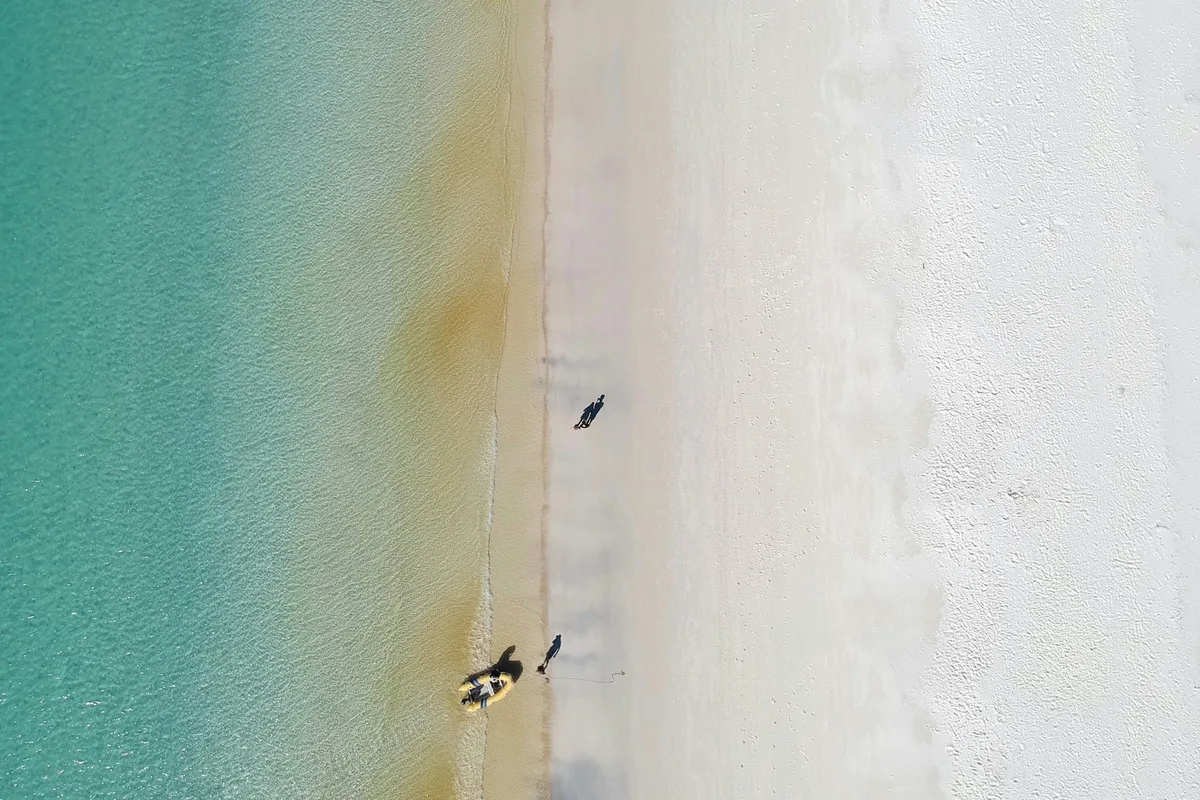
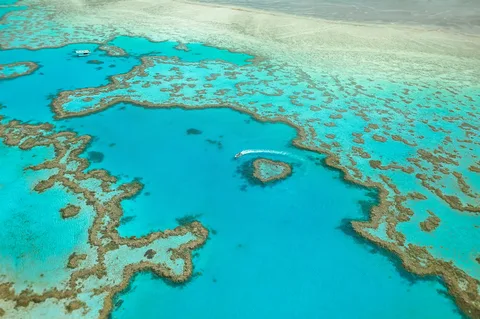
A seven-kilometre beach of almost pure silica sand in the Whitsunday Islands, known for the swirling white-and-turquoise pattern where sand meets the tidal shallows at Hill Inlet.
Visitor guide
Whitehaven Beach is a seven-kilometre stretch of pale silica sand on Whitsunday Island, the largest of the Whitsunday Islands off the coast of central Queensland, Australia. It is reached by boat, seaplane or helicopter from Airlie Beach or Hamilton Island, and nearby Hill Inlet is among the most popular day-visit spots on the island.
Wikipedia gives the length of Whitehaven Beach as seven kilometres and describes the sand as about 98 percent pure silica. Because silica is not present in the local rocks, the sand is thought to have been carried here by ocean currents over a very long time. The grains are very fine and are reported to stay cooler underfoot than ordinary sand on hot days, although the same fine grains can damage phones and cameras, so care is advised near the water.
The beach lies on the east coast of Whitsunday Island, which Wikipedia says covers about 275 square kilometres. The warm, shallow, clear waters and strong tidal flows around the island suit fringing coral reefs, and seagrass beds in the northern bays support diverse marine life. Unadorned rock-wallabies live on the island.
Hill Inlet, Cid Harbour and Gulnare Inlet are listed by Wikipedia as popular destinations on Whitsunday Island with day visitors and overnight sailors. Hill Inlet, at the northern end of the beach, is the spot most often photographed, where the tide moves white sand and clear turquoise water into shifting patterns. The appearance changes with tide and light, so the view differs from hour to hour.
The Ngaro people, a seafaring people, inhabited Whitsunday Island for thousands of years before British colonisation; Wikipedia gives a period of about 8,000 years. Captain James Cook named the island while sailing through the area in June 1770. The beach itself was named in 1879 by Staff Commander E. P. Bedwell, the Admiralty surveyor for Queensland, after the English town of Whitehaven, one of several names from Cumberland that he gave to features in the area.
Logging also left a mark on the island's history. Eugene Fitzalan set up the first logging camp in 1861 to harvest hoop pine for building in Bowen, and Wikipedia notes that the local Ngaro people besieged the camp for two weeks.
Whitehaven Beach was named Queensland's Cleanest Beach in the Keep Australia Beautiful Beach Challenge State Awards in 2008, and in 2010 it was rated as a top eco-friendly beach by CNN. In 2017 Cyclone Debbie caused erosion and damage, and parts of the southern end needed reconstruction work.
Visitors swim, sunbathe and eat lunch on the beach, and camping facilities are managed by the national parks authority. An annual two-kilometre open-water swim has been held here in November since 2009 as part of the Hamilton Island Triathlon. Most visitors arrive on a day cruise, and weather and tides influence what each trip can do, so flexibility is useful when planning.
See every tour and attraction we cover in Australia.