TorontoOntario · 36 tours
 Niagara FallsOntario · 25 tours
 New York CityNew York · 30 tours
 Las VegasNevada · 8 tours
 San FranciscoCalifornia · 16 tours
 VancouverBritish Columbia · 17 tours
 DubaiUAE · 54 tours
 Abu DhabiUAE · 5 tours
 Buenos AiresArgentina · 23 tours
 AthensGreece · 31 tours
 AucklandNew Zealand · 38 tours
 CancunMexico · 54 tours
No destinations match “”. Try searching all tours instead — that search understands full questions, not just place names.
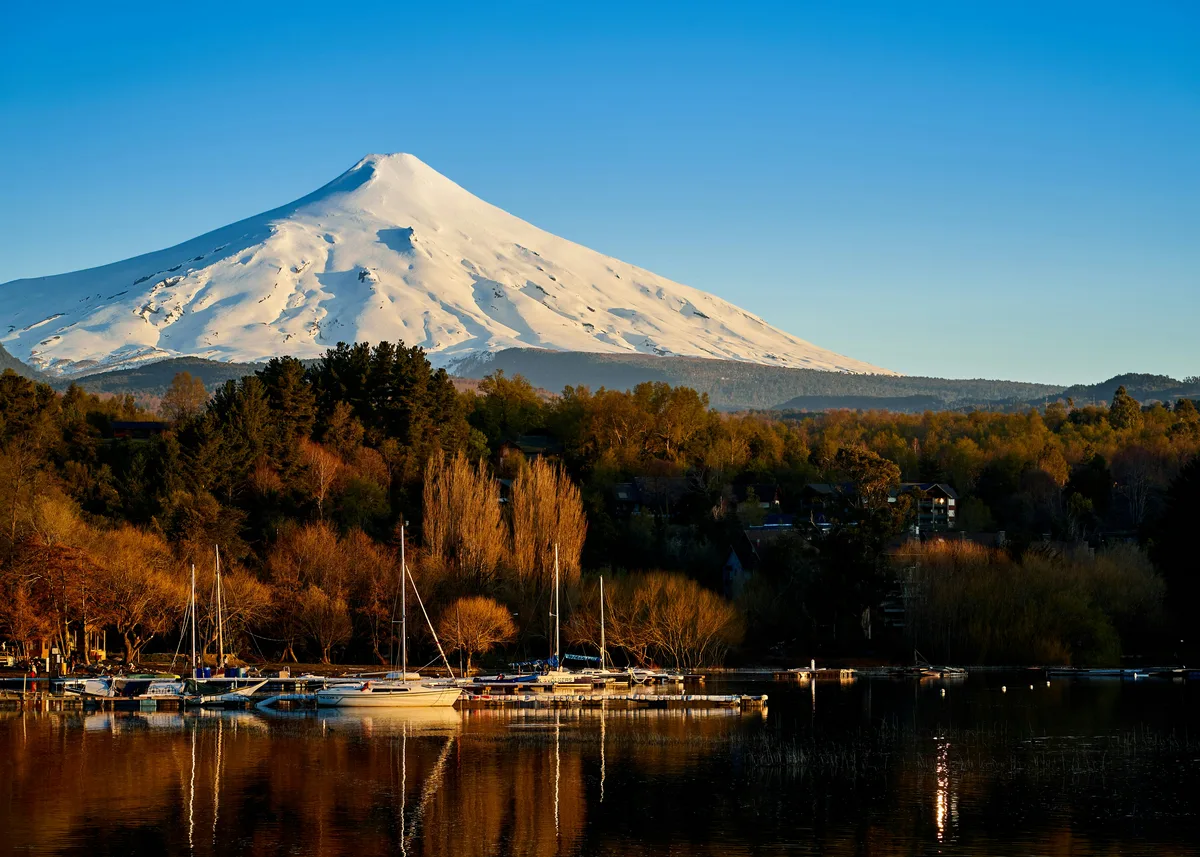
An active, snow-capped stratovolcano rising above the lake town of Pucon in Chile's Lake District, with a summit crater that's climbable on a guided day hike when conditions allow.
 Multi-Day Tours Popular Pick
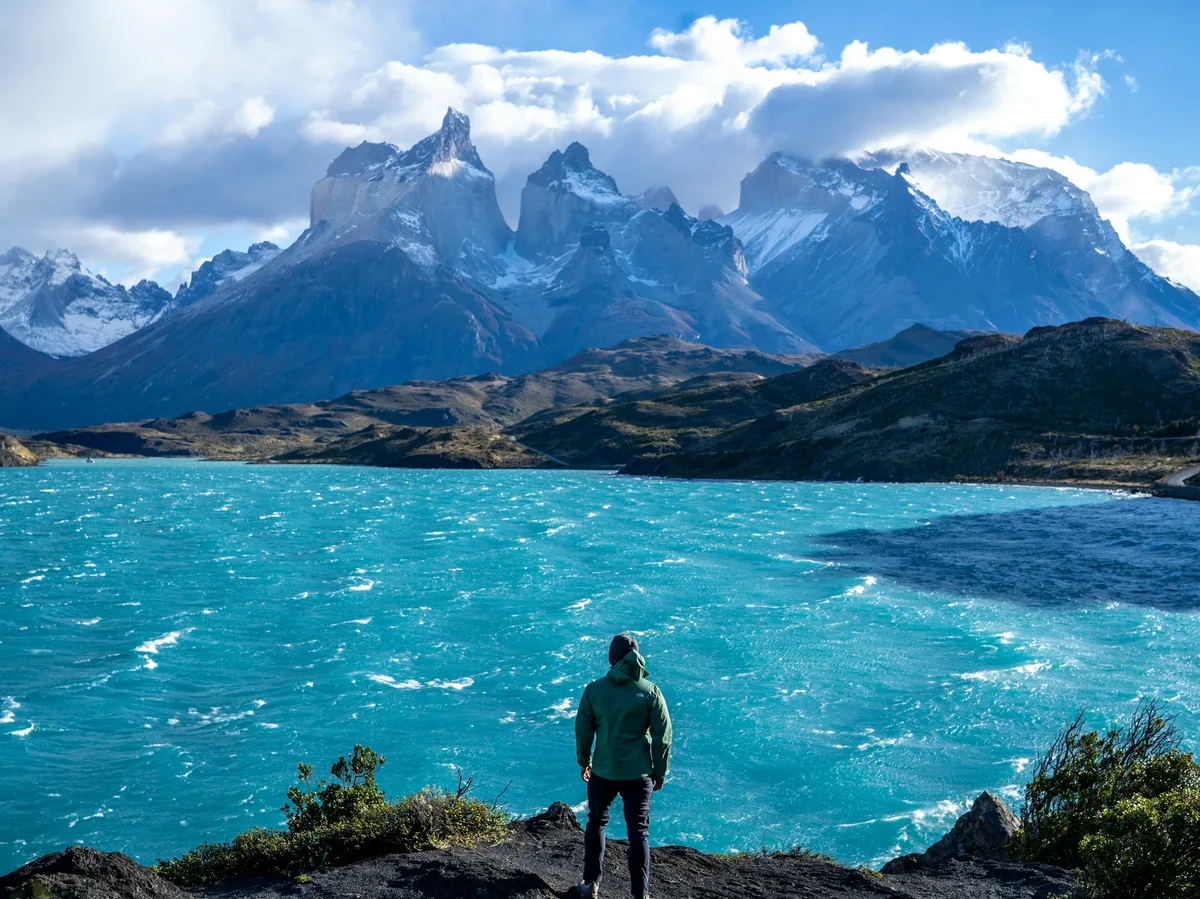
Chile's flagship grand tour — Santiago and the coast, the Atacama Desert's geysers and salt flats, the volcanoes and lakes of Pucón and Puerto Varas, Chiloé's stilt villages, and Patagonia's glaciers and Torres del Paine.
 Multi-Day Tours
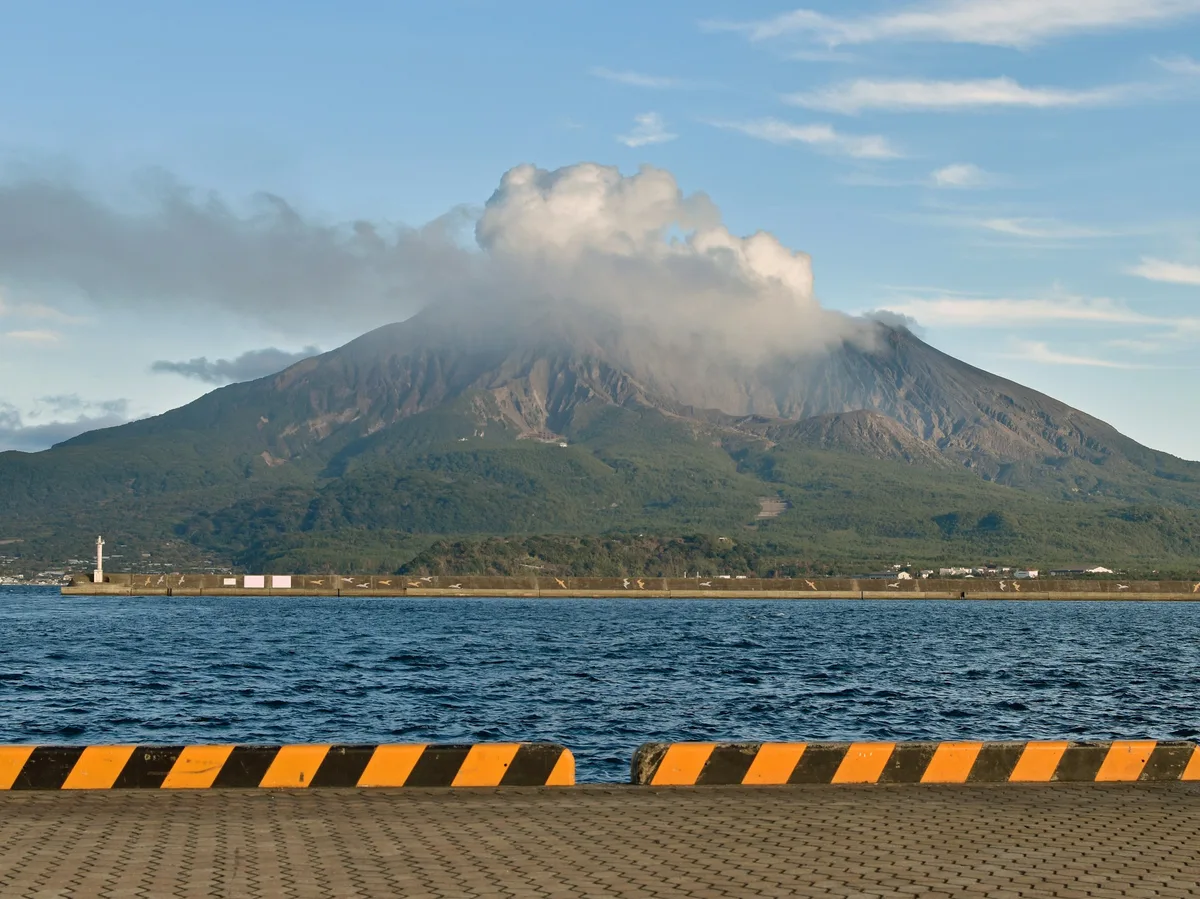
Two weeks off the well-worn route — Iquique's ghost towns and geoglyphs, San Pedro de Atacama's Rainbow Valley, and the volcanoes and rainforest lodges of the Lake District's Huilo Huilo reserve.
Visitor guide
Villarrica is one of Chile's most active volcanoes, rising above the lake and town of the same name in the Araucania Region, and the resort town of Pucon on the eastern shore of Lake Villarrica is its main gateway. Wikipedia places the volcano about 750 kilometres south of Santiago, though the Smithsonian Global Volcanism Program gives about 675 kilometres, with Pucon roughly 16 to 17 kilometres to its north.
Villarrica is a stratovolcano also known by the Mapuche name Rucapillan, meaning great spirit's house or, in another rendering, the demon's house. Wikipedia explains that it is the westernmost of three large stratovolcanoes aligned along a fault zone, together with Quetrupillan and the Chilean part of Lanin, all protected within Villarrica National Park.
Its basaltic-andesitic lava feeds an intermittent lava lake in the crater, one of a small number known worldwide. Eruptions are usually strombolian, and rain plus melted ice can produce lahars, such as those that occurred in 1964 and 1971. The upper parts are permanently covered by snow and carry about 40 square kilometres of glaciers, which have shrunk since the 1960s according to Wikipedia.
Eruptions have been recorded since the Spanish founded the city of Villarrica in 1552 near the site of present-day Pucon. Wikipedia reports that frequent strombolian eruptions took place in the second half of the sixteenth century, with peaks in 1558 and 1562. The city was an important gold and silver mining centre, but lahars may have buried the gold placers and prompted settlers to move west to the modern site of Villarrica.
The modern settlement of Pucon was founded in 1883 as a fort, and its first hotel opened in 1923. Wikipedia describes it as a major adventure tourism centre, with activities including rafting on the Trancura River, horse riding, canopy trails, hot springs, skiing in winter and guided climbs of the volcano. Nearby protected areas include Huerquehue National Park and Villarrica National Reserve, and lakes such as Caburgua and Tinquilco.
The El Cani protected area, a private reserve of 500 hectares run by a non-profit, has hiking trails through ancient araucaria forest and a lookout with views of four volcanoes.
Wikipedia gives an account of the 1963 and 1964 eruptions, during which a flank vent produced a lava flow about a kilometre long and heavy melting of snow and ice triggered lahars that damaged the settlement of Coniaripe and several bridges between Villarrica and Pucon. A further eruptive cycle in 1971 and 1972 produced lahars in the Trancura River basin. The volcano is therefore monitored closely, and lahar risk zones around Pucon have been studied; a 2014 study found that most of the urban area lies outside likely lahar paths.
Wikipedia also lists river sections on the Trancura suitable for rafting, from family-friendly rapids to Level V runs, and thermal spas including Palguin, Rio Blanco, Huife, Quimey-Co and Los Pozones.
Climbs of Villarrica are made with guides and may be suspended due to cloud or volcanic activity, per Wikipedia. Visitors who prefer not to climb can enjoy the lakeshore, thermal baths and viewpoints. A private guided visit with a dedicated vehicle and driver can combine the volcano views, nearby waterfalls and the lakeside town at a relaxed pace.
See every tour and attraction we cover in Chile.