TorontoOntario · 36 tours
 Niagara FallsOntario · 25 tours
 New York CityNew York · 30 tours
 Las VegasNevada · 8 tours
 San FranciscoCalifornia · 16 tours
 VancouverBritish Columbia · 17 tours
 DubaiUAE · 54 tours
 Abu DhabiUAE · 5 tours
 Buenos AiresArgentina · 23 tours
 AthensGreece · 31 tours
 AucklandNew Zealand · 38 tours
 CancunMexico · 54 tours
No destinations match “”. Try searching all tours instead — that search understands full questions, not just place names.
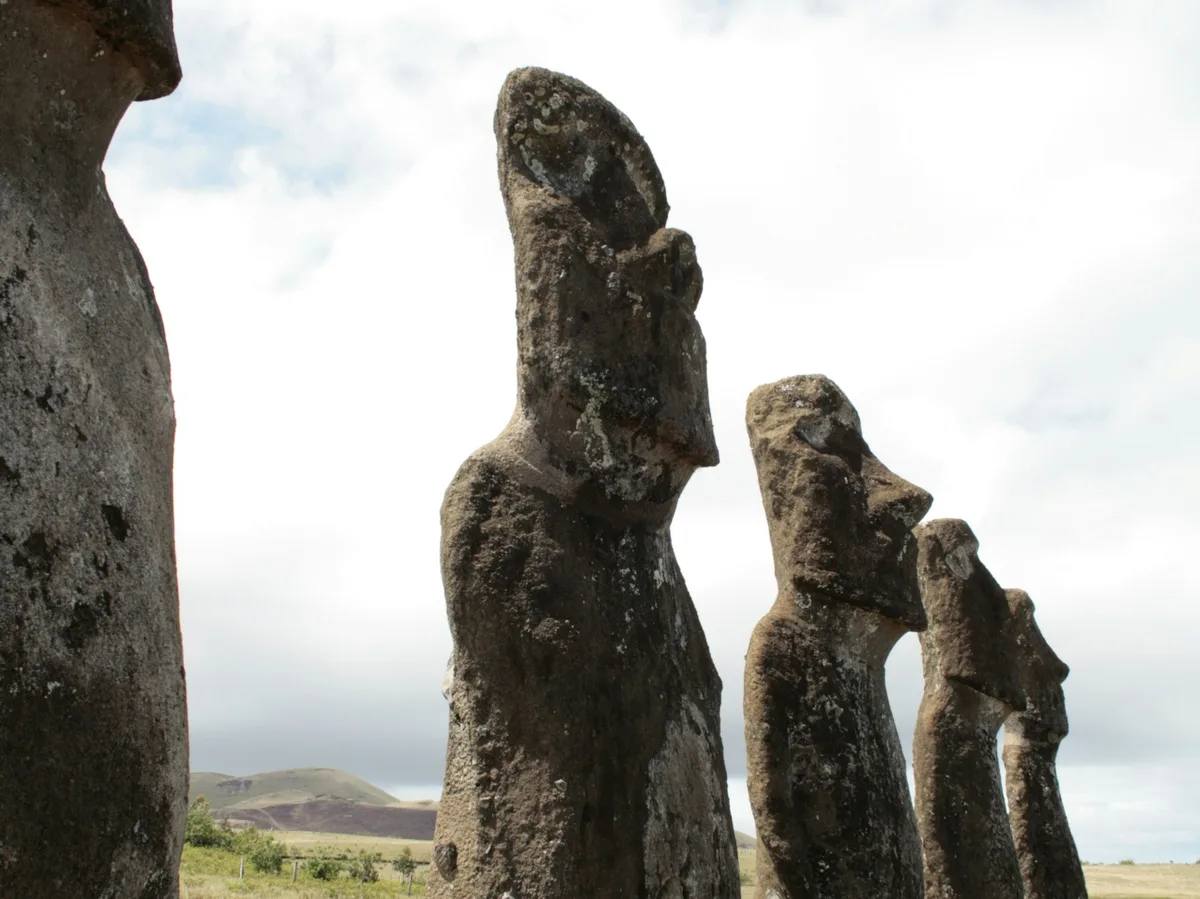
A remote Chilean Pacific island famed for its nearly 900 monumental moai statues carved by the Rapa Nui people, a UNESCO World Heritage Site.
Visitor guide
Easter Island, known as Rapa Nui to its people and Isla de Pascua in Spanish, is a Chilean special territory in the southeastern Pacific Ocean. It is renowned for its nearly 1,000 extant monumental statues called moai, and in 1995 UNESCO named it a World Heritage Site, with much of the island protected within Rapa Nui National Park.
The island sits at the southeasternmost point of the Polynesian Triangle and is one of the most remote inhabited islands in the world. Wikipedia gives the distance to Pitcairn Island as about 2,075 kilometres and to the nearest point of continental Chile as about 3,512 kilometres. Experts differ on when Polynesians first arrived, with many researchers citing around the year 800 and a 2007 study suggesting closer to 1200.
The Dutch explorer Jacob Roggeveen reached the island on Easter Sunday 1722 and gave it its English name. Chile annexed the island in 1888. In 2017 the administration of Rapa Nui National Park was handed to the Ma'u Henua Indigenous community, which now manages and protects the heritage, with park revenue invested on the island.
Moai are monolithic human figures carved by the Rapa Nui between about 1250 and 1500, according to Wikipedia. Nearly half remain at Rano Raraku, the main quarry, while hundreds were moved to stone platforms called ahu around the coast. They are carved from volcanic tuff, have oversized heads and are generally understood as living faces of deified ancestors.
The tallest moai erected, called Paro, was almost 10 metres high, and one unfinished figure at the quarry would have stood about 21 metres. By the late nineteenth century all had fallen, possibly because of European contact or internal conflict. Since 1950 many have been restored, including the line of statues at Ahu Tongariki.
The ceremonial village of Orongo sits on a narrow ridge between the ocean and the crater of Rano Kau volcano. Wikipedia describes it as the centre of the Birdman cult that replaced the moai cult. Rano Kau last erupted roughly 150,000 to 210,000 years ago.
Rapa Nui National Park is triangular in shape, about 23 kilometres long and 11 kilometres wide, with elevations from sea level to around 300 metres. Wikipedia describes volcanoes, freshwater crater lakes and an eroding rugged coastline. The park was created by the Chilean government in 1935, and after sheep-ranching leases ended in the 1980s the whole island was declared a historic park.
UNESCO inscribed the park in 1995 under cultural criteria. Beyond the statues, the park holds petroglyphs and paintings, ceremonial ahu platforms and many unfinished moai still lying in the quarry. The moai were toppled between about 1837 and 1864, and the standing statues seen today have been re-erected during restoration programmes with international assistance.
The island has a warm subtropical climate, with average temperatures between about 19 and 24 degrees Celsius, and rain falling mainly in winter. Most visitors stay in the main settlement of Hanga Roa. A private guided visit with a dedicated vehicle and driver can cover the main archaeological sites in a single day, with a guide to put the carvings in context.
See every tour and attraction we cover in Chile.