TorontoOntario · 36 tours
 Niagara FallsOntario · 25 tours
 New York CityNew York · 30 tours
 Las VegasNevada · 8 tours
 San FranciscoCalifornia · 16 tours
 VancouverBritish Columbia · 17 tours
 DubaiUAE · 54 tours
 Abu DhabiUAE · 5 tours
 Buenos AiresArgentina · 23 tours
 AthensGreece · 31 tours
 AucklandNew Zealand · 38 tours
 CancunMexico · 54 tours
No destinations match “”. Try searching all tours instead — that search understands full questions, not just place names.
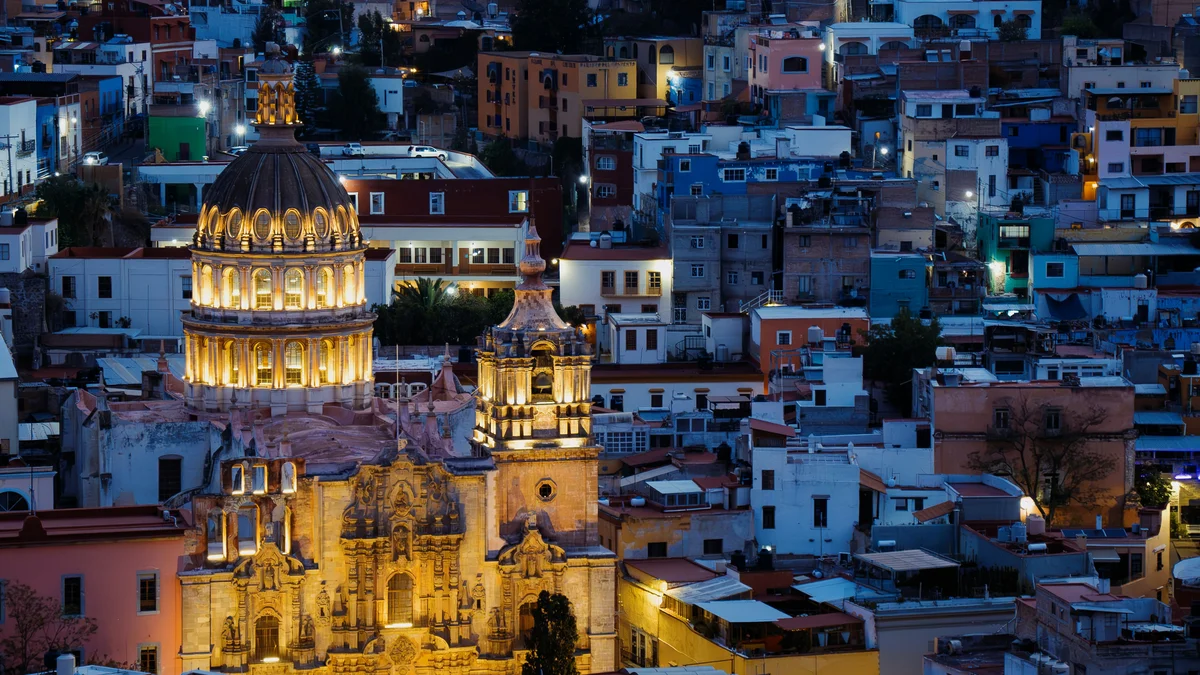
One of the richest silver mines in colonial-era history, the Valenciana mine outside Guanajuato produced roughly two-thirds of the world's silver at its 18th-century peak and financed the fortune behind the nearby Church of San Cayetano. Its historic mine shaft and colonial mining buildings remain a working link to the wealth that built Guanajuato's entire historic center.
 Private Tours
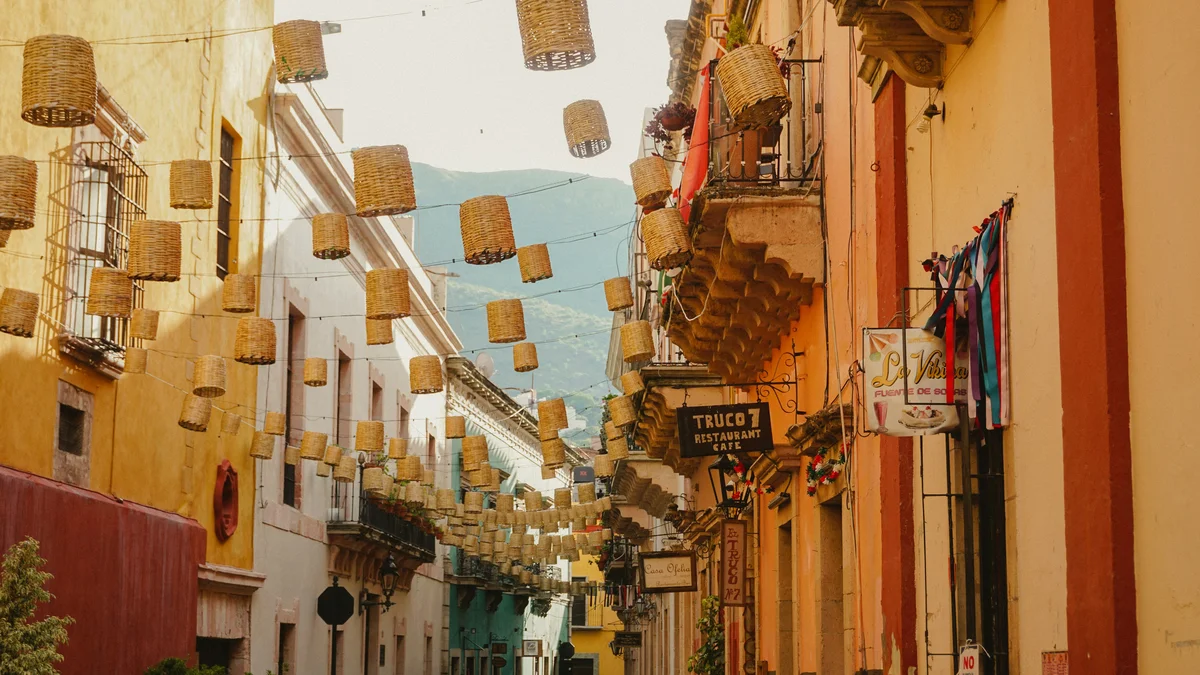
A private, door-to-door day trip from San Miguel de Allende to Guanajuato, visiting the Bocamina San Ramón mine, San Cayetano's pink church, the Callejón del Beso, and the Mirador de Rayas lookout.
 Private Tours
Explore Guanajuato's mining heritage on a private tour that takes you into a real historic mine, alongside the city's colonial architecture, plazas, and fountains.
Visitor guide
La Valenciana is a historic silver mine just outside Guanajuato, Mexico, and part of the UNESCO World Heritage Site that covers the historic town of Guanajuato and its adjacent mines. Wikipedia credits it with a very large share of world silver output at its eighteenth-century peak, and the wealth it produced paid for the nearby Church of San Cayetano.
Wikipedia dates the discovery of Guanajuato's mother vein to 1548, and silver extraction at Valenciana began in the sixteenth century. The English article on the church adds that the mine was first worked in 1558 but abandoned the following year because it was thought to be exhausted. Output peaked from 1768 to 1804. The mine article says it produced about 60 percent of world silver production in the eighteenth century and that its output equaled two-thirds of all the silver obtained in New Spain, while a separate Wikipedia article on Guanajuato gives about two-thirds of world output. These figures differ, so they are best read as a very large share of world silver rather than an exact proportion.
Antonio de Obregon y Alcocer obtained a loan in 1760 from Pedro Luciano Otero, a merchant tied to the Rayas mine, and the two kept investing until output rose sharply in 1768. Wikipedia says that for several decades Valenciana produced more silver than all the mines of the Viceroyalty of Peru. On 20 March 1780 King Charles III granted Obregon the titles of Viscount of the Mine and Count of La Valenciana. After his son succeeded him in 1788, ownership was divided into 24 shares among the Obregon and Otero families and the family of Juan Antonio de Santa Ana.
Alexander von Humboldt visited the mine on 8 August 1803 and, in his Political Essay on the Kingdom of New Spain, wrote of enormous annual profits for its owners. In good years more than three thousand workers were employed. The mine was worked to a depth of about 185 metres in 1803 and about 514 metres by 1815, and Wikipedia says it is worked today to roughly 760 metres.
When the independence war began in 1810, most of the miners took part in the capture of the Alhondiga de Granaditas and then formed a regiment from the mine's workforce. In 1817 Xavier Mina failed to take the plaza of Guanajuato and ordered the mine's machinery set on fire. From 1848 to 1865 the mine was run by Francisca Perez de Galvez, and her nephew Miguel Rul then rehabilitated it, helping Valenciana again become the largest silver producer in Guanajuato by 1878. Prices fell and output dropped in the 1890s, and in 1904 the owners sold the company to the American Guanajuato Reduction and Mines Company.
After a miners' strike that lasted from 1936 to 1937, the mine passed to the workers of section 4 of the national mining union, who formed the Santa Fe cooperative. Wikipedia says the cooperative continues to work it.
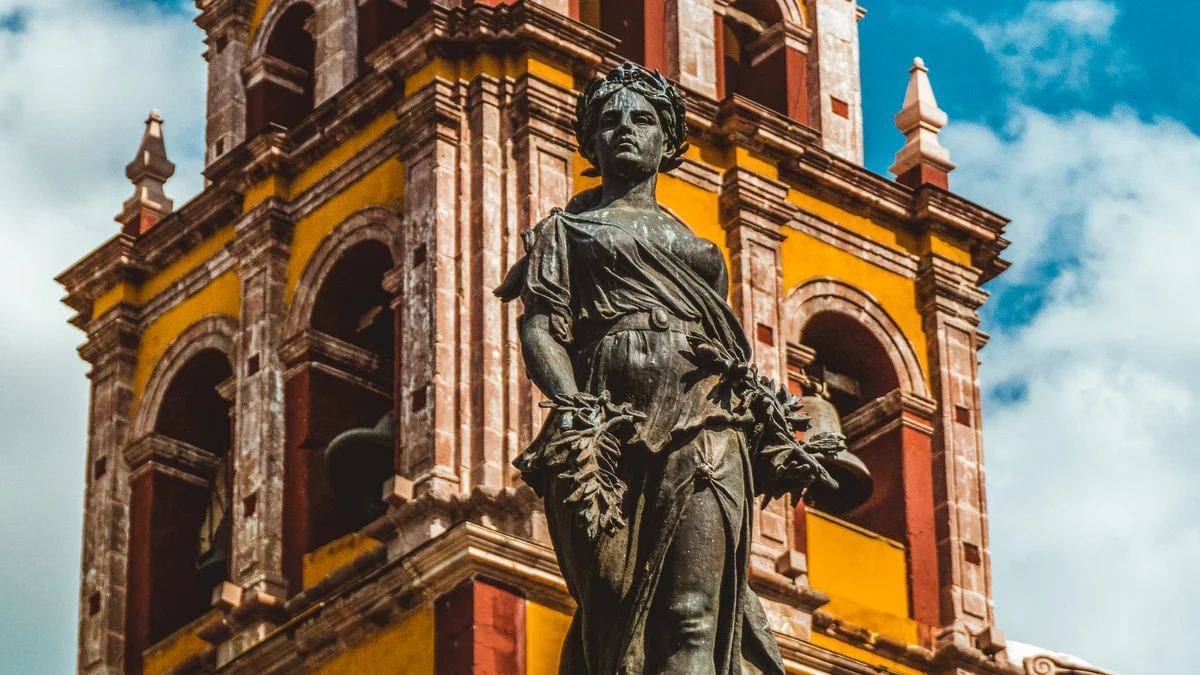
In the settlement that grew beside the mine, Obregon commissioned the Templo de San Cayetano in thanks to his patron saint. Construction began in 1775 and finished in 1788, directed first by the architect Andres de la Riva and then by Jorge Archundia, after the original architect and master carpenter died. The church is built of pink quarry stone in the churrigueresque style, a richly ornamented form of Baroque, and has a Latin-cross plan with an octagonal dome at the crossing. Three large altarpieces covered in gold leaf stand in the chancel, with the central one dedicated to Saint Cajetan. The family also built a house for Theatine monks, which was never occupied.
The mouth of the mine, known as the Bocamina, lies directly behind the outer wall of the church, and Wikipedia notes that a museum on the site interprets the mine's history. Together the church, shaft and surrounding colonial buildings show how silver shaped Guanajuato, and a private guided visit can combine them with the historic centre.
See every tour and attraction we cover in Mexico.