TorontoOntario · 36 tours
 Niagara FallsOntario · 25 tours
 New York CityNew York · 30 tours
 Las VegasNevada · 8 tours
 San FranciscoCalifornia · 16 tours
 VancouverBritish Columbia · 17 tours
 DubaiUAE · 54 tours
 Abu DhabiUAE · 5 tours
 Buenos AiresArgentina · 23 tours
 AthensGreece · 31 tours
 AucklandNew Zealand · 38 tours
 CancunMexico · 54 tours
No destinations match “”. Try searching all tours instead — that search understands full questions, not just place names.
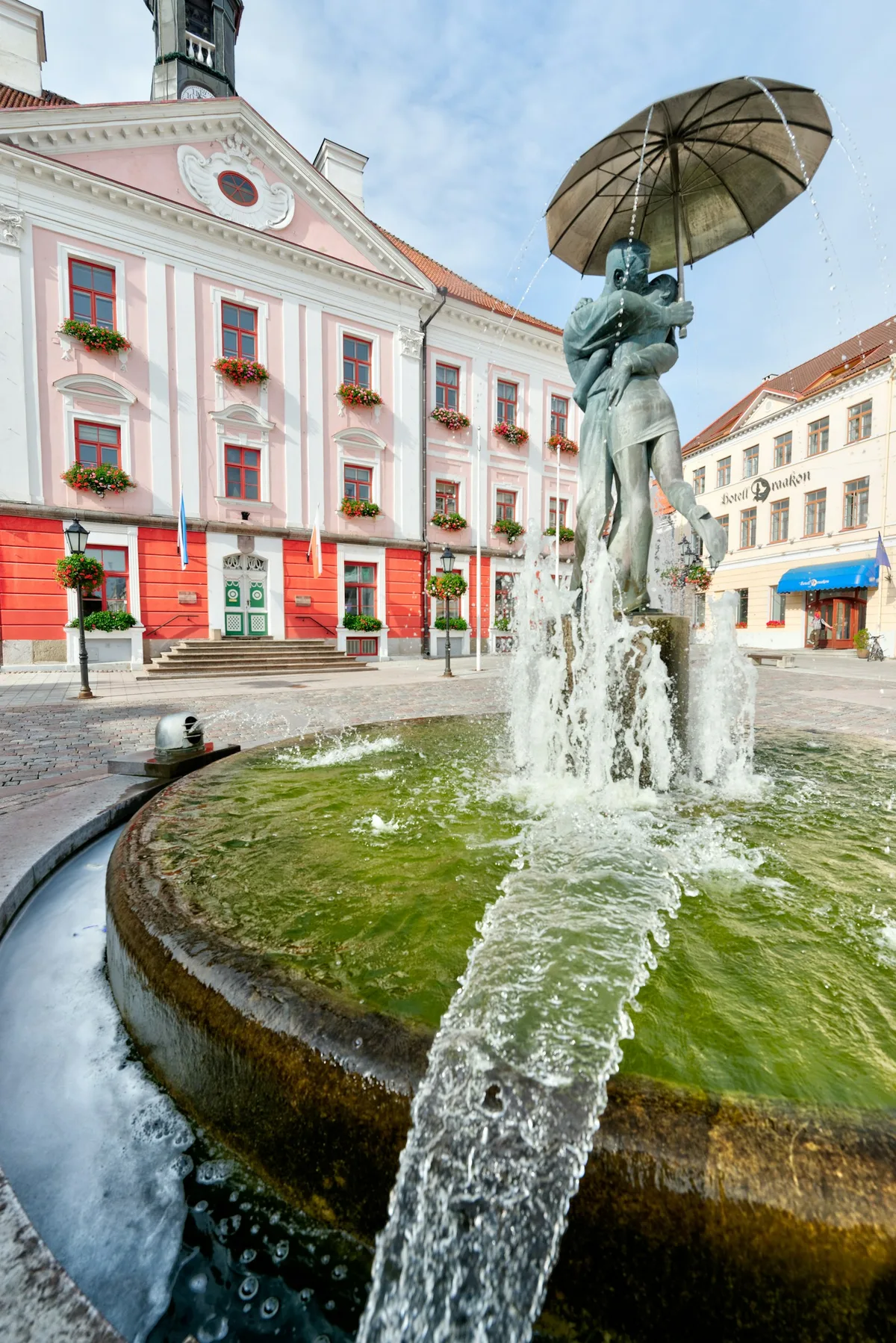
Estonia's oldest and most prestigious university, founded in 1632, anchoring Tartu's Town Hall Square, home to the well-known Kissing Students fountain in front of the pink town hall.
Visitor guide
The University of Tartu is a public research university in Tartu, Estonia's second-largest city, and the country's oldest and largest university. Founded in 1632 by King Gustavus Adolphus of Sweden, it sits beside Town Hall Square, the lively centre of Tartu's old town.
The foundation act was signed on 30 June 1632, and the opening ceremony took place that October. Johan Skytte, governor-general of several Swedish provinces, was the first chancellor, and the university was the third oldest in the Swedish kingdom. War forced it to move to Tallinn, and it closed in 1665. It reopened in Tartu in 1690 and later moved to Parnu, finally closing after Parnu surrendered in 1710. It reopened in 1802 as Universitat Dorpat, the first German-speaking university in the Russian Empire. German remained the language of instruction until 1893, and Wikipedia describes the period from 1860 to 1880 as its golden age.
Estonian-language instruction began in 1919, after Estonia's independence. Under Soviet rule from 1940 to 1989 it was called Tartu State University, and it regained academic autonomy in 1992.
The university has 56 buildings, including 31 architectural monuments in the city. The main building was constructed between 1804 and 1809, and the old observatory includes a monument to the astronomer Friedrich Georg Wilhelm von Struve. The Botanical Garden was founded in 1803. The university runs four museums and several gardens. Wilhelm Ostwald, a Baltic German chemist, won the 1909 Nobel Prize in Chemistry, and the study of lectins was founded at the university in 1888. ESTCube-1, the first Estonian satellite, was developed mainly by students and staff. The university reports around 15,000 students, of whom about 1,600 are international, and most programmes are taught in Estonian, with roughly 30 taught in English. A statue of Gustav II Adolf stood on campus from 1928 until Soviet authorities removed it in 1950, and a new statue was unveiled in 1992.
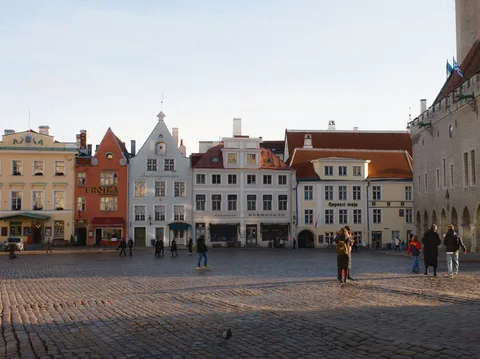
Town Hall Square, Raekoja plats, is Tartu's central gathering place. The Town Hall, an 18th-century neoclassical building, anchors the square, and Wikipedia gives its construction as 1782 to 1789, though sources differ. A major fire in 1775 destroyed much of the centre, which was rebuilt in Late Baroque and Neoclassical styles. The Kissing Students monument stands on the square, and the Barclay de Tolly monument stands in nearby Barclay Square.
Tartu is a city on the Emajogi river, which links Lake Vorts and Lake Peipus. Settlement there dates to the 5th century, and a wooden fortification stood on Toome Hill by the 7th century. The town joined the Hanseatic League in the 1280s. On 2 February 1920, a peace treaty between Soviet Russia and Estonia was signed in Tartu, ending the Estonian War of Independence. Tartu was named a European Capital of Culture in 2024, and its student character gives it a youthful feel. A private guided visit with a driver can pair Tartu with other stops between Tallinn and southern Estonia.
See every tour and attraction we cover in Estonia.