TorontoOntario · 36 tours
 Niagara FallsOntario · 25 tours
 New York CityNew York · 30 tours
 Las VegasNevada · 8 tours
 San FranciscoCalifornia · 16 tours
 VancouverBritish Columbia · 17 tours
 DubaiUAE · 54 tours
 Abu DhabiUAE · 5 tours
 Buenos AiresArgentina · 23 tours
 AthensGreece · 31 tours
 AucklandNew Zealand · 38 tours
 CancunMexico · 54 tours
No destinations match “”. Try searching all tours instead — that search understands full questions, not just place names.
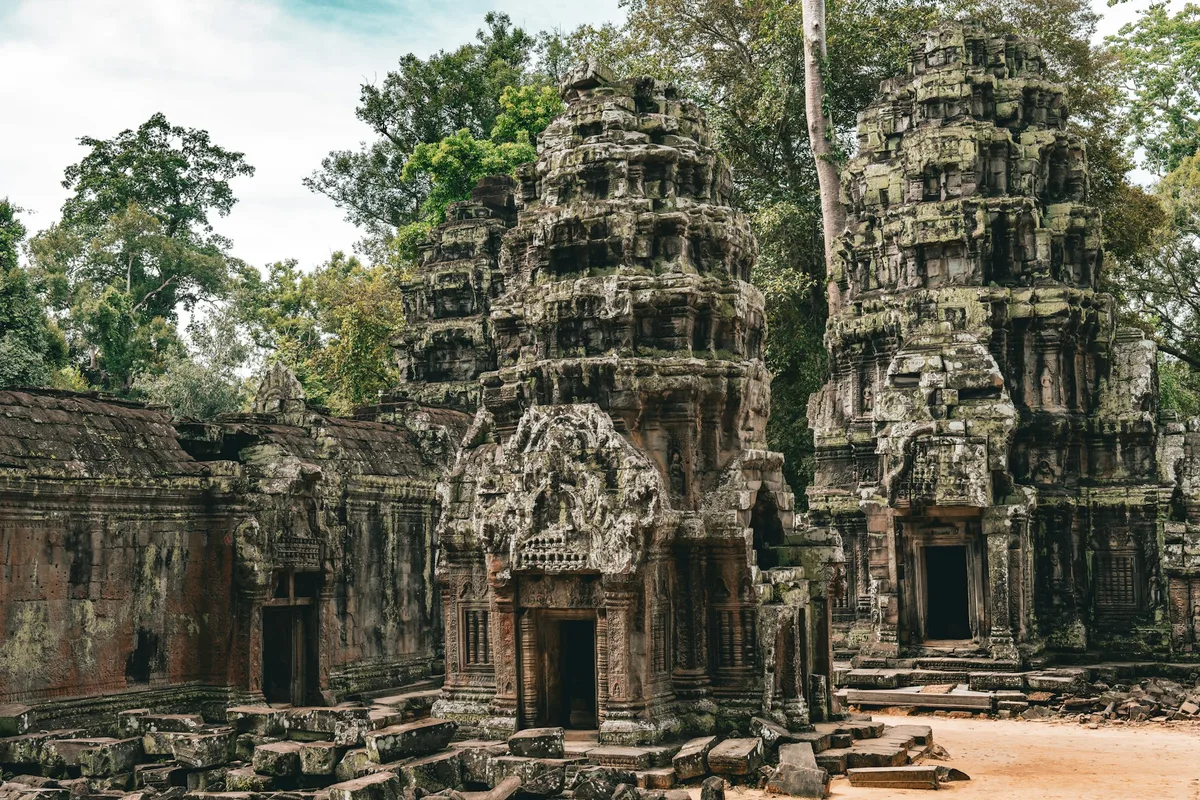
A 12th-century Angkor-era temple left largely as it was found, with giant silk-cotton and strangler fig tree roots grown through and over its stone galleries — the temple most associated with Angkor's jungle-reclaimed look.
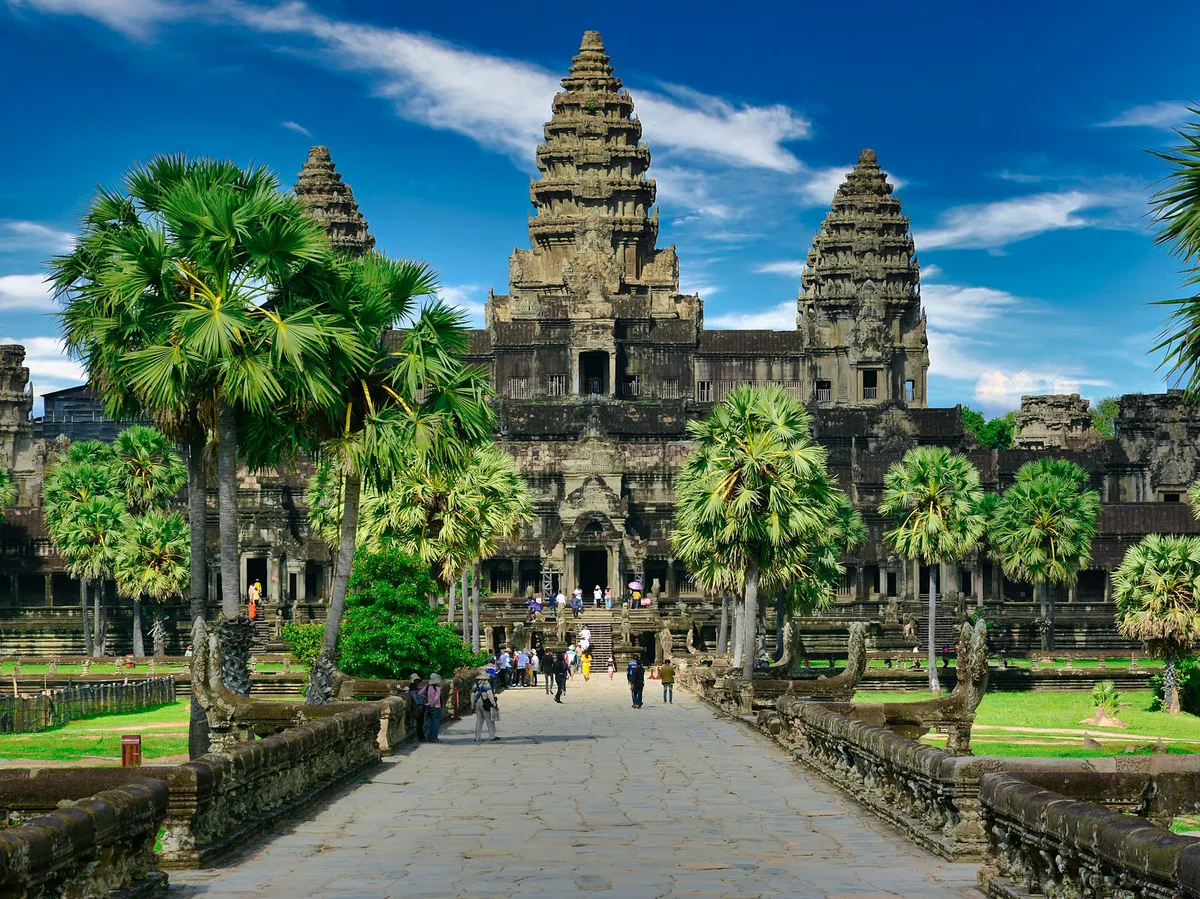 Multi-Day Tours Popular Pick
A 9-day journey through Cambodia's ancient Angkor temples, the floating villages of Tonlé Sap, Phnom Penh's history, and a restful finish on the Sihanoukville coast.
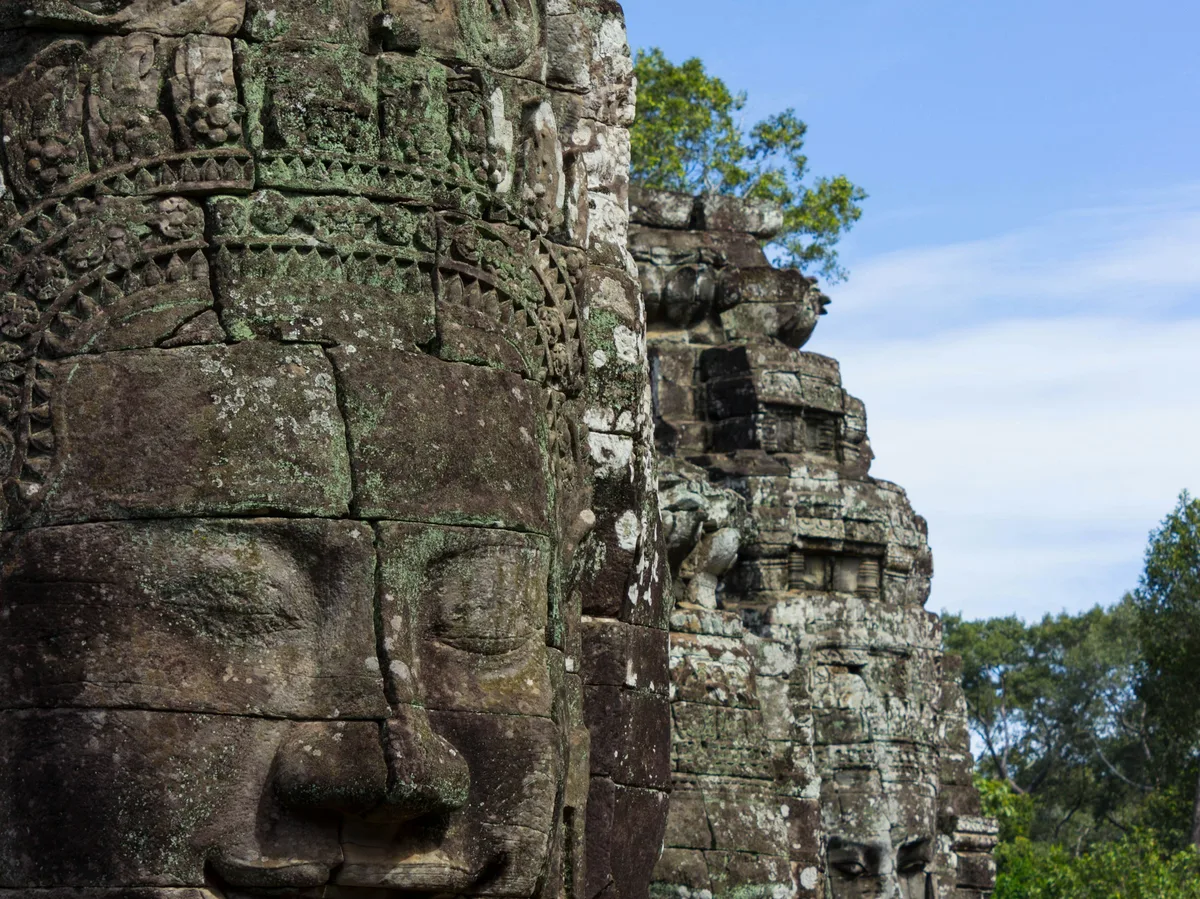 Multi-Day Tours
A 9-day pairing of Cambodia's Angkor temples and Tonlé Sap floating villages with Laos's Luang Prabang, its waterfalls, and a Mekong-tributary kayaking route.
Visitor guide
Ta Prohm is a Buddhist temple near Siem Reap, Cambodia, a short distance east of Angkor Thom, roughly one to three kilometres depending on the reference point, built in the late 12th and early 13th centuries in the Bayon style. It is best known for the giant trees whose roots grip and straddle its stone galleries, giving it the most atmospheric look among the Angkor monuments.
Ta Prohm's original name was Rajavihara, meaning Royal Monastery. King Jayavarman VII founded it as a Mahayana Buddhist monastery and centre of learning, and its founding stele dates the foundation to 1186. The temple was built in honour of the king's family. Its main image represented Prajnaparamita, the personification of wisdom, and was modelled on the king's mother, while satellite shrines honoured his guru and his elder brother. Ta Prohm formed a complementary pair with Preah Khan, dedicated in 1191, whose main image of Lokesvara was modelled on the king's father.
The stele records more than 12,500 people living at the site, including 18 high priests and 615 dancers, with about 80,000 more people in surrounding villages providing services and goods. Additions continued into the late 13th century.
Ta Prohm is a flat temple rather than a temple-mountain. Five rectangular enclosing walls surround a central sanctuary, and the complex faces east. The outer wall measures about 1,000 by 650 metres, enclosing a large area that once held a substantial town. Face towers resembling those of the Bayon were added to the gateways in the 13th century, some of which have collapsed. The inner enclosures have galleries, libraries, satellite temples, a Hall of Dancers and a House of Fire. The temple has few narrative bas-reliefs compared with Angkor Wat, though carvings of devatas, ascetics and door guardians survive, along with a badly eroded scene of the Great Departure of Siddhartha.
The trees growing through the ruins are the temple's best-known feature. Because the temple was built without mortar, roots took hold in the loosened stones after it was abandoned. The larger trees are either silk-cotton trees or thitpok, and the smaller are either strangler figs or gold apples, as sources disagree on the identification. The École francaise d'Extreme-Orient chose to leave Ta Prohm largely as found when conservation of Angkor began in the early 20th century, as a concession to the general taste for the picturesque.
UNESCO inscribed Ta Prohm as part of the Angkor World Heritage Site in 1992. Conservation is a partnership between the Archaeological Survey of India and the Cambodian APSARA authority, and wooden walkways and platforms have been installed to protect the monument from visitor wear. The Hall of Dancers renovation was completed in November 2022. Ta Prohm appeared in the 2001 film Lara Croft: Tomb Raider, which earned it nicknames such as the Tomb Raider Temple, although Wikipedia notes that the film's interior scenes were shot in a studio.
Ta Prohm is among the most photographed corners of Angkor, and the trees, moss-covered stones and corridors reward an unhurried walk. A private guide can help you read the layout and the stories behind the carvings.
See every tour and attraction we cover in Cambodia.