TorontoOntario · 36 tours
 Niagara FallsOntario · 25 tours
 New York CityNew York · 30 tours
 Las VegasNevada · 8 tours
 San FranciscoCalifornia · 16 tours
 VancouverBritish Columbia · 17 tours
 DubaiUAE · 54 tours
 Abu DhabiUAE · 5 tours
 Buenos AiresArgentina · 23 tours
 AthensGreece · 31 tours
 AucklandNew Zealand · 38 tours
 CancunMexico · 54 tours
No destinations match “”. Try searching all tours instead — that search understands full questions, not just place names.
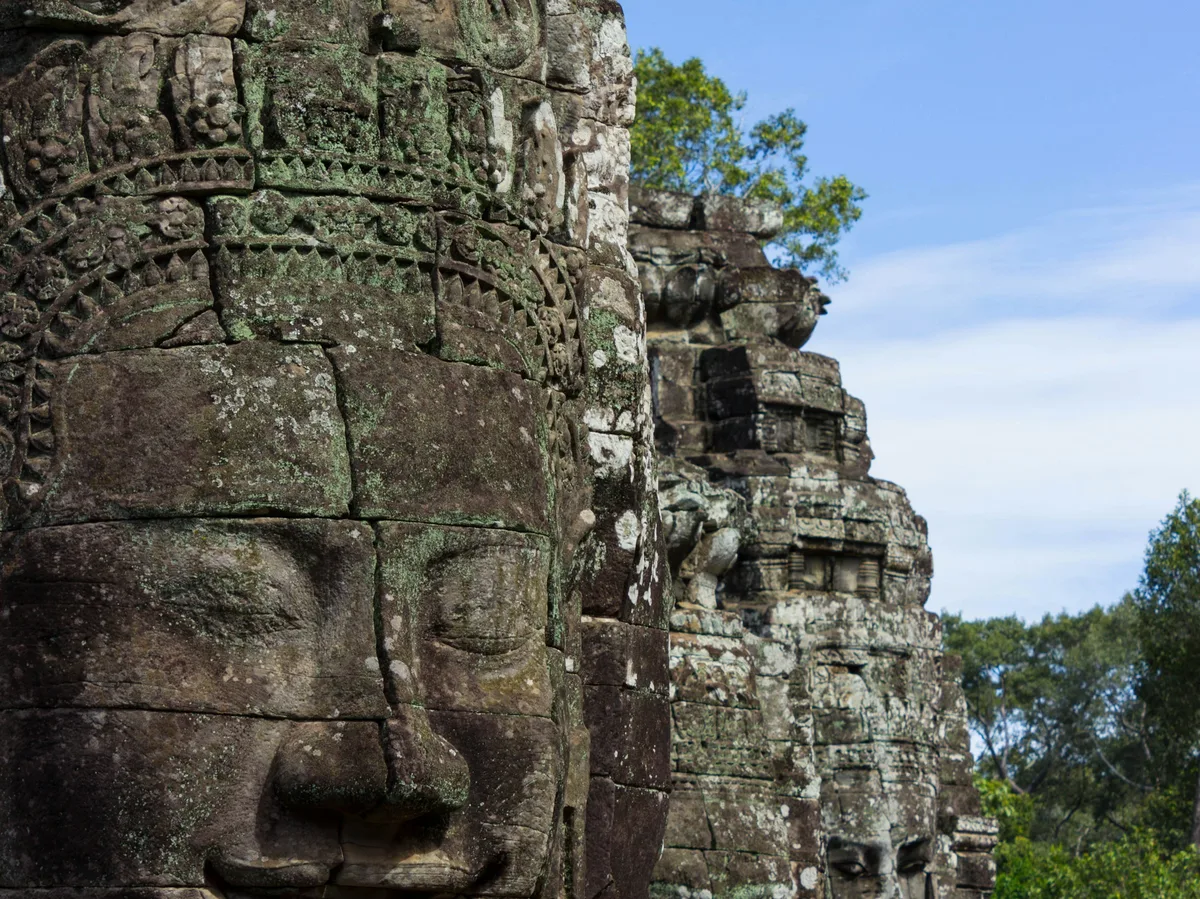
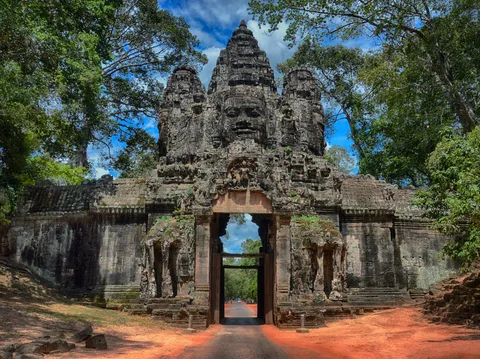
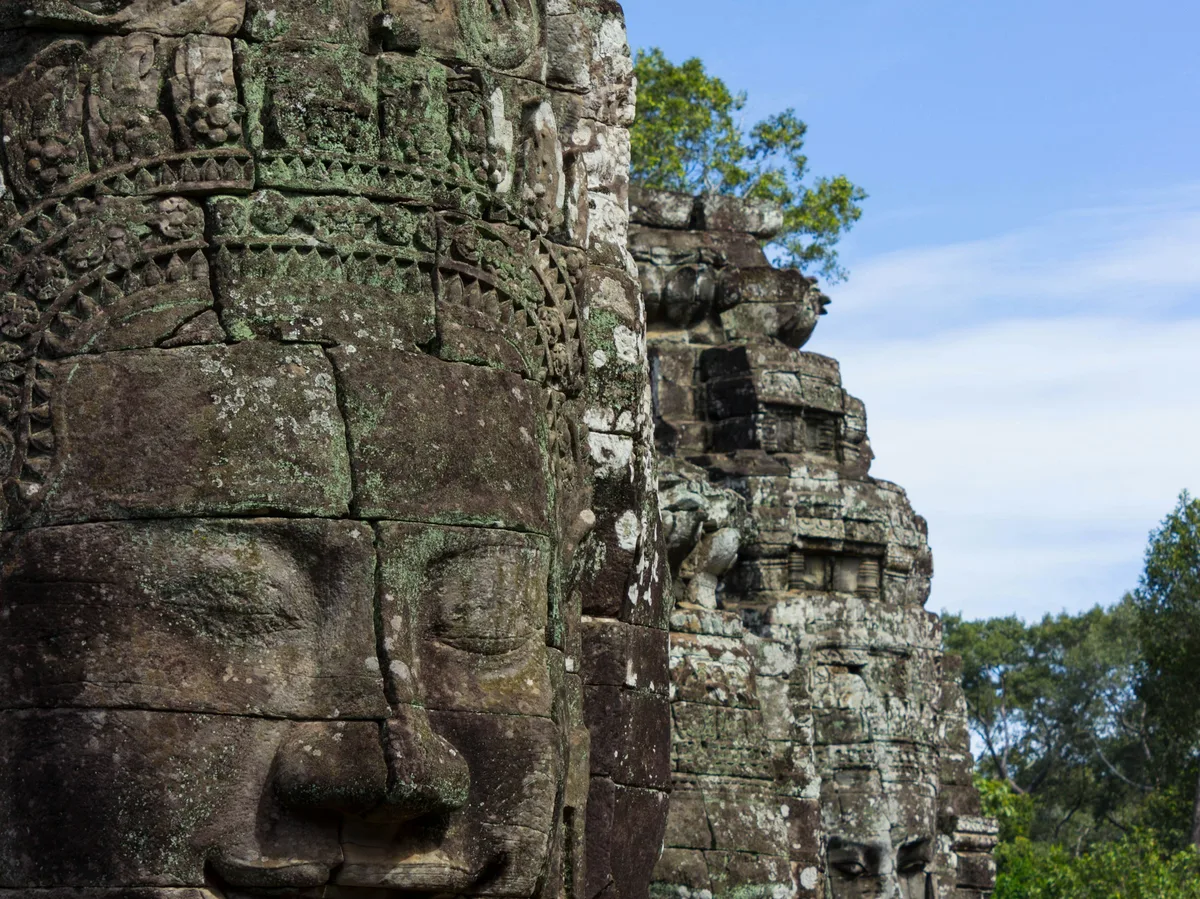
The last great capital of the Khmer Empire, Angkor Thom is famed for the Bayon temple at its center, whose towers are carved with dozens of serene, giant stone faces.
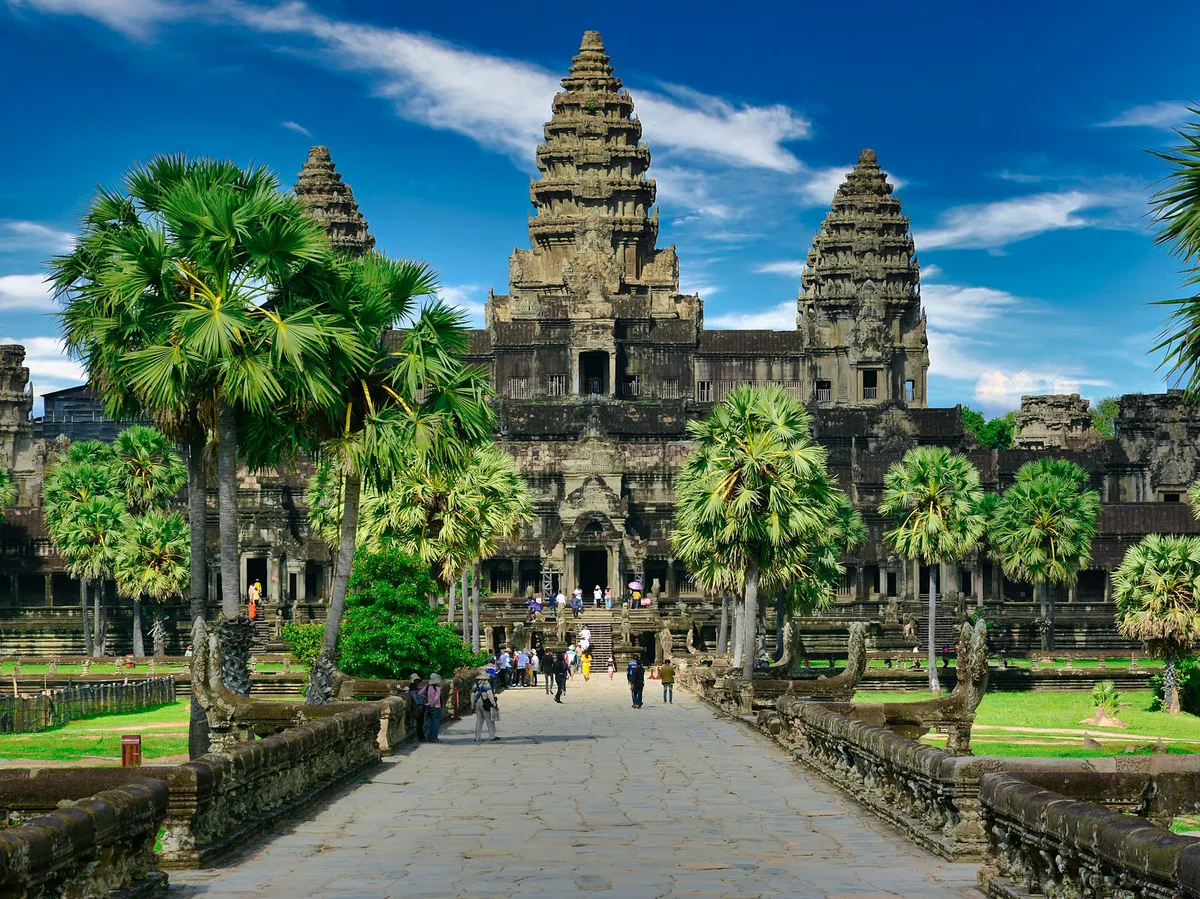 Multi-Day Tours Popular Pick
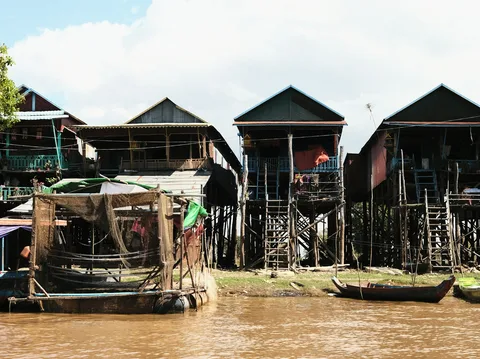
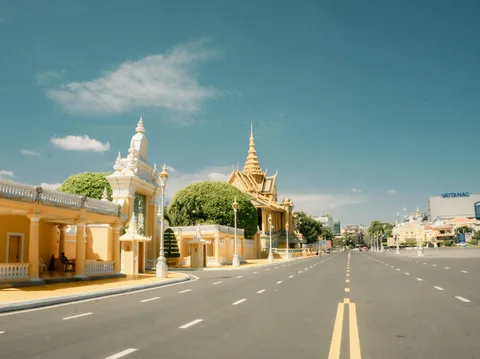
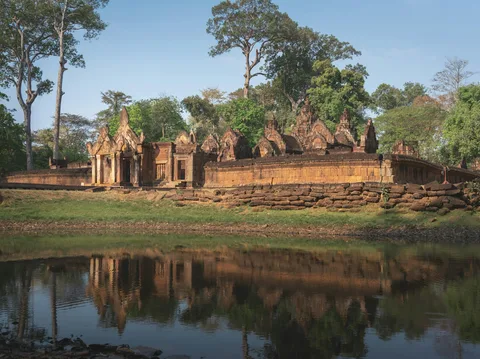
A 9-day journey through Cambodia's ancient Angkor temples, the floating villages of Tonlé Sap, Phnom Penh's history, and a restful finish on the Sihanoukville coast.
 Multi-Day Tours
A grand 23-day sweep across four countries — Thailand, Laos, Cambodia, and Vietnam — pairing Angkor Wat and Phnom Penh with Bangkok, Luang Prabang, Ho Chi Minh City, and Ha Long Bay.
 Multi-Day Tours
A 9-day pairing of Cambodia's Angkor temples and Tonlé Sap floating villages with Laos's Luang Prabang, its waterfalls, and a Mekong-tributary kayaking route.
Visitor guide
Angkor Thom is a walled royal city in Siem Reap Province, Cambodia, founded in the late 12th century by King Jayavarman VII as the last and most enduring capital of the Khmer Empire. At its centre stands the Bayon, a Buddhist state temple whose towers are carved with serene, enormous stone faces.
Angkor Thom covers about 9 square kilometres and was the centre of Jayavarman VII's large building programme. An inscription found in the city describes the king as the groom and the city as his bride. The site overlaps an earlier capital, Yasodharapura, dating from roughly three centuries before, and older structures such as the Baphuon and Phimeanakas stand within its walls.
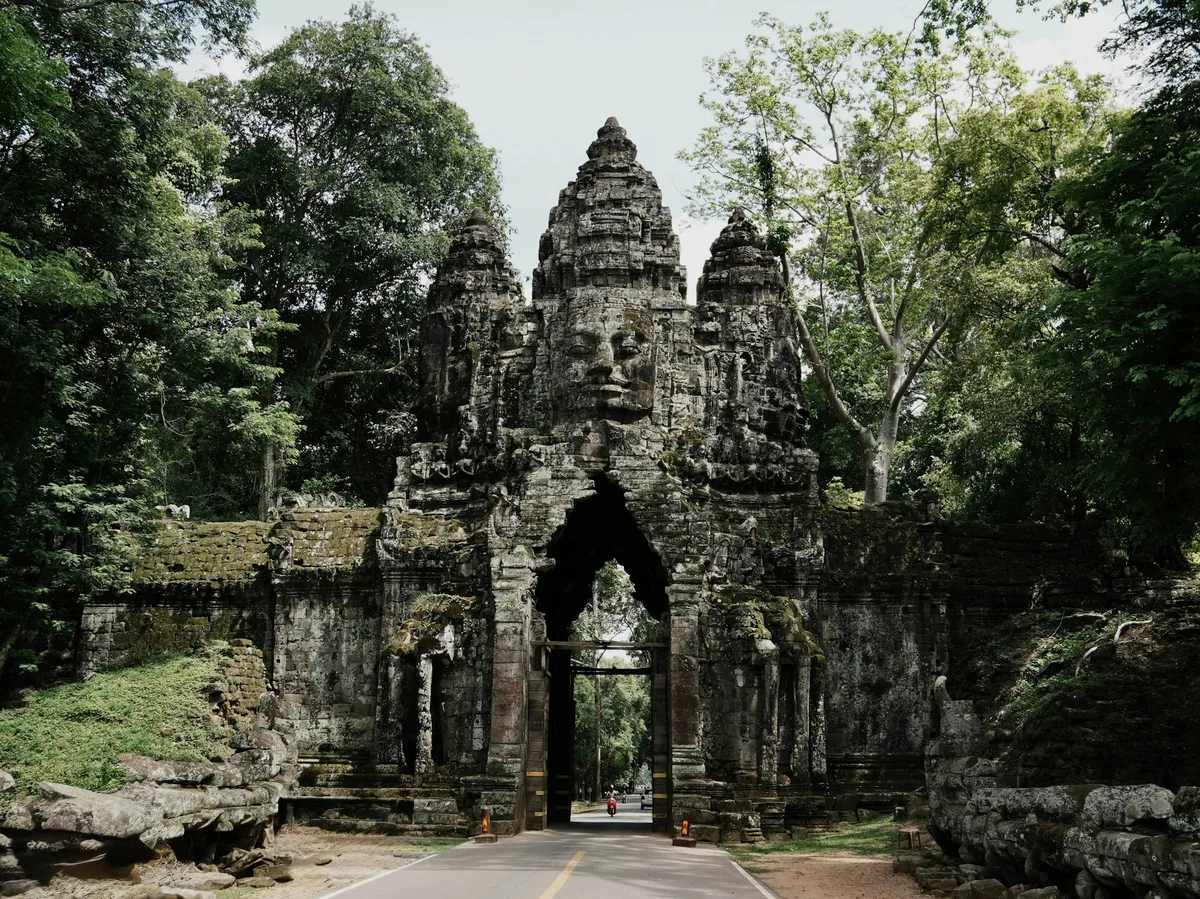
Walls about 8 metres high, flanked by a moat, form a square with sides of about 3 kilometres. Gates stand at each cardinal point, with roads leading to the Bayon, and the gate towers rise about 23 metres and carry faces resembling those of the Bayon. Their meaning is uncertain: they may depict the king, the bodhisattva Avalokiteshvara, or guardians of the four directions. Causeways over the moat are lined with figures of gods and demons holding a naga serpent in a tug-of-war, probably a reference to the Churning of the Sea of Milk. Archaeologists read the walls and moat as the mountains and oceans surrounding the mythical Mount Meru.
The Bayon was built in the late 12th or early 13th century as Jayavarman VII's state temple, and its original name was Jayagiri, or Victory Mountain. It was the last state temple built at Angkor and the only one built primarily for Buddhist deities. The temple was conceived around Avalokiteshvara, the bodhisattva of compassion, and the faces on its towers are widely read as portraits of the king linked to that deity.
At its peak the temple had 49 towers, of which 37 remain. The upper terrace holds face towers carrying two, three or most commonly four faces, and Wikipedia gives a total of about 200 faces, noting that an exact count is impossible because some are only partly preserved. The temple has no wall or moat of its own, relying on those of the city.
The outer gallery of the Bayon carries bas-reliefs showing historical events and everyday scenes, among them a Khmer army alongside Chinese soldiers, a naval battle against Cham forces on the Tonle Sap lake, markets, cockfights and a royal procession. Because the reliefs have no accompanying inscriptions, identifications remain uncertain. The inner gallery, added under Jayavarman VIII, draws on Hindu mythology, including apsaras, Garuda and the Churning of the Sea of Milk.
Around Victory Square, just north of the Bayon, stand further monuments including the Terrace of the Elephants and the Terrace of the Leper King. The Baphuon, a former state temple, and Phimeanakas, which was incorporated into the Royal Palace, belong to the earlier city. Corner shrines of sandstone dedicated to Avalokiteshvara stand at each corner of the walled enclosure.
The Ayutthaya Kingdom sacked Angkor Thom, after which the Khmers under Ponhea Yat moved their capital southeast toward Phnom Penh. The city was abandoned before 1609, and it is estimated to have supported between 80,000 and 150,000 people at its height. In the early 20th century the Ecole francaise d'Extreme-Orient restored the Bayon by anastylosis, and since 1995 a Japanese government team has been the main conservation body there. Angkor Thom lies within the Angkor World Heritage area inscribed in 1992.
See every tour and attraction we cover in Cambodia.