TorontoOntario · 36 tours
 Niagara FallsOntario · 25 tours
 New York CityNew York · 30 tours
 Las VegasNevada · 8 tours
 San FranciscoCalifornia · 16 tours
 VancouverBritish Columbia · 17 tours
 DubaiUAE · 54 tours
 Abu DhabiUAE · 5 tours
 Buenos AiresArgentina · 23 tours
 AthensGreece · 31 tours
 AucklandNew Zealand · 38 tours
 CancunMexico · 54 tours
No destinations match “”. Try searching all tours instead — that search understands full questions, not just place names.
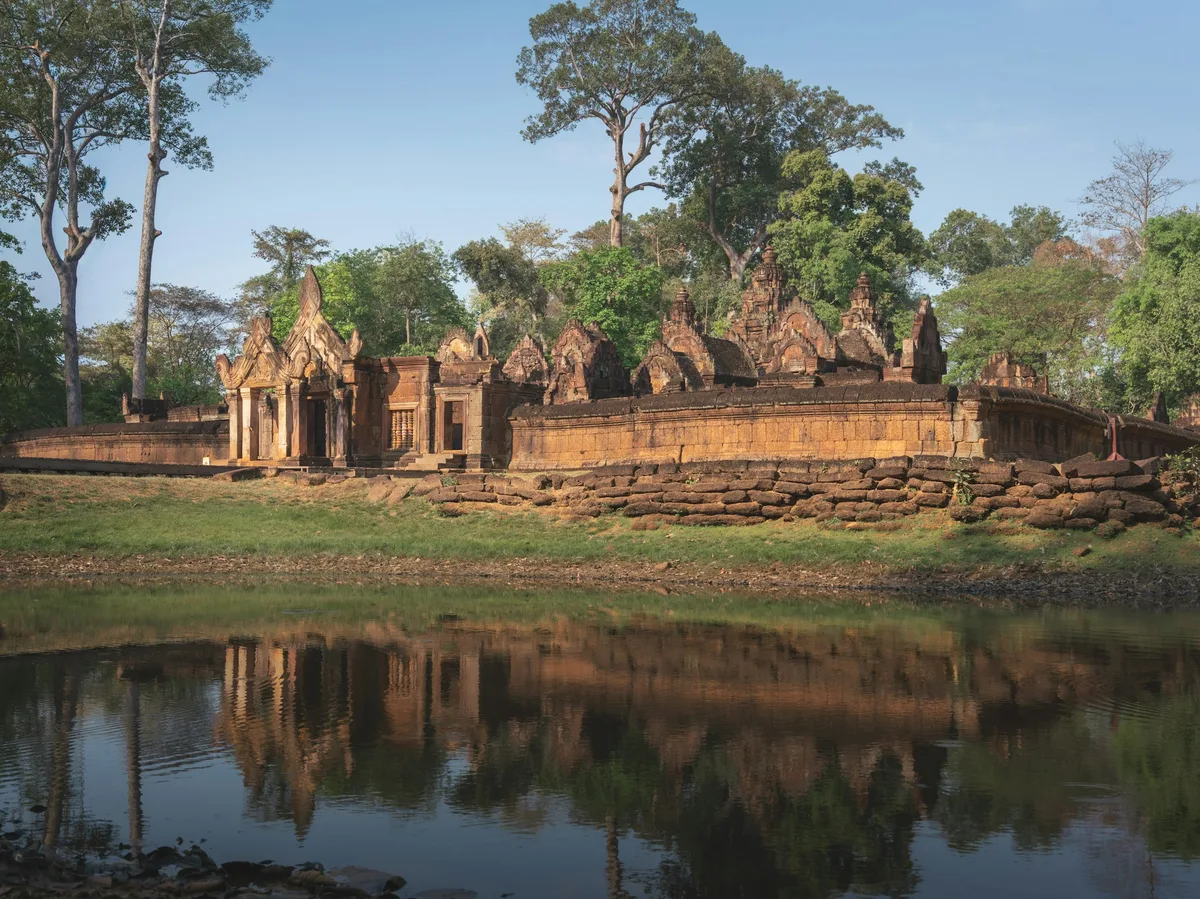
A 10th-century temple dedicated to the Hindu god Shiva, built from pink sandstone and celebrated for some of the most intricate, well-preserved carvings of the entire Angkor era.
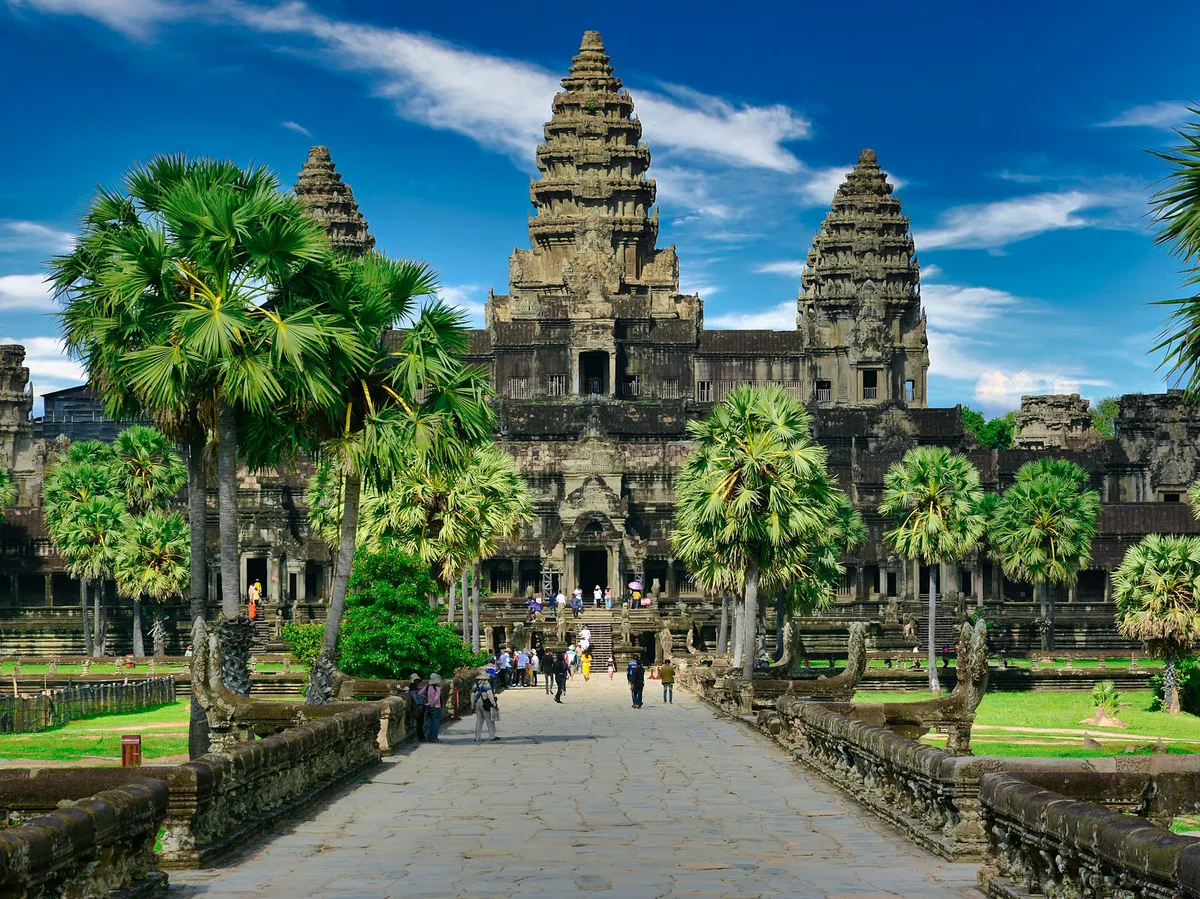 Multi-Day Tours Popular Pick
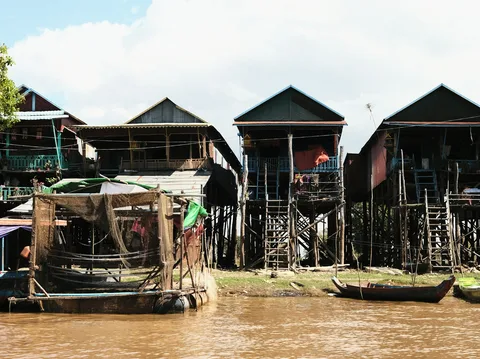
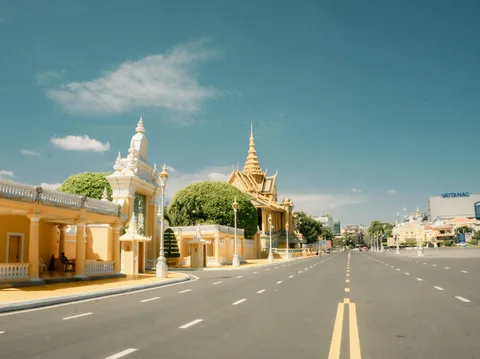
A 9-day journey through Cambodia's ancient Angkor temples, the floating villages of Tonlé Sap, Phnom Penh's history, and a restful finish on the Sihanoukville coast.
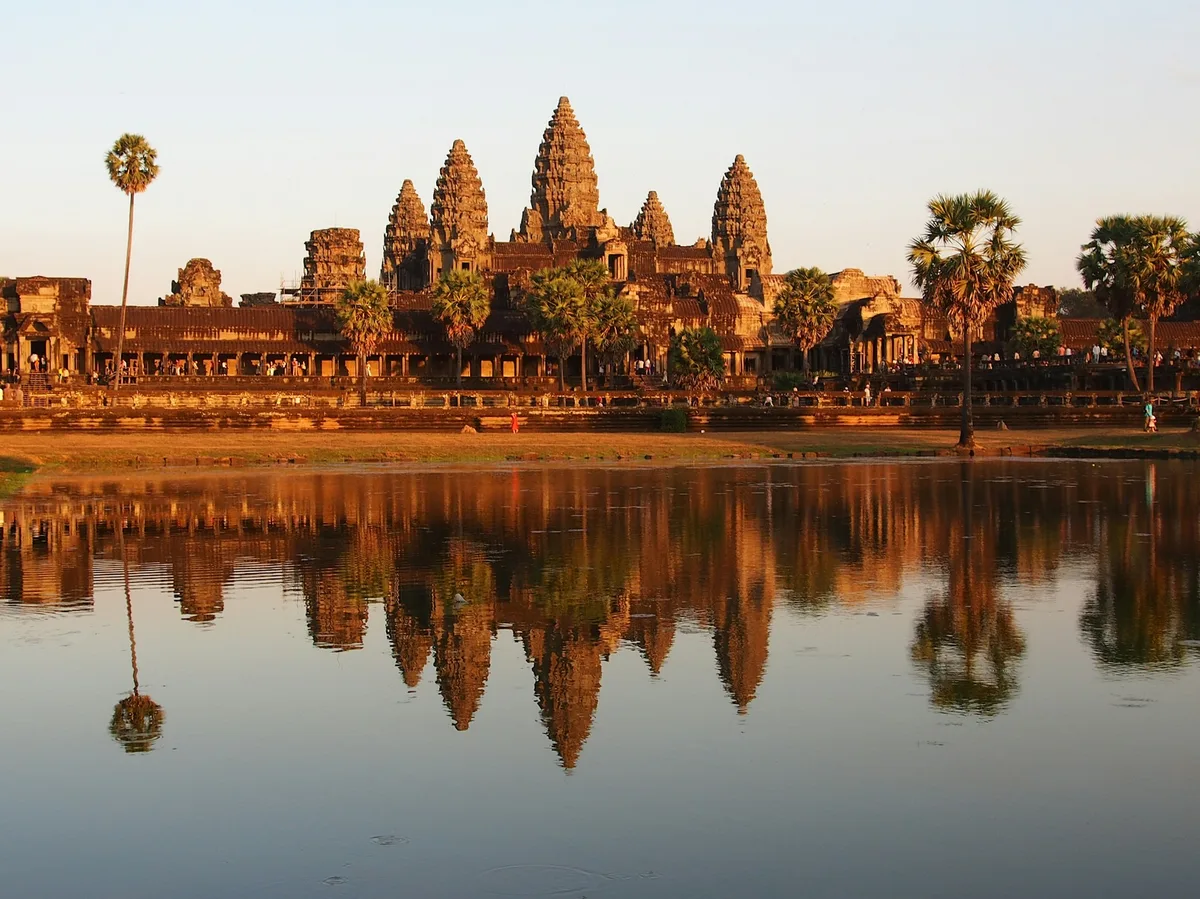 Multi-Day Tours
A 12-day route from the temples of Angkor and the history of Phnom Penh into Laos, taking in Vientiane, Vang Vieng, and UNESCO-listed Luang Prabang.
Visitor guide
Banteay Srei is a 10th-century Khmer temple near Angkor in Siem Reap Province, Cambodia, dedicated to the Hindu gods Shiva and Parvati. Built largely of red sandstone, it is famous for the depth and delicacy of its carvings, which are among the finest in Khmer architecture.
Banteay Srei was consecrated on 22 April 967 CE. Its original name, Tribhuvanamaheshvara, roughly means Great Lord of the Threefold World, an epithet of Shiva. The modern name is often translated as Citadel of Women, likely a reference to the delicate carvings and the many devatas, female divinities, on its walls. Unlike the other major Angkor temples, it was not built by a ruler. Wikipedia credits the courtiers Vishnukumara and Yajnavaraha, counsellors to King Rajendravarman II. The foundation stela describes Yajnavaraha as a scholar and philanthropist, and his pupil was the future King Jayavarman V. The temple was originally surrounded by a town called Ishvarapura.
The temple is built mainly of hard red sandstone, which can be carved almost like wood. Brick and laterite were used only for the enclosure walls and some structural parts. The pediments are large and gabled and, for the first time in Khmer architecture, depict whole mythological scenes. Kala masks, door guardians, devatas, false doors and slender colonettes cover nearly every surface. The scholar Maurice Glaize compared the work more to goldsmithing and woodcarving than to stone sculpture. Depending on the light, the stone can look pink, which is why many visitors know it as the pink temple.
The site has three concentric rectangular enclosures arranged along an east-west axis. A causeway about 67 metres long runs from the outer gateway, the only surviving remnant of the wall around Ishvarapura, to the outermost enclosure. The innermost enclosure holds two libraries and the sanctuary, which has a small entrance hall and three towers. The central tower is the tallest at about 9.8 metres, so the temple is small in scale compared with Angkor Wat. Buildings south of the central axis are devoted to Shiva, while those to the north are associated with Vishnu.
The temple was rediscovered in 1914. In 1923 the writer Andre Malraux removed four devatas from the walls; he was arrested soon afterward and the figures were returned, an incident that drew attention to the site. In the 1930s Banteay Srei became the first major Angkor site restored through anastylosis, a method that rebuilds a ruin from its original fallen pieces. Earlier scholars had assumed the heavy decoration meant a later date, but the foundation stela, found in 1936, showed otherwise. A joint Cambodian and Swiss project between 2000 and 2003 installed drainage to protect the structure from water damage.
Banteay Srei lies a short distance northeast of the main Angkor group and is often combined with other outlying sites such as Kbal Spean and Phnom Kulen. Its small scale and close detail make it a site best appreciated slowly, and a private guide can point out the details in the lintels and pediments.
See every tour and attraction we cover in Cambodia.