TorontoOntario · 36 tours
 Niagara FallsOntario · 25 tours
 New York CityNew York · 30 tours
 Las VegasNevada · 8 tours
 San FranciscoCalifornia · 16 tours
 VancouverBritish Columbia · 17 tours
 DubaiUAE · 54 tours
 Abu DhabiUAE · 5 tours
 Buenos AiresArgentina · 23 tours
 AthensGreece · 31 tours
 AucklandNew Zealand · 38 tours
 CancunMexico · 54 tours
No destinations match “”. Try searching all tours instead — that search understands full questions, not just place names.
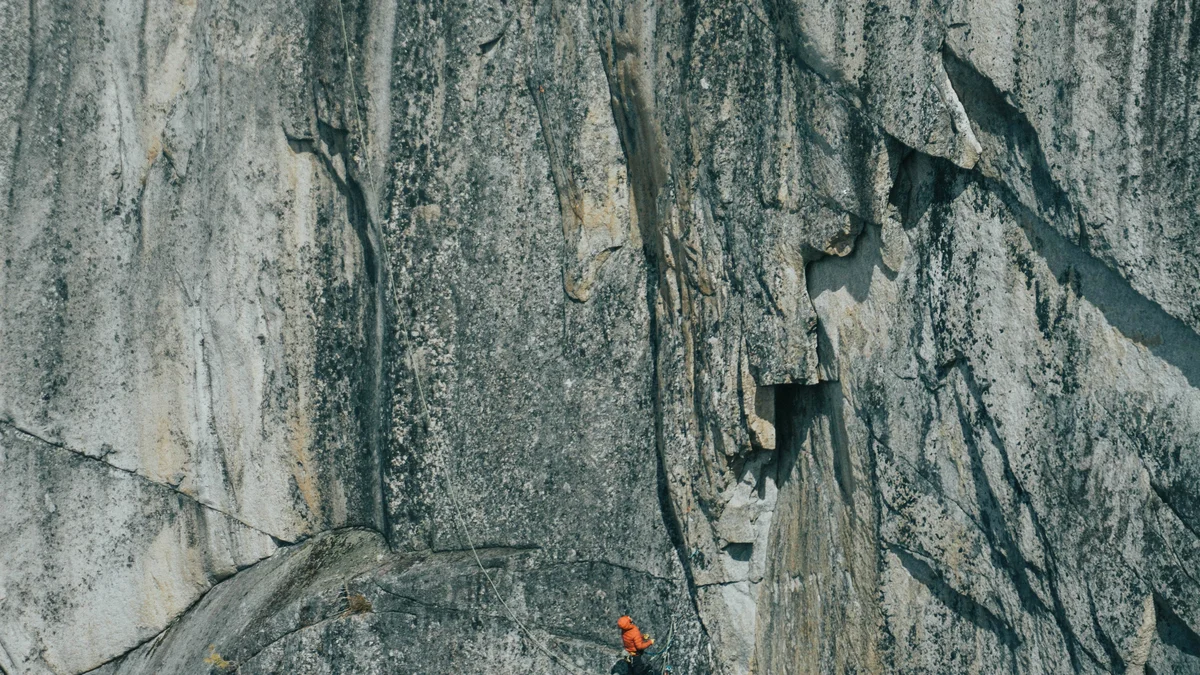
Home to the Stawamus Chief, one of the largest granite monoliths in the world and a magnet for rock climbers from around the globe. Hiking trails to its summit reward visitors with panoramic views over Howe Sound and downtown Squamish.
Visitor guide
The Stawamus Chief is a massive granite dome rising beside Howe Sound at the southern entrance to Squamish, British Columbia. Its highest summit reaches 702 metres (2,303 feet), and it is described as one of the largest granite monoliths in the world and a world-class climbing destination. The surrounding Stawamus Chief Provincial Park, created in 1997, protects about 530 hectares.
The Chief is part of a medium-sized pluton of granodiorite that formed roughly 100 million years ago in the Cretaceous (Wikipedia is inconsistent on whether that is early or late Cretaceous). Glacial ice later carved the steep walls, and polished, striated rock on the summit suggests the whole formation was once buried beneath thick ice. The vertical gullies follow fractures in the rock. The comparison to Gibraltar as the second-largest granite monolith is widely repeated but not firmly established, so treat it as a popular claim.
The mountain takes its English name from the nearby Squamish village of Stawamus. In Squamish tradition, as retold in sources like Wikipedia, the Chief is a longhouse turned to stone by the Transformer Brothers (Xáays), and the great cleft is a mark left by a two-headed sea serpent. These are traditional stories rather than geological explanations.
Climbers have used the Chief since the mid-twentieth century. The Grand Wall was first climbed in 1961 by Ed Cooper and Jim Baldwin, and Peter Croft became known in the late 1970s for bold free routes. In 2006 Sonnie Trotter established Cobra Crack, rated 5.14b and considered at the time among the hardest traditional routes in North America. Routes range across traditional, sport, aid and bouldering. The Dihedral Wall and Tantalus Wall are nesting areas for peregrine falcons; BC Parks notes closures and asks visitors to keep their distance, and climbing restrictions generally run from mid-March to the end of July.
Three trails climb the back side to the summits, which are First Peak (610 metres), Second Peak (655 metres) and Third Peak (702 metres). BC Parks gives the trails as 1.5 kilometres with 540 metres of gain, 1.7 kilometres with 590 metres, and 1.8 kilometres with 630 metres respectively. They are steep, with chains and ladders in places, and there are no railings at the summits. BC Parks also warns that rockfall can occur at any time and that winter trails can be slippery. A 2009 pedestrian overpass built for the Olympic-era highway upgrades links the park to a parking lot. The Shannon Falls connection is about 1.5 kilometres from the Stawamus parking lot.
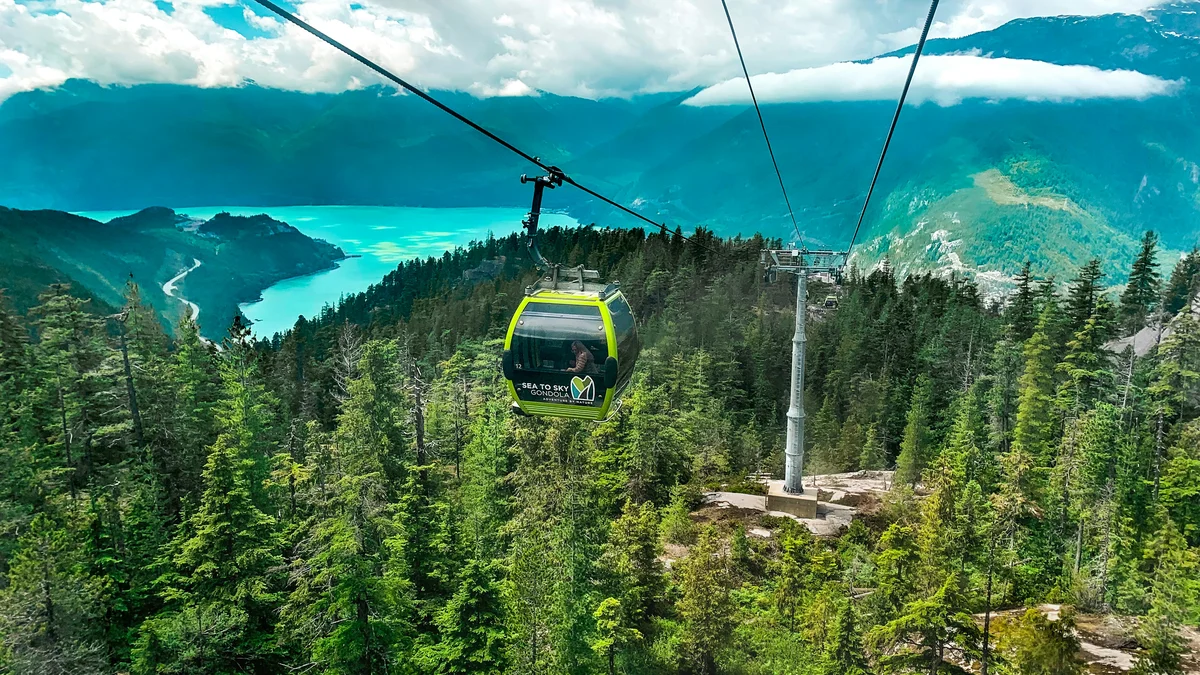
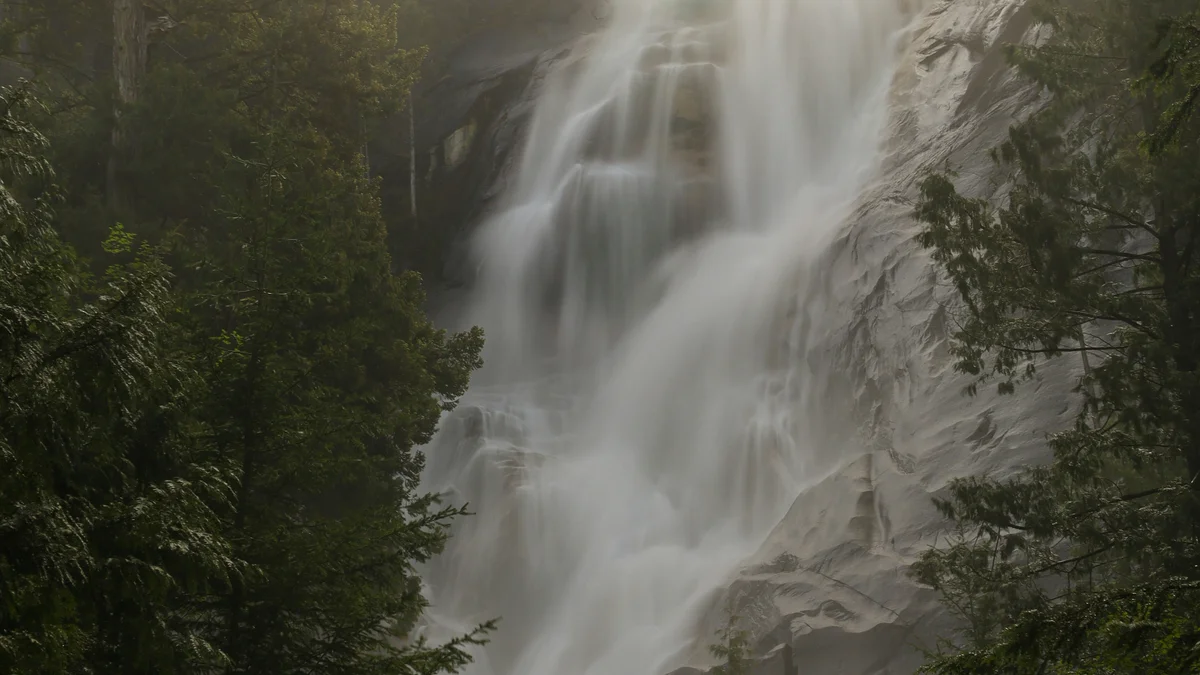
Shannon Falls, the Sea to Sky Gondola and downtown Squamish are all within a few minutes, and Garibaldi Provincial Park lies to the north. A private tour with Voyzo, with a private vehicle and driver and door-to-door pickup, lets you plan a viewpoint stop here alongside the falls and gondola without worrying about parking.
See every tour and attraction we cover in Squamish.