TorontoOntario · 36 tours
 Niagara FallsOntario · 25 tours
 New York CityNew York · 30 tours
 Las VegasNevada · 8 tours
 San FranciscoCalifornia · 16 tours
 VancouverBritish Columbia · 17 tours
 DubaiUAE · 54 tours
 Abu DhabiUAE · 5 tours
 Buenos AiresArgentina · 23 tours
 AthensGreece · 31 tours
 AucklandNew Zealand · 38 tours
 CancunMexico · 54 tours
No destinations match “”. Try searching all tours instead — that search understands full questions, not just place names.
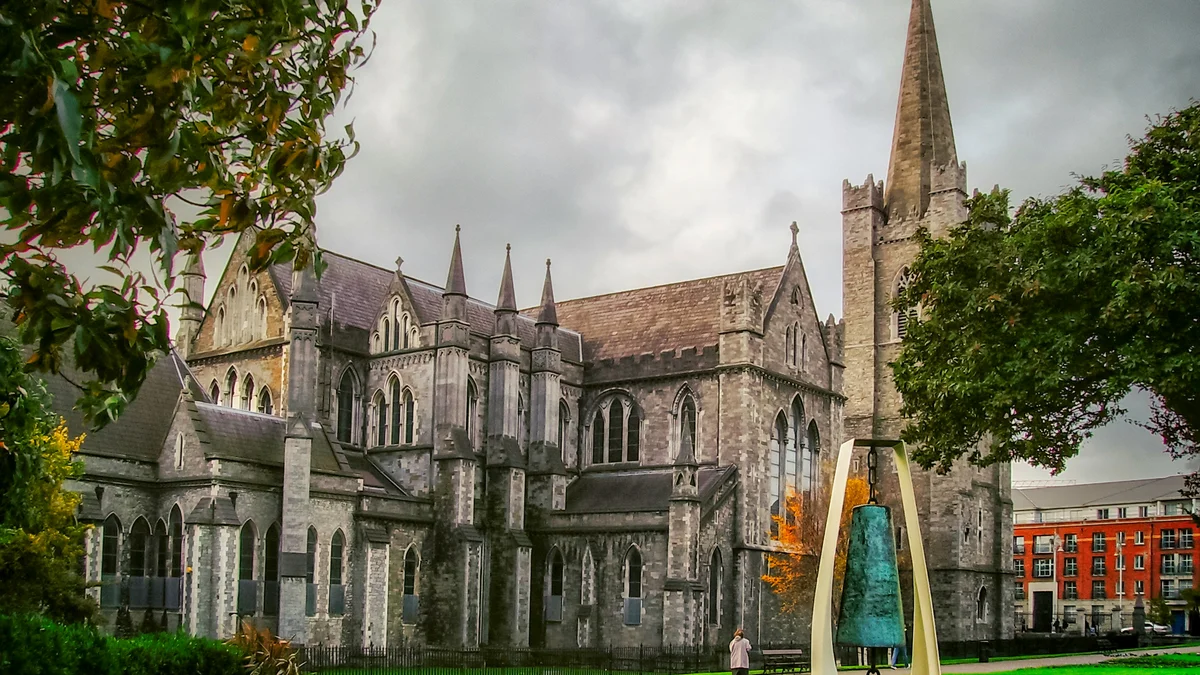
Ireland's largest cathedral, founded in 1191 beside the well where Saint Patrick is said to have baptized converts. Jonathan Swift, author of Gulliver's Travels, served as Dean here from 1713 to 1745 and is buried inside alongside his companion Esther Johnson.
Visitor guide
St Patrick's Cathedral in Dublin is the national cathedral of the Church of Ireland and the largest church in Ireland, according to Wikipedia. Founded beside a holy well in the Middle Ages, it is best known for its association with Jonathan Swift, who served as dean in the 18th century.
Archbishop John Comyn raised the existing parish church, dedicated to St Patrick, to collegiate status, and it was dedicated on 17 March 1191. A papal bull of Pope Celestine III confirmed the charter within a year, and the office of dean was created by a charter of Archbishop Henry de Loundres in 1220. Wikipedia states that the present building was constructed between 1191 and 1270, with rededication in 1254 and the Lady Chapel added around 1270. The church was founded beside a holy well of St Patrick, and a Celtic cross found nearby in the 19th century is thought to mark its site.
The cathedral is about 87 metres long internally and 49 metres across the transepts. Christ Church Cathedral, about 400 metres away, is the diocesan cathedral and seat of the Archbishop of Dublin, while St Patrick's has been the Church of Ireland's national cathedral since 1870.
Jonathan Swift was dean from 1713 to 1745 and gave many sermons there, including during the period of his Irish tracts such as the Drapier's Letters. He funded an almshouse for poor women and Saint Patrick's Hospital. His grave and epitaph lie in the cathedral beside those of his companion Esther Johnson, known as Stella.
Benjamin Guinness financed a major reconstruction from 1860 to 1865 after fears that the building might collapse, and much of the current decoration dates from this period. A bronze statue of Sir Benjamin Lee Guinness by John Henry Foley, erected in 1875, stands outside the south door. George Semple added the spire in 1749.
The Choir School was founded in 1432, and its boys supplied singers for the first performance of Handel's Messiah in 1742. A Cathedral Girls' Choir was founded in 2000. The organ has over 4,000 pipes and includes parts from a 1695 instrument by Renatus Harris.
Over the centuries the building has seen repeated change. Wikipedia notes that few records of the Victorian work survive and that medieval chantries were removed during it, so the interior seen today is largely a 19th-century presentation of a medieval church. The cathedral's chapter draws members from the Church of Ireland's twelve dioceses, which reflects its national role, and the Wheatly Tomb is among the notable monuments inside.
From 1783 to 1871 the cathedral served as the chapel of the Order of St Patrick. After the Church of Ireland was disestablished in 1871, installation ceremonies moved to St Patrick's Hall at Dublin Castle, but the knights' heraldic banners from that era still hang above the choir stalls. More than 500 people are buried on the site, including archbishops and judges. A private guided visit can pair the cathedral with Dublin Castle and Christ Church.
See every tour and attraction we cover in Dublin.