TorontoOntario · 36 tours
 Niagara FallsOntario · 25 tours
 New York CityNew York · 30 tours
 Las VegasNevada · 8 tours
 San FranciscoCalifornia · 16 tours
 VancouverBritish Columbia · 17 tours
 DubaiUAE · 54 tours
 Abu DhabiUAE · 5 tours
 Buenos AiresArgentina · 23 tours
 AthensGreece · 31 tours
 AucklandNew Zealand · 38 tours
 CancunMexico · 54 tours
No destinations match “”. Try searching all tours instead — that search understands full questions, not just place names.
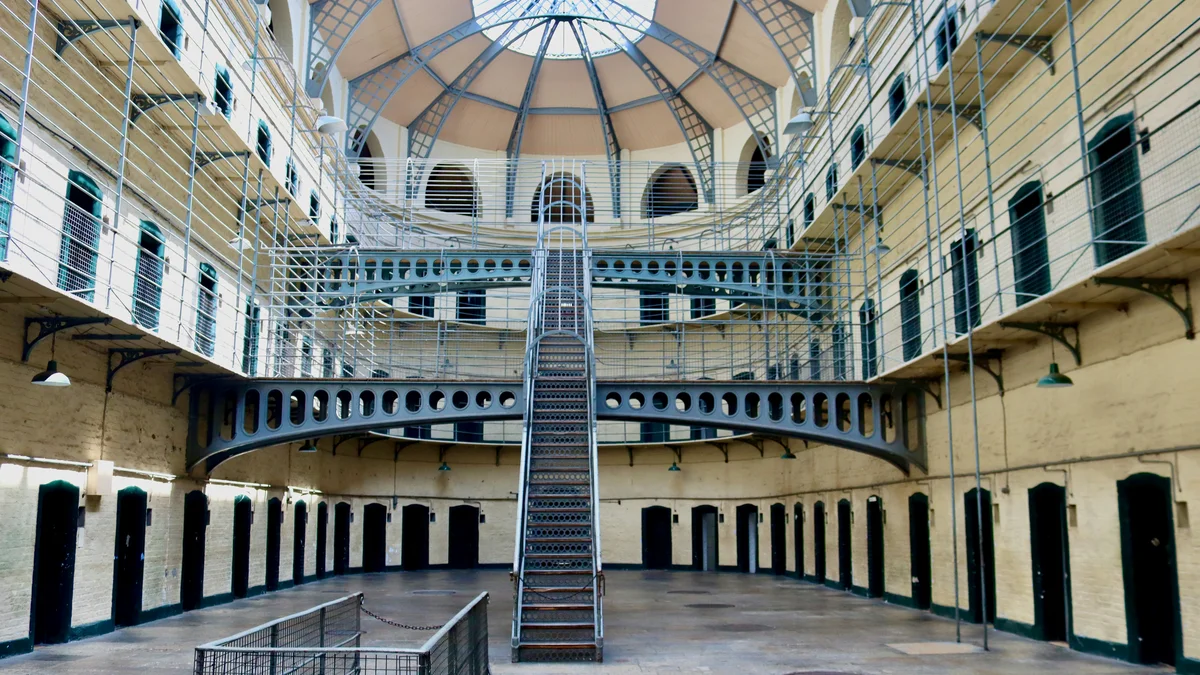
A decommissioned prison dating to 1796 where many leaders of Irish rebellions were held, including the leaders of the 1916 Easter Rising, most of whom were executed in its Stonebreakers' Yard. Now a museum run by the Office of Public Works, it is one of the most visited sites connected to the story of Irish independence.
Visitor guide
Kilmainham Gaol is a former prison in the Kilmainham district of Dublin, Ireland, now a museum run by the Office of Public Works. Built in 1796, it held many figures of Irish nationalist history and is best known as the place where leaders of the 1916 Easter Rising were executed.
According to Wikipedia, Kilmainham Gaol was built in 1796 and first called the New Gaol to distinguish it from an older prison nearby that it replaced. Its official name was the County of Dublin Gaol, and the Grand Jury for County Dublin originally ran it. Public hangings were originally held at the front of the prison, but few executions took place there after the 1820s, and a small hanging cell was added in 1891.
Conditions were harsh. Prisoners were not segregated by sex or age, up to five people shared a cell lit by a single candle, and children were sometimes arrested for petty theft. Many adult prisoners were transported to Australia. Thirty female cells were added in 1840, but overcrowding returned, and the Great Famine later overwhelmed the prison.
Prisoners included Henry Joy McCracken and Oliver Bond from 1796 to 1798, Robert Emmet and Anne Devlin in 1803, and later William Smith O'Brien, Thomas Francis Meagher and Jeremiah O'Donovan Rossa. Charles Stewart Parnell was held in 1881 to 1882 with most of his parliamentary colleagues and signed the Kilmainham Treaty with William Gladstone during this time. After the Easter Rising of 1916, leaders including Patrick Pearse, Thomas Clarke, Sean Mac Diarmada, Joseph Plunkett, Eamonn Ceannt and Thomas MacDonagh were held and executed in the prison on the orders of the UK Government, and James Connolly was executed there but not held there. A statue across the road commemorates the 14 leaders executed.
The first four Republican prisoners executed by the Free State during the Civil War were shot in the prison yard. During the 1923 hunger strikes, 97 women at Kilmainham refused food in March, and the strike ended later that month when privileges were restored. The Irish Free State decommissioned the prison in 1924. It was seen mainly as a place of oppression, and there was little interest in preserving it.
Plans to reopen it were abandoned in 1929 and a 1936 demolition proposal was dropped because of cost. The Kilmainham Gaol Restoration Society, founded in 1958 by the engineer Lorcan Leonard and a small group of nationalists, proposed restoring the prison using volunteer labour and donated materials. In May 1960 the keys were handed to a board of trustees for a nominal rent of one penny a year, about 60 volunteers began clearing the site, and the gaol opened to the public on 10 April 1966.
The gaol has been used in films including In the Name of the Father and Michael Collins. It offers guided tours, and the neighbouring former courthouse reopened in 2015 as its visitor centre. Since the site has a strong historical focus, a private guided visit pairs well with it, though entry arrangements should be checked in advance.
See every tour and attraction we cover in Dublin.