TorontoOntario · 36 tours
 Niagara FallsOntario · 25 tours
 New York CityNew York · 30 tours
 Las VegasNevada · 8 tours
 San FranciscoCalifornia · 16 tours
 VancouverBritish Columbia · 17 tours
 DubaiUAE · 54 tours
 Abu DhabiUAE · 5 tours
 Buenos AiresArgentina · 23 tours
 AthensGreece · 31 tours
 AucklandNew Zealand · 38 tours
 CancunMexico · 54 tours
No destinations match “”. Try searching all tours instead — that search understands full questions, not just place names.
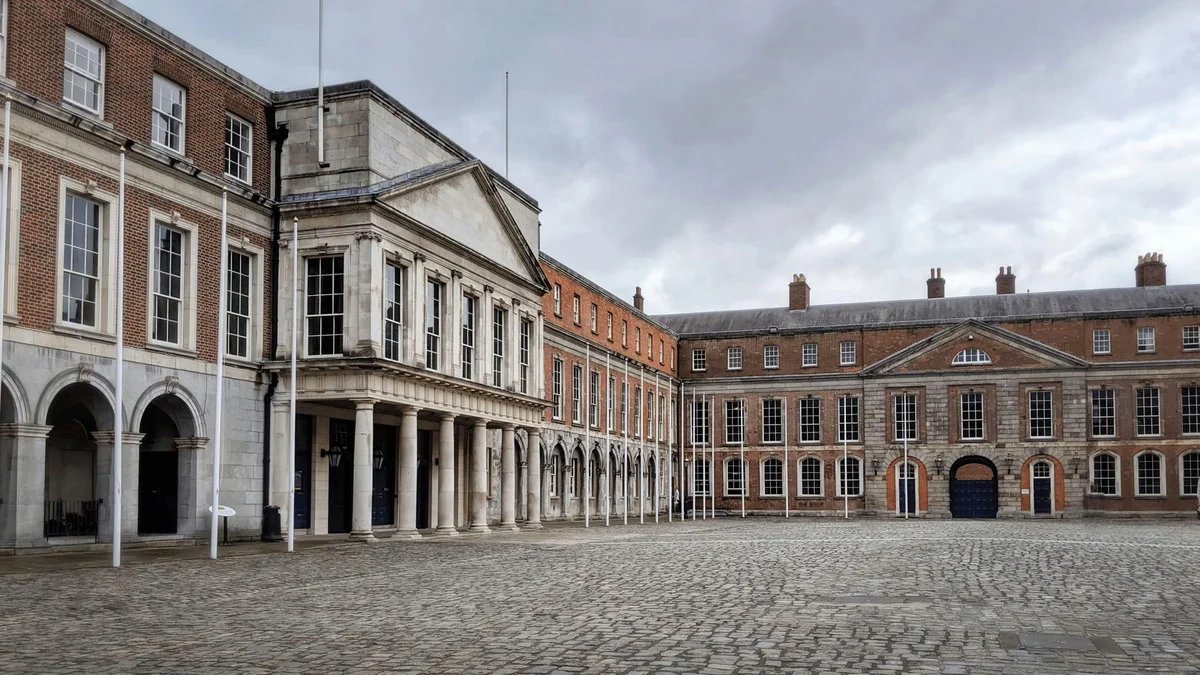
The seat of British rule in Ireland for more than 700 years, built from 1204 on the orders of King John. Today it hosts Irish state occasions, including presidential inaugurations, and visitors can tour the State Apartments and the excavated Viking and medieval foundations beneath the Castle grounds.
Visitor guide
Dublin Castle is a complex of historic buildings in central Dublin, Ireland, built on the site of a medieval fortress and for centuries the seat of English and British administration in Ireland. Today it is used for state occasions and houses museums and a library.
According to Wikipedia, the castle was built beside the Dubh Linn, Irish for dark pool, which gave Dublin its name. The pool lay on the lower course of the River Poddle just before it met the Liffey, and the former pool site is now a garden. Meiler Fitzhenry founded the castle in 1204 on the orders of King John of England as a defensive work to defend the city, administer justice and protect the Crown's treasure. By about 1230 it had a typical Norman courtyard layout with no keep, high walls and a circular tower at each corner. Surviving Viking-era defences lie beneath part of the complex.
The Record Tower, dating from about 1228, is the only surviving tower of the medieval castle above ground, and the Bermingham Tower's base is another original element. A seventeenth-century Earl of Arran famously called the castle the worst castle in the worst situation in Christendom.
A fire in 1684 caused severe damage, and extensive rebuilding turned the medieval fortress into a Georgian palace, with most buildings dating from the 18th century. The State Apartments were the residence of the Lord Lieutenant and the setting for the winter Castle Season. St Patrick's Hall dates from the 1740s, and its ceiling, painted around 1790 by Vincenzo Valdre, is considered among Ireland's most significant. The Throne Room contains a throne built for King George IV's 1821 visit, and the Chapel Royal next to the Record Tower features a carved head of St Patrick.
At the start of the Easter Rising in 1916, about 25 Irish Citizen Army members seized the castle's entrance and guard room. After the Anglo-Irish Treaty of December 1921 the castle was ceremonially handed to the Provisional Government led by Michael Collins, and in 1922 it temporarily housed the courts of the new Irish Free State. Douglas Hyde was inaugurated as the first President of Ireland at the castle in 1938, and every presidential inauguration since has taken place there.
The Chester Beatty Library occupies a purpose-built facility within the grounds, and the Garda Museum is in the Treasury Building. The Revenue Museum is also on site, and the Dubhlinn Gardens occupy the former dark pool. The castle hosts state banquets, official visits and conferences, and it has served as the base for Ireland's European Union presidencies.
Because parts of the complex are used for official functions, access to some rooms varies, so it is worth checking in advance. A private guided visit can pair the castle with nearby sights such as Christ Church and Trinity College.
See every tour and attraction we cover in Dublin.