TorontoOntario · 36 tours
 Niagara FallsOntario · 25 tours
 New York CityNew York · 30 tours
 Las VegasNevada · 8 tours
 San FranciscoCalifornia · 16 tours
 VancouverBritish Columbia · 17 tours
 DubaiUAE · 54 tours
 Abu DhabiUAE · 5 tours
 Buenos AiresArgentina · 23 tours
 AthensGreece · 31 tours
 AucklandNew Zealand · 38 tours
 CancunMexico · 54 tours
No destinations match “”. Try searching all tours instead — that search understands full questions, not just place names.
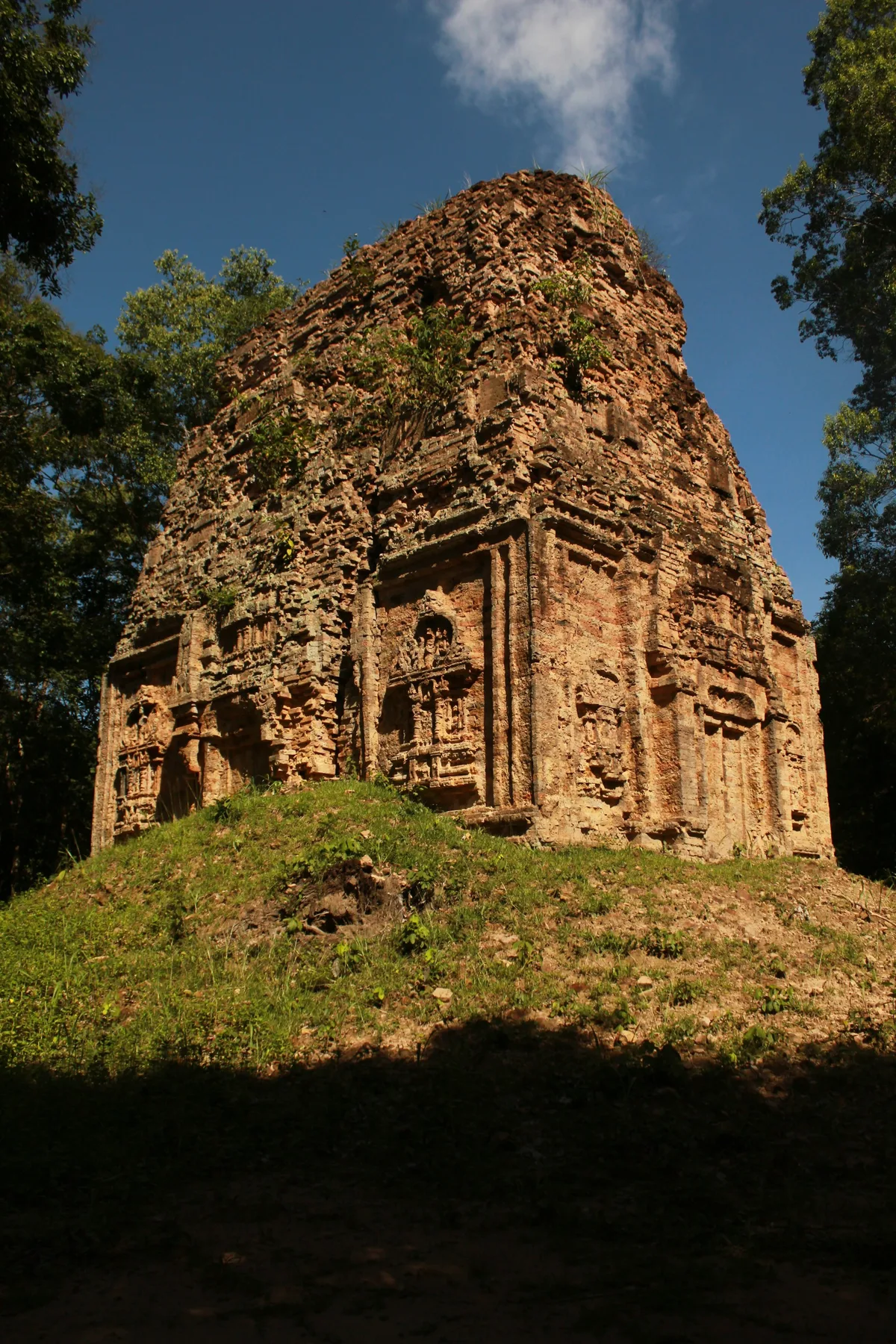
A UNESCO World Heritage site of pre-Angkorian brick temple towers dating to the 7th century, built as the capital of the Chenla Kingdom and set among quiet forest rather than the crowds of Angkor.
Visitor guide
Sambor Prei Kuk is an archaeological site in Kampong Thom Province, Cambodia, preserving the ruins of Isanapura, a capital of the pre-Angkorian Chenla kingdom. Its brick temple towers date mainly to the 7th century, and the site was inscribed as a UNESCO World Heritage Site in 2017.
Sambor Prei Kuk lies about 30 kilometres north of Kampong Thom city, roughly 176 kilometres east of Angkor and 206 kilometres north of Phnom Penh, in mature forest near the Stung Sen river. According to Wikipedia, the ruins date to the Chenla period, between the late 6th and 9th centuries, when it served as a royal sanctuary and capital. King Isanavarman I, who reigned from about 616 to 637, made Isanapura his capital and is credited with building the northern and southern groups. An inscription dated 13 September 627 supports his link to Prasat Sambor. He also sent an embassy to Sui China in 616 or 617.
The central complex has three walled groups labelled North, South and Central, within a double-walled enclosure of about 1,000 acres that Wikipedia says once held around 150 Hindu temples, most now in ruins; UNESCO describes an ensemble of 186 brick temples. Prasat Sambor in the north group, dedicated to Shiva as Gambhireshvara, is considered the main temple. The south group, Prasat Yeay Poan, has 22 sanctuaries dated to roughly 600 to 635 and dedicated to Shiva. The central group, Prasat Tao, is known as the Lions' Temple for its lion sculptures and is the newest of the three, dating to the 9th century.
Brick is the principal material, although sandstone appears in some structures. The buildings have relatively simple external plans, and notable features include prasats, octagonal towers, lingas and yonis, ponds and reservoirs, and lion sculptures. The decoration includes the vyala, a lion-goat hybrid borrowed from Pallava buildings in southern India. Horses, winged lions and garuda also appear. A lion from Prasat Tao shares its curled mane style with a terracotta lion from Wat Phra Men in Nakhon Pathom, Thailand, suggesting cultural links across the region.
Jayavarman I was the last major king at Isanapura. His death at the start of the 8th century threw the kingdom into turmoil and split it into principalities, opening the way to Angkor. The site is also claimed as an early capital of Jayavarman II. Sambor Prei Kuk therefore offers a view of Khmer architecture before the great stone temples of Angkor, and it is considered an important forerunner of those later forms.
UNESCO added the site to the World Heritage List on 8 July 2017 as the Temple Zone of Sambor Prei Kuk, Archaeological Site of Ancient Isanapura. Bombing during the Cambodian conflict of the early 1970s left craters near some temples, and the land was mined, with clearance reported complete in 2008. Visitors should stay on marked paths, as Wikipedia notes the area may still contain unexploded ordnance. Compared with Angkor, the setting is quiet and forested, and a private guided visit gives the history of the Chenla kingdom that the ruins alone do not explain.
See every tour and attraction we cover in Cambodia.