TorontoOntario · 36 tours
 Niagara FallsOntario · 25 tours
 New York CityNew York · 30 tours
 Las VegasNevada · 8 tours
 San FranciscoCalifornia · 16 tours
 VancouverBritish Columbia · 17 tours
 DubaiUAE · 54 tours
 Abu DhabiUAE · 5 tours
 Buenos AiresArgentina · 23 tours
 AthensGreece · 31 tours
 AucklandNew Zealand · 38 tours
 CancunMexico · 54 tours
No destinations match “”. Try searching all tours instead — that search understands full questions, not just place names.
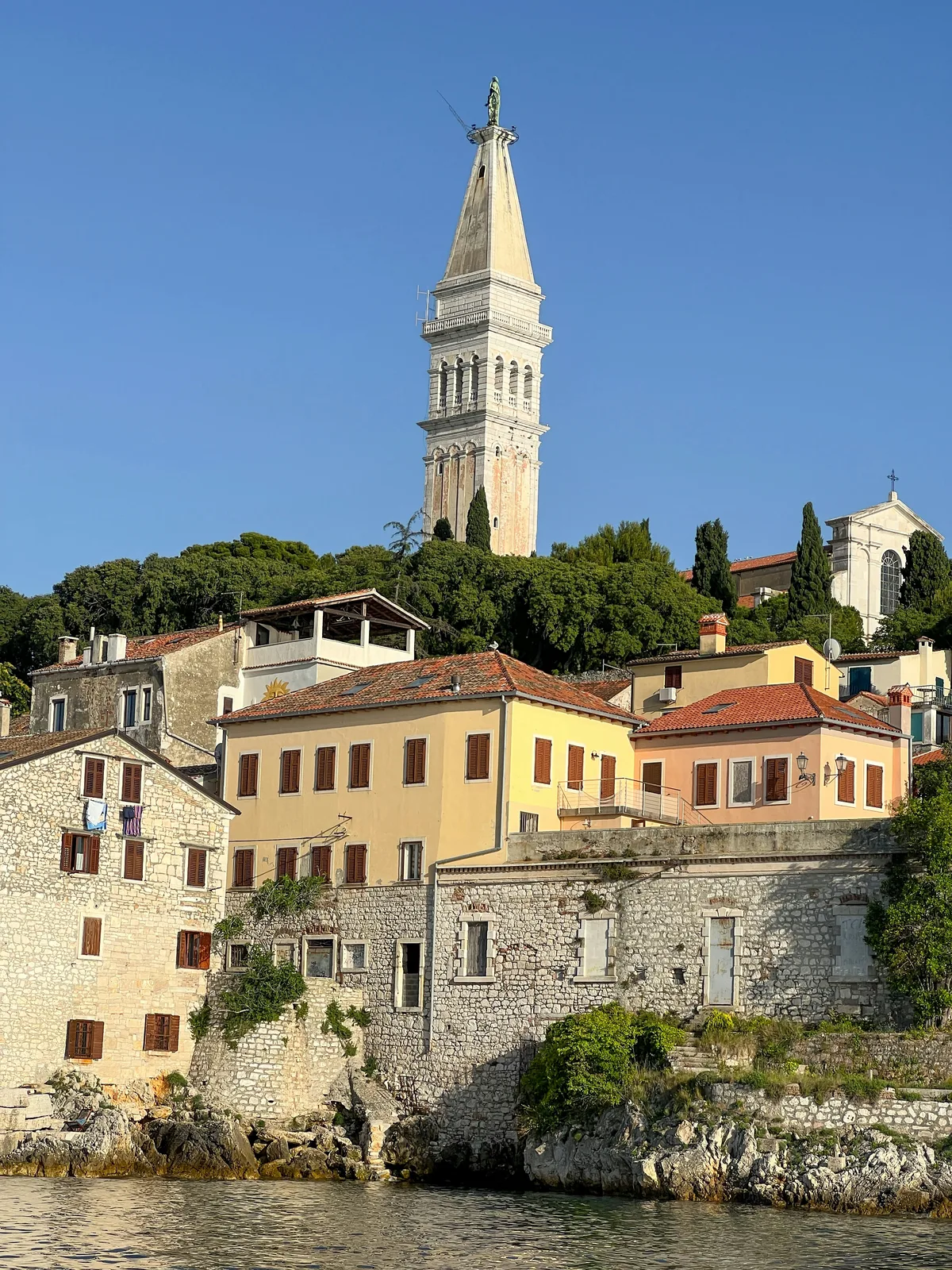
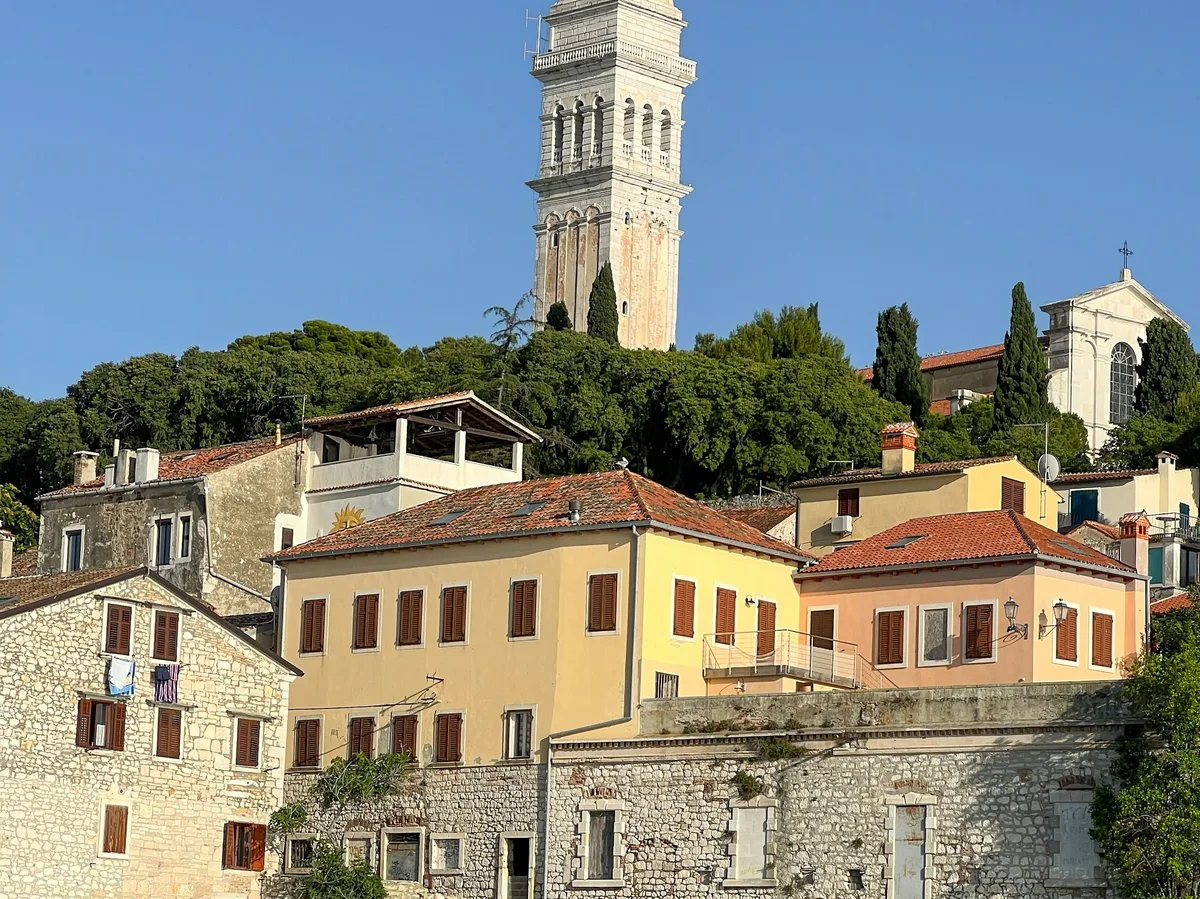
A former fishing town on Istria's coast, with pastel houses climbing toward a hilltop church, cobbled lanes, and a harbor that still keeps some of its working fishing fleet.
Visitor guide
Rovinj is a coastal town on the western side of the Istrian peninsula in Croatia, on the northern Adriatic. Pastel houses climb a former island toward the hilltop church of St Euphemia, and the town remains both a fishing port and one of Istria's main resort destinations.
Before Roman conquest the site was settled by Venetic or Illyrian peoples, and the Romans knew it as Arupinium or Mons Rubineus. After passing through Byzantine and Frankish hands, it was acquired by the Patriarchate of Aquileia in 1209, and from 1283 to 1797 Venice governed Rovinj as one of Istria's most important towns. Three gates and two rows of defensive walls, some still visible, once encircled it. The first town statute dates from 1531. Rovinj stood on an island until the channel separating it from the mainland was filled in 1763.
After Venice fell in 1797 the town passed to Austria, then to Italy in 1918, and finally in 1947 to Yugoslavia and, from 1991, to independent Croatia. The town is officially bilingual in Croatian and Italian, with Italian schools alongside Croatian ones, and some residents still speak Istriot, a Romance language once widely used in the area.
The Church of St Euphemia dominates the skyline. The Baroque three-nave church was built between 1725 and 1736 on the foundations of older early Christian structures, with a facade added in 1883. Its bell tower, begun in 1651 to plans by the Milanese architect Alessandro Monopola and built over about 26 years, stands about 60 metres high and is often compared to the campanile of St Mark's in Venice. A statue of the saint crowns it and doubles as a weather vane. The saint's relics rest in a sixth-century Roman sarcophagus, and a local legend tells of the sarcophagus arriving miraculously by sea. That story is folklore rather than documented history.
Balbi's Arch, erected in 1678-1679, is a former town gate that stands next to a late-Renaissance clock tower near the harbour. In the old harbour the community ecomuseum Casa della Batana honours the batana, the traditional flat-bottomed fishing boat, and has been recognised by UNESCO as a model for safeguarding living heritage.
The Rovinj archipelago comprises roughly 20 islands and islets (the Tourist Board's own guide gives figures from 16 to 22), and a protected coastal strip runs from the St Ivan promontory to Barbariga, including holm oak and pine forests. Natural sites include the Palud marsh, the Dvije Sestrice islands, a gull nesting site, and the forested Gustinja promontory. Zlatni Rt Forest Park is also part of the coastal landscape.
Tourism drives the local economy, and Rovinj is the second-largest tourist destination in Istria County by overnight stays. The old town is largely pedestrian with steep cobbled lanes such as Carera Street, lined with galleries and independent shops. A private guided visit with a driver can combine Rovinj with other Istrian hill towns.
See every tour and attraction we cover in Croatia.