TorontoOntario · 36 tours
 Niagara FallsOntario · 25 tours
 New York CityNew York · 30 tours
 Las VegasNevada · 8 tours
 San FranciscoCalifornia · 16 tours
 VancouverBritish Columbia · 17 tours
 DubaiUAE · 54 tours
 Abu DhabiUAE · 5 tours
 Buenos AiresArgentina · 23 tours
 AthensGreece · 31 tours
 AucklandNew Zealand · 38 tours
 CancunMexico · 54 tours
No destinations match “”. Try searching all tours instead — that search understands full questions, not just place names.
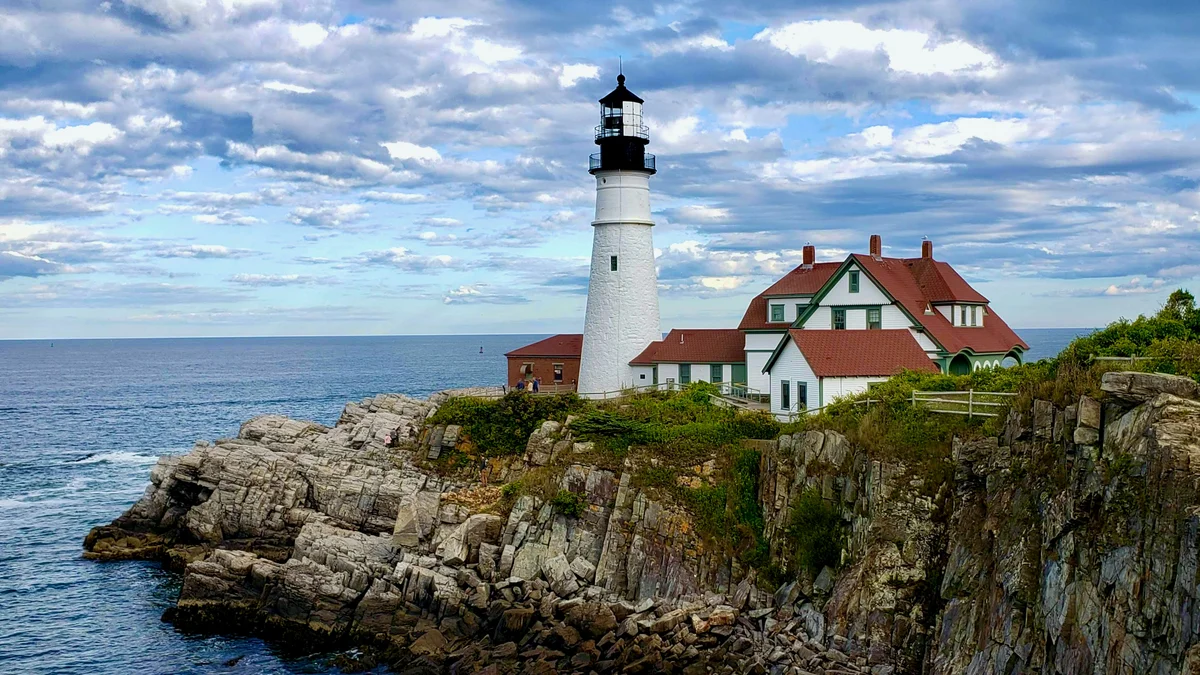
A Portland art museum founded in 1882, with a collection spanning American and European painting, sculpture, and decorative arts, including significant works by Winslow Homer, who painted at nearby Prouts Neck. Its Congress Square building anchors Portland's downtown arts district.
Visitor guide
The Portland Museum of Art, at Congress Square in downtown Portland, was founded in 1882 as the Portland Society of Art, and it holds a collection of more than 18,000 works from the 18th century to the present. It is best known for its deep ties to Winslow Homer, who painted at Prouts Neck just south of the city, and for a campus that combines a 1911 Beaux-Arts gallery, a Federal-style house and a 1983 brick building by I. M. Pei & Partners.
The museum was founded by local artists in 1882. In 1908 Margaret Jane Mussey Sweat bequeathed her mansion, now called the McLellan House, along with funds for a gallery in memory of her husband, Congressman Lorenzo De Medici Sweat. The L. D. M. Sweat Memorial Galleries, designed by John Calvin Stevens, opened in 1911. The modern era began in 1976, when Maine native Charles Shipman Payson promised the museum 17 Winslow Homer paintings and $8 million toward a new building. The Charles Shipman Payson Building, designed by Henry Nichols Cobb of I. M. Pei & Partners, opened in 1983; the museum calls it the arched-front brick structure facing Congress Square. A renovation completed in October 2002 joined the McLellan House, the Sweat Galleries and the Payson Building into one connected museum.
Wikipedia lists American artists in the collection including Winslow Homer, Marsden Hartley, John Marin, Louise Nevelson and Andrew Wyeth, along with European works by artists such as Degas, Monet, Picasso, Rodin and Munch. Other gifts shaped the holdings: more than 50 works by American modernists from the Hamilton Easter Field Art Foundation in 1979, the Joan Whitney Payson Collection of 20 Impressionist and Post-Impressionist works on permanent loan from 1991, and 66 works of American art bequeathed by Elizabeth B. Noyce in 1996. The museum later acquired Homer's 'Weatherbeaten', which shows waves breaking on the rocks at Prouts Neck.
In 2006 the museum acquired Homer's studio at Prouts Neck in Scarborough, its first property beyond downtown Portland, restored it, and opened it in 2012. Maine architect John Calvin Stevens altered and expanded a carriage house for Homer in 1884, and Homer lived and worked there until his death in 1910. The Shingle Style building, whose distinctive feature is a balcony the width of the structure, was designated a National Historic Landmark in 1965. Restoration reversed changes made by Homer's family in 1938 and 1939 to return it to its 1910 appearance, and in 2014 the museum bought surrounding land to preserve it. The studio can be seen only on a guided tour organized by the museum.
Hours, exhibitions and studio tour dates change, so check the museum's website before planning. The museum's own materials describe the Payson Building as the building most people associate with the museum. Voyzo can fit a visit into a private Portland day with door-to-door pickup, and pair it with the coast south of the city if Homer is the draw.
See every tour and attraction we cover in Portland, Maine.