TorontoOntario · 36 tours
 Niagara FallsOntario · 25 tours
 New York CityNew York · 30 tours
 Las VegasNevada · 8 tours
 San FranciscoCalifornia · 16 tours
 VancouverBritish Columbia · 17 tours
 DubaiUAE · 54 tours
 Abu DhabiUAE · 5 tours
 Buenos AiresArgentina · 23 tours
 AthensGreece · 31 tours
 AucklandNew Zealand · 38 tours
 CancunMexico · 54 tours
No destinations match “”. Try searching all tours instead — that search understands full questions, not just place names.
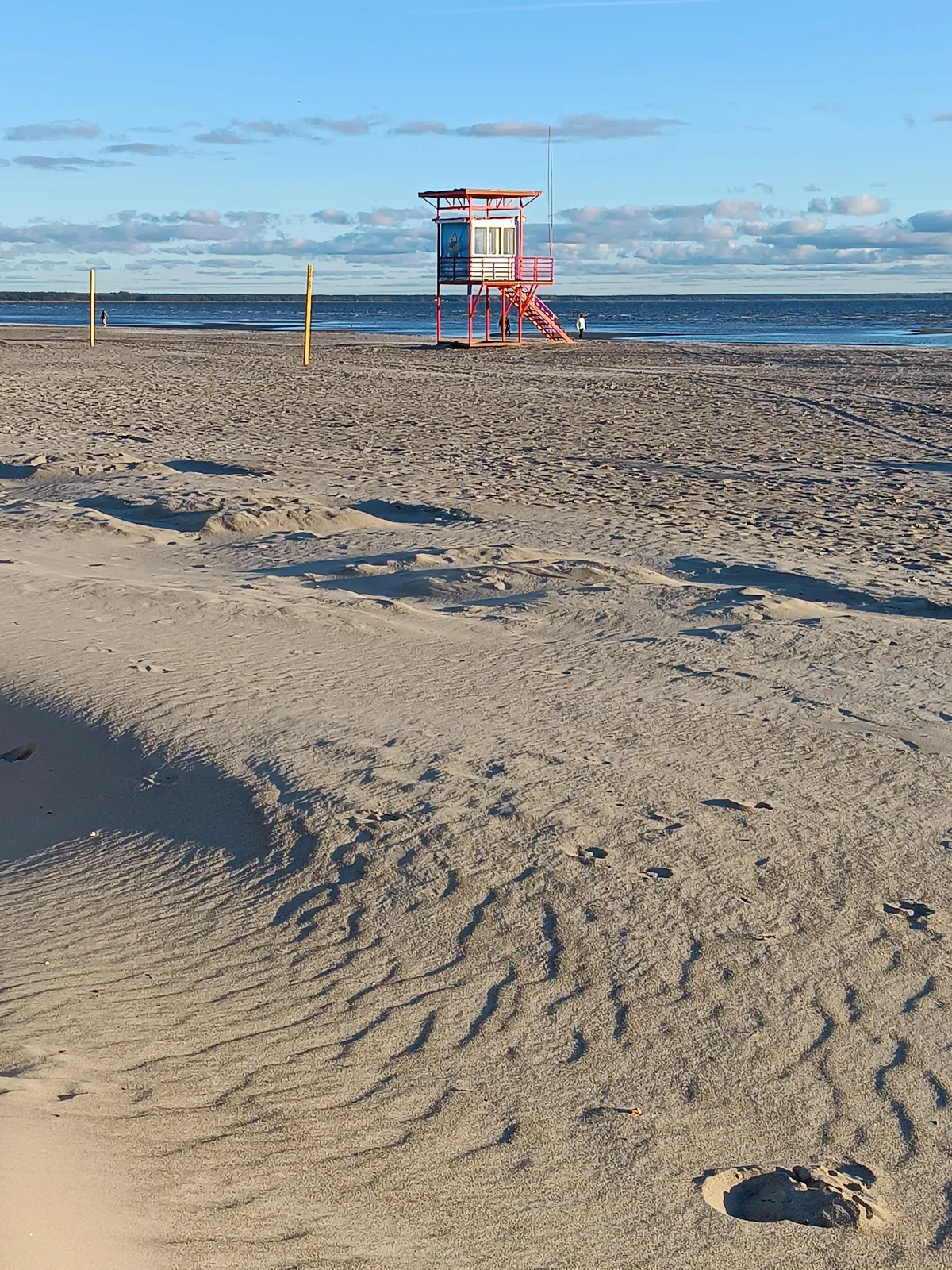
A long stretch of white sand on the Gulf of Riga in Pärnu, Estonia's summer capital, backed by a pine park and known as the country's most popular seaside resort town.
Visitor guide
Parnu Beach is the long sandy city beach on Parnu Bay, an inlet of the Gulf of Riga, in the resort city of Parnu in southwestern Estonia. It is the centrepiece of a town known as Estonia's Summer Capital and a place where sea bathing and spa culture have been part of life since the 19th century.
Parnu is a city of about 41,500 people, roughly 128 kilometres south of Tallinn, where the Parnu River flows into the gulf. Its resort history dates to 1838, when the first bathing facility opened. The stone Mud Baths building followed in 1927 on the same site. Parnu has been known as Estonia's Summer Capital since 1996. Wikipedia describes it as a popular summer holiday resort among Estonians, with visitors mostly from Estonia, Finland and Sweden.
On sunny summer days tens of thousands of sunbathers and swimmers visit the beach. The seabed is shallow, and local guides note that the water warms quickly in hot weather. Wikipedia records a water temperature of 33 degrees Celsius in 2010, a record for the beach, though normal summer temperatures are much cooler. Amenities listed include swings, surfing equipment rental and a mini golf area. The beach promenade was renovated in 2021. A local legend holds that couples who hold hands along the seawall and kiss at its end will stay together forever, a charming tale that is folklore rather than fact.
Behind the beach lies Rannapark, the Beach Park, which was laid out in stages from the 1880s. Nearby hotels include the Parnu Rannahotell, the Parnu Mud Baths and Tervise Paradiis. The Mud Baths, whose name comes from the treatments using local Parnu mud, are the origin of the city's health-resort identity, and treatments historically included seawater baths in summer.
Old Parnu was founded around 1251 by the bishop of Osel-Wiek, and the Teutonic Order later founded a nearby town, which joined the Hanseatic League and became an important ice-free harbour for Livonia. Landmarks in the town include the Town Hall, Red Tower, St Elizabeth's Church, St Catherine's Church, the Tallinn Gate and the old moat. The Endla Theatre building is notable as the place where Estonian independence was first proclaimed on 23 February 1918. The Weekend Festival Baltic, a dance music event, first took place in Parnu in 2015. Over the centuries the city changed hands among Poland-Lithuania, Sweden and Russia, became part of independent Estonia in 1918, and regained independence in 1991 after decades of Soviet and Nazi occupation. The Parnu River flows into the gulf within the city limits.
Summer is the main season for the beach, while the cooler months bring a quieter, spa-focused town. A private guided journey with a driver from Tallinn lets visitors combine the beach with the old town without worrying about parking.
See every tour and attraction we cover in Estonia.