TorontoOntario · 36 tours
 Niagara FallsOntario · 25 tours
 New York CityNew York · 30 tours
 Las VegasNevada · 8 tours
 San FranciscoCalifornia · 16 tours
 VancouverBritish Columbia · 17 tours
 DubaiUAE · 54 tours
 Abu DhabiUAE · 5 tours
 Buenos AiresArgentina · 23 tours
 AthensGreece · 31 tours
 AucklandNew Zealand · 38 tours
 CancunMexico · 54 tours
No destinations match “”. Try searching all tours instead — that search understands full questions, not just place names.
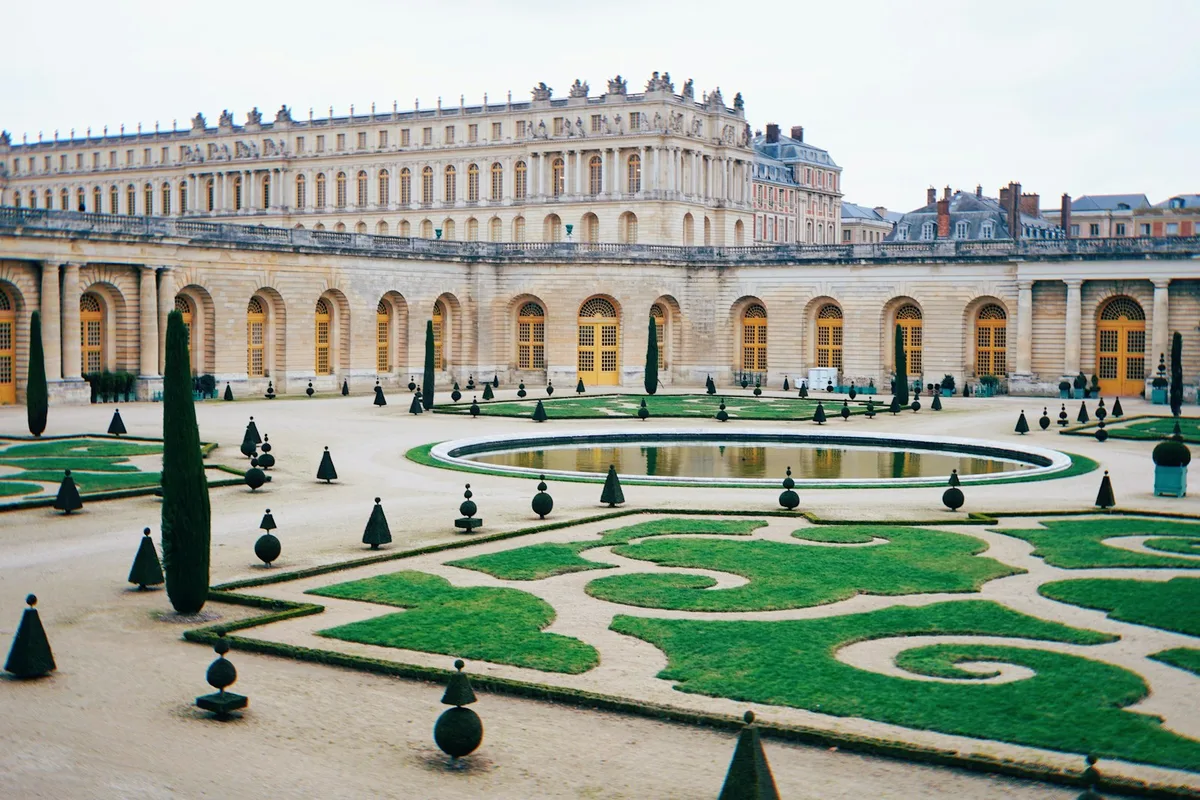
The vast royal palace built for Louis XIV outside Paris, famous for the Hall of Mirrors and its formal gardens with fountains, a UNESCO World Heritage Site and one of France's most visited monuments.
Visitor guide
The Palace of Versailles (Chateau de Versailles) is a royal chateau in the town of Versailles in the Yvelines department, about 16 kilometres southwest of Paris, France. It was the principal residence of the French kings Louis XIV, Louis XV and Louis XVI, and is considered a masterpiece of French classical architecture.
Versailles began in 1623 as a modest hunting lodge built by Louis XIII in a wooded wetland, which some contemporaries mocked as a small and unworthy chateau. Between 1631 and 1634 the architect Philibert Le Roy replaced it with a larger chateau. After Louis XIII's death in 1643 the estate was neglected until Louis XIV took an interest in it in the 1660s.
A turning point came in August 1661, when Louis XIV attended a lavish festival at Vaux-le-Vicomte, the chateau of finance minister Nicolas Fouquet. Impressed by its architecture and gardens, he recruited its creators, the architect Louis Le Vau, the garden designer Andre Le Notre and the painter Charles Le Brun, for his own project. The king, the court and the government lived at Versailles permanently from 6 May 1682 until 6 October 1789, apart from the Regency years of 1715 to 1723.
Work focused first on the gardens. From 1668 to 1671 Louis XIII's chateau was encased on three sides in a new Italianate shell, called the enveloppe. After Le Vau's death in 1670 Francois d'Orbay carried the work on, and after 1678 Jules Hardouin-Mansart became First Architect, adding the Hall of Mirrors between 1678 and 1681 and the Ministers' Wings. The Ambassadors' Staircase, begun in 1674, was a grand route for receiving guests.
Wikipedia says the palace covers about 63,154 square metres and contains roughly 2,300 rooms. The city of Versailles itself was laid out to house the court and government.
The park covers 815 hectares today, compared with more than 8,000 hectares before the French Revolution, of which 93 hectares are formal gardens. The estate includes the Grand Trianon and Petit Trianon, the Hameau de la Reine, the Grand Canal and the Orangerie. Later rulers, including Napoleon I and Napoleon III, used the Trianon palaces.
Louis XIV conceived Versailles to glorify the French monarchy, and the palace exerted major influence across Europe in the 18th and 19th centuries on architecture and decorative arts. Part of it now houses the National Museum of the History of France. Wikipedia notes that it is one of the most visited sites in Europe and is central to discussions about managing overtourism.
Because the palace and grounds are extensive, visitors usually choose between the main palace, the gardens and the Trianon estate. A private guided visit with a driver from Paris can help a group plan how to spend their time.
See every tour and attraction we cover in France.