TorontoOntario · 36 tours
 Niagara FallsOntario · 25 tours
 New York CityNew York · 30 tours
 Las VegasNevada · 8 tours
 San FranciscoCalifornia · 16 tours
 VancouverBritish Columbia · 17 tours
 DubaiUAE · 54 tours
 Abu DhabiUAE · 5 tours
 Buenos AiresArgentina · 23 tours
 AthensGreece · 31 tours
 AucklandNew Zealand · 38 tours
 CancunMexico · 54 tours
No destinations match “”. Try searching all tours instead — that search understands full questions, not just place names.
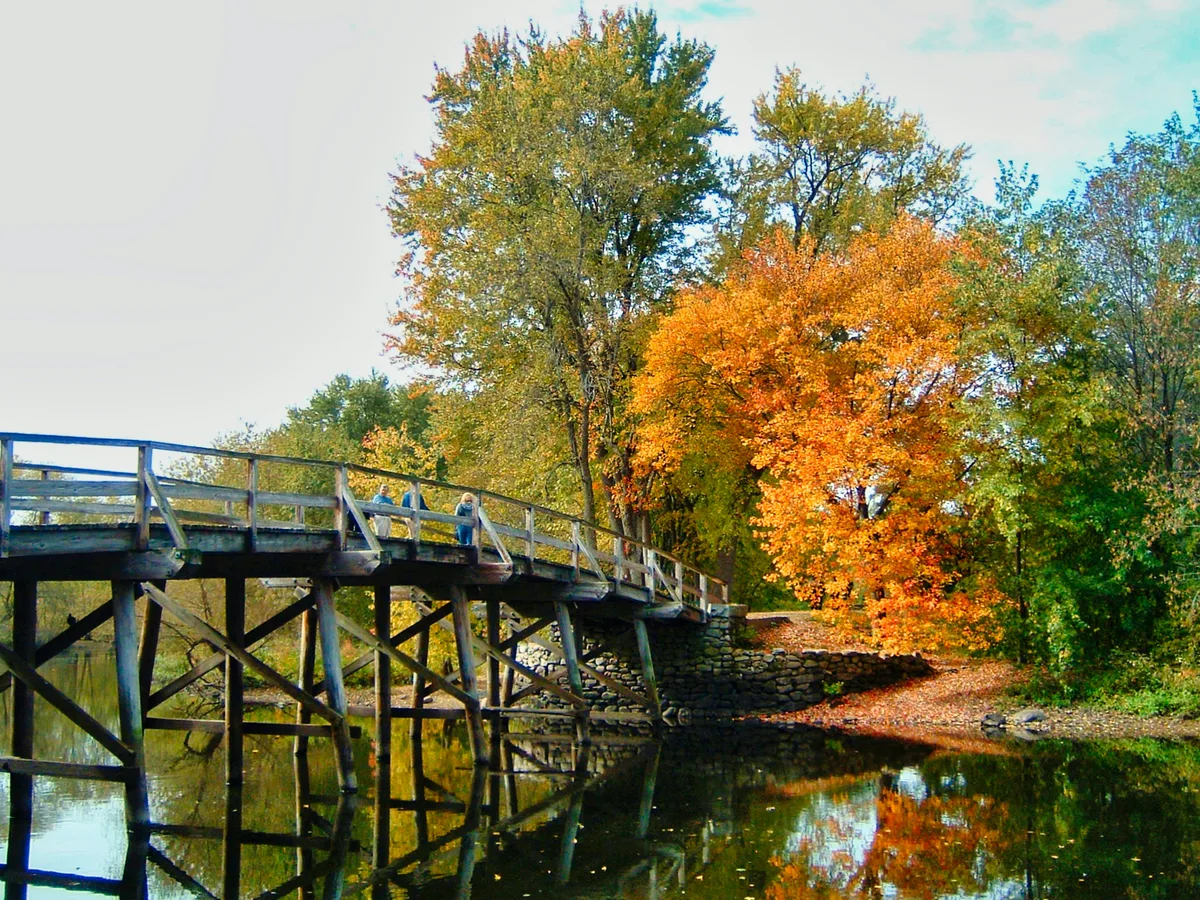
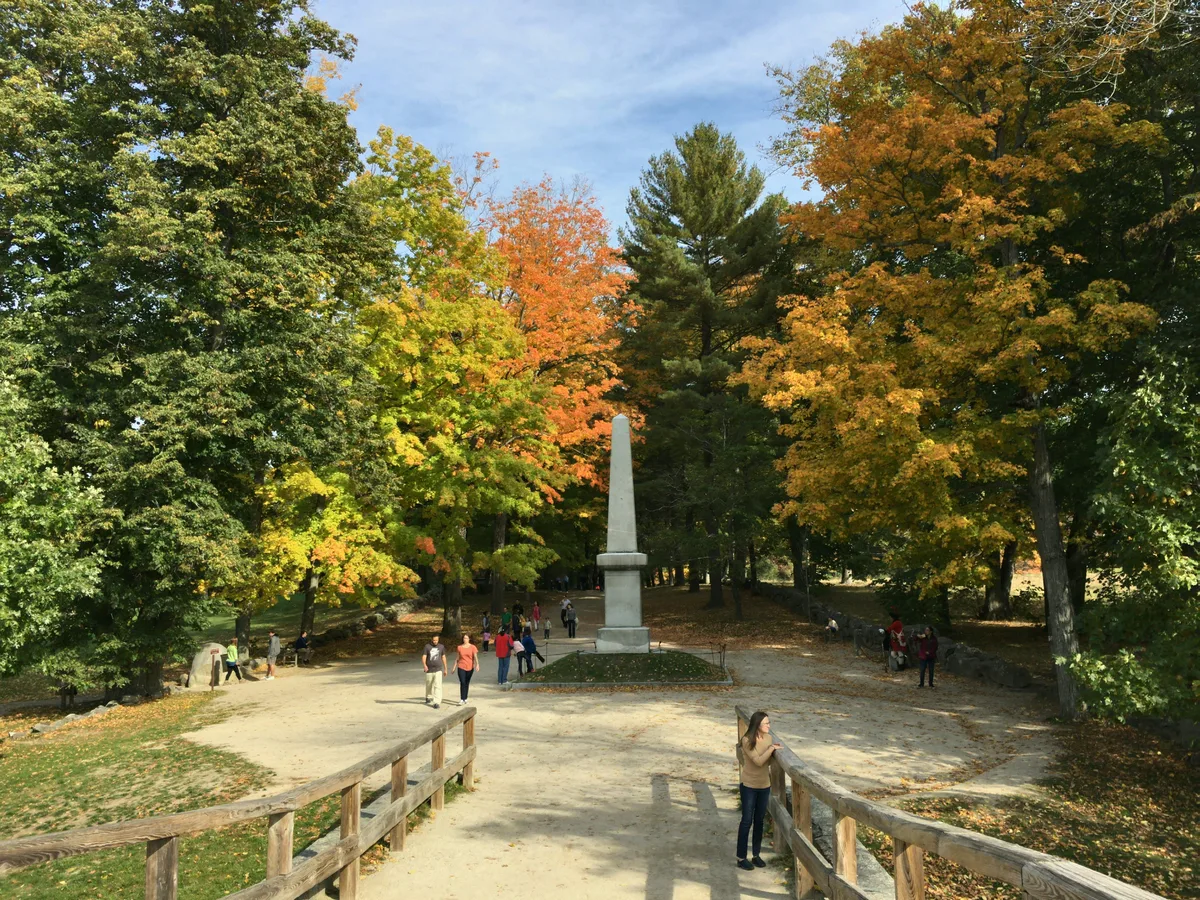
The Concord bridge where Minutemen met British troops in the 1775 battle known as the 'shot heard round the world.'
Visitor guide
The Old North Bridge in Concord, Massachusetts, is where militiamen and British regulars exchanged fire on the morning of April 19, 1775, in one of the opening engagements of the American Revolution. The wooden footbridge across the Concord River today is a mid-twentieth-century replacement, set in the North Bridge unit of Minute Man National Historical Park, which the National Park Service manages.
General Thomas Gage, the British commander in Massachusetts, sent roughly 700 soldiers out from Boston to seize military stores in Concord. Among the prizes was a brass cannon known as The Hancock, one of four hidden in the town, and the National Park Service names its recovery as one of Gage's chief motives. Light infantry companies of the 4th, 10th and 43rd Regiments, under Captain Walter Laurie, were left to hold the North Bridge while other troops searched for supplies.
Hundreds of militia and minutemen gathered on the high ground west of the river. Accounts in the sources used here give roughly 400 militia against about 96 British soldiers under Captain Walter Laurie, according to the National Park Service. When the militia advanced, shots were exchanged, and Major John Buttrick of Concord is recorded as calling out, "Fire, fellow soldiers, for God's sake fire!" Captain Isaac Davis of Acton, who led the advance, was among the dead. Casualties are commonly given as three British killed and nine wounded, and two Americans killed and four wounded, though sources differ on the exact tally and on who fired first. The regulars withdrew, and the long retreat toward Boston that afternoon turned into a running fight.
Ralph Waldo Emerson gave the encounter its enduring phrase, "the shot heard round the world," in his 1837 "Concord Hymn," written for the dedication of the battle monument.
A bridge has stood at this crossing since at least the early 1650s, and floods and decay meant the town replaced it every few decades. The 1760 bridge was the one standing during the fight. A replacement went up in 1788, but when the town built a new crossing downriver in 1793 this one was abandoned, and the spot had no bridge for 82 years. A covered-pavilion "Centennial Bridge" followed in 1874, a plainer bridge in 1888, and a concrete span in 1909. After damage from Hurricane Diane in 1955, the Commonwealth built the present wooden bridge, designed by Whitman and Howard, which was dedicated on September 29, 1956. It is about 109 feet long. Sources disagree on how many distinct bridges have occupied the site, so treat any single count with caution.
The granite battle monument, designed by Solomon Willard, was dedicated on July 4, 1837, on land donated by the Rev. Ezra Ripley. Across the river stands Daniel Chester French's bronze statue The Minute Man, unveiled on April 19, 1875, with President Ulysses S. Grant attending. French was in his early twenties, and the statue was cast from melted Civil War cannon. Near the bridge a marker commemorates British soldiers who died in the fight; the park notes that it is not known which of the three killed privates (James Hall, Thomas Smith and Patrick Gray) are buried there.
The North Bridge Visitor Center, in a brick mansion built in 1911 by descendants of the Buttrick family, shows a short film about the fight, has exhibits including The Hancock cannon, and sells books. The bridge, the battle monument and French's statue sit within an easy stroll of one another across the grounds. In 1959 the bridge and surrounding land became part of the national park, and the unit covers about 114 acres. Check the National Park Service for current hours, programs and access.
The site lends itself to an unhurried visit. On a Voyzo private tour from Boston, your driver handles the road and parking so your group can spend its time on the walk down to the river rather than on logistics.
See every tour and attraction we cover in Boston.