TorontoOntario · 36 tours
 Niagara FallsOntario · 25 tours
 New York CityNew York · 30 tours
 Las VegasNevada · 8 tours
 San FranciscoCalifornia · 16 tours
 VancouverBritish Columbia · 17 tours
 DubaiUAE · 54 tours
 Abu DhabiUAE · 5 tours
 Buenos AiresArgentina · 23 tours
 AthensGreece · 31 tours
 AucklandNew Zealand · 38 tours
 CancunMexico · 54 tours
No destinations match “”. Try searching all tours instead — that search understands full questions, not just place names.
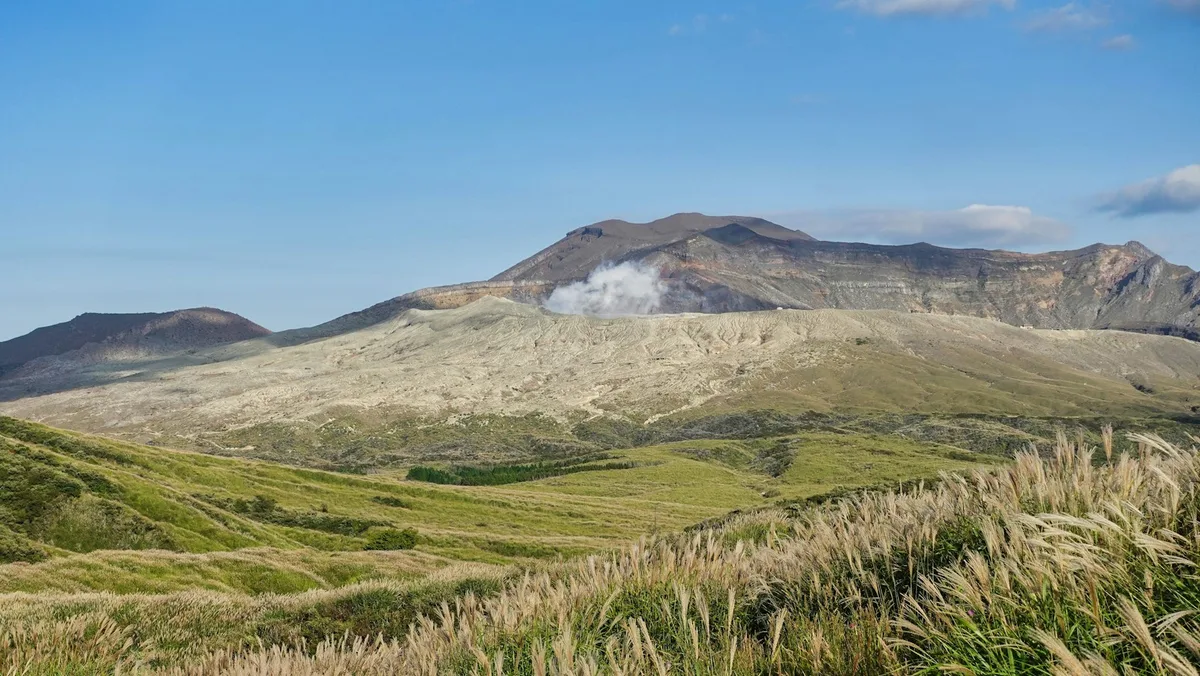
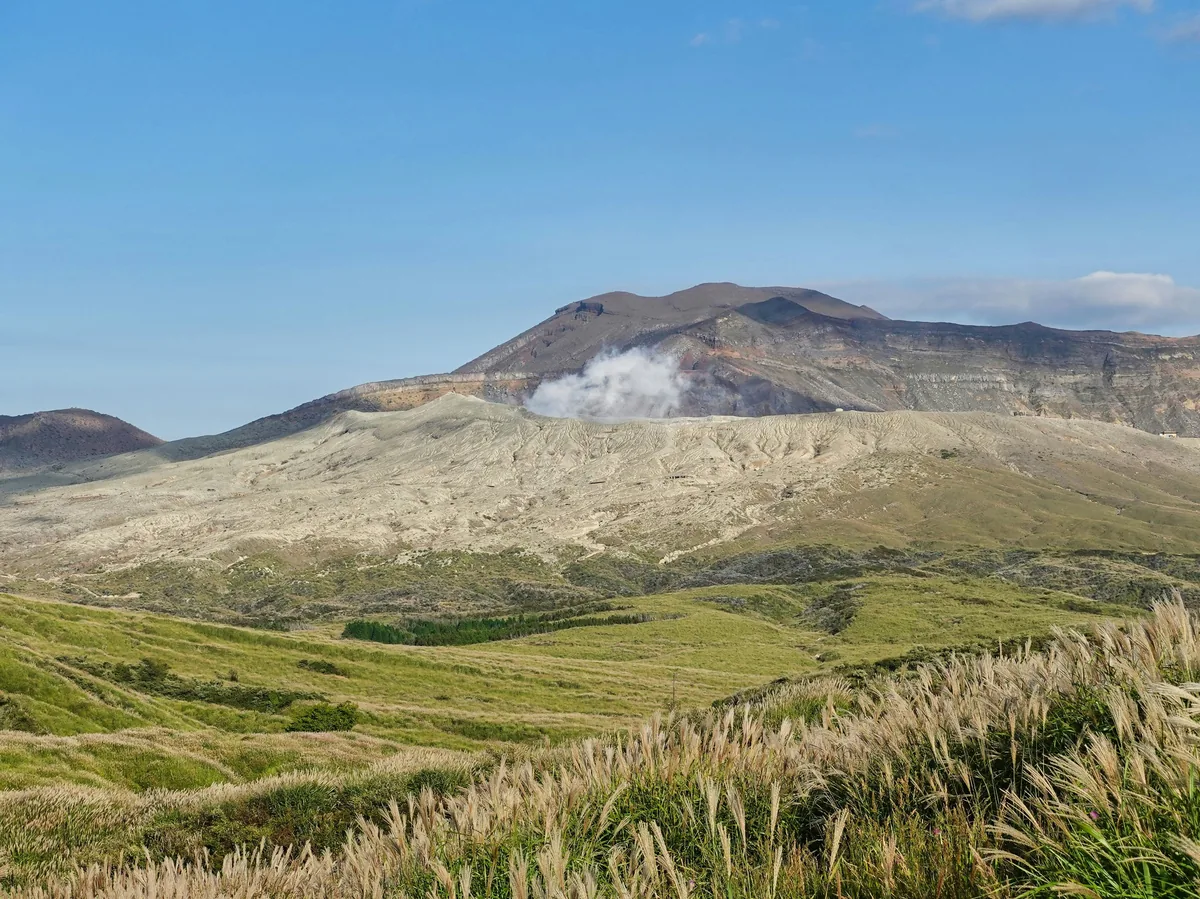
One of the world's largest active volcanic calderas, in central Kyushu, with a still-smoking crater visitors can view from an observation area when conditions allow.
Visitor guide
Mount Aso is an active volcano in Aso-Kuju National Park in Kumamoto Prefecture, on the island of Kyushu, Japan. It sits within one of the largest calderas in the world, which measures about 25 kilometres north to south and 18 kilometres east to west. According to Wikipedia, it is the second largest active volcano in Japan after Mount Fuji, and its tallest peak, Takadake, rises 1,592 metres above sea level.
The present caldera was formed by four huge eruptions between about 300,000 and 90,000 years ago, called Aso 1 to 4. The fourth was the largest, and its ash covered the whole of Kyushu and reached as far as Yamaguchi Prefecture. Ejecta from the eruption about 90,800 years ago covered more than 600 cubic kilometres, which Wikipedia says roughly equals the volume of Mount Fuji. The caldera has a circumference of around 120 kilometres, although sources vary, and it contains the city of Aso as well as the towns of Takamori and Minamiaso.
Inside the caldera stands a central cone group known as the Five Mountains of Aso: Neko, Taka, Naka, Eboshi and Kishima. The crater of Mount Naka, whose west side is accessible by road, contains an active volcano that continuously emits smoke and has occasional eruptions. Only the northernmost, or first, crater has been active for the last 70 years, with eruptions recorded in years including 1974, 1979, 1989 to 1991, 2011, 2015 and 2021.
Aso's volcanic ash plays a role well beyond the mountain. Wikipedia notes that ash from Aso and Mount Kuju is carried by the Chikugo River to the coast, where it helps maintain the tidal flats of the Ariake Sea, some of which are Ramsar sites. Aso's welded tuff was used to build about 320 arched stone bridges in Kumamoto Prefecture, including the Tsujun-kyo and Reitai-kyo bridges, which are important national cultural properties.
The slopes support unusual plants. The seasonal flowering of Rhododendron kiusianum on the slopes of Takadake is cited as a reflection of significant protected botanical ecosystems. Mount Aso has a humid continental climate with warm summers and cold winters, and precipitation is particularly heavy in June and July.
Aso has long been considered sacred and became a mountain for training and worship. Aso Shrine, in the town of Aso, is one of the oldest shrines in Japan and is traditionally said to have been established in 281 BC, though its original location in or near the crater is uncertain because it was destroyed and rebuilt many times. The earliest records include a 7th-century Chinese chronicle, which says that the people of Aso held festivals every time the volcano erupted to calm its wrath.
The area was established as Aso National Park on 4 December 1934 and renamed Aso-Kuju National Park in 1986. Foreign visitors first came in the Meiji era for tourism and research, and in the Taisho era the Miyaji railway line opened. Wikipedia lists activities around the mountain including hot springs at Uchinomaki, Asoakamizu and Kurokawa, camping, horse riding at Kusasenrigahama, and hiking, with nearly all trails reachable from the bus stop at the volcano museum.
Because Mount Naka is an active volcano, access to the crater rim depends on volcanic gas levels and activity and can change at short notice, so viewing from the crater edge is never guaranteed. The broader caldera landscape, with its grasslands, viewpoints and rim roads, can be appreciated in any season. A private guided visit lets a driver and guide adapt the route to the conditions on the day.
See every tour and attraction we cover in Japan.