TorontoOntario · 36 tours
 Niagara FallsOntario · 25 tours
 New York CityNew York · 30 tours
 Las VegasNevada · 8 tours
 San FranciscoCalifornia · 16 tours
 VancouverBritish Columbia · 17 tours
 DubaiUAE · 54 tours
 Abu DhabiUAE · 5 tours
 Buenos AiresArgentina · 23 tours
 AthensGreece · 31 tours
 AucklandNew Zealand · 38 tours
 CancunMexico · 54 tours
No destinations match “”. Try searching all tours instead — that search understands full questions, not just place names.
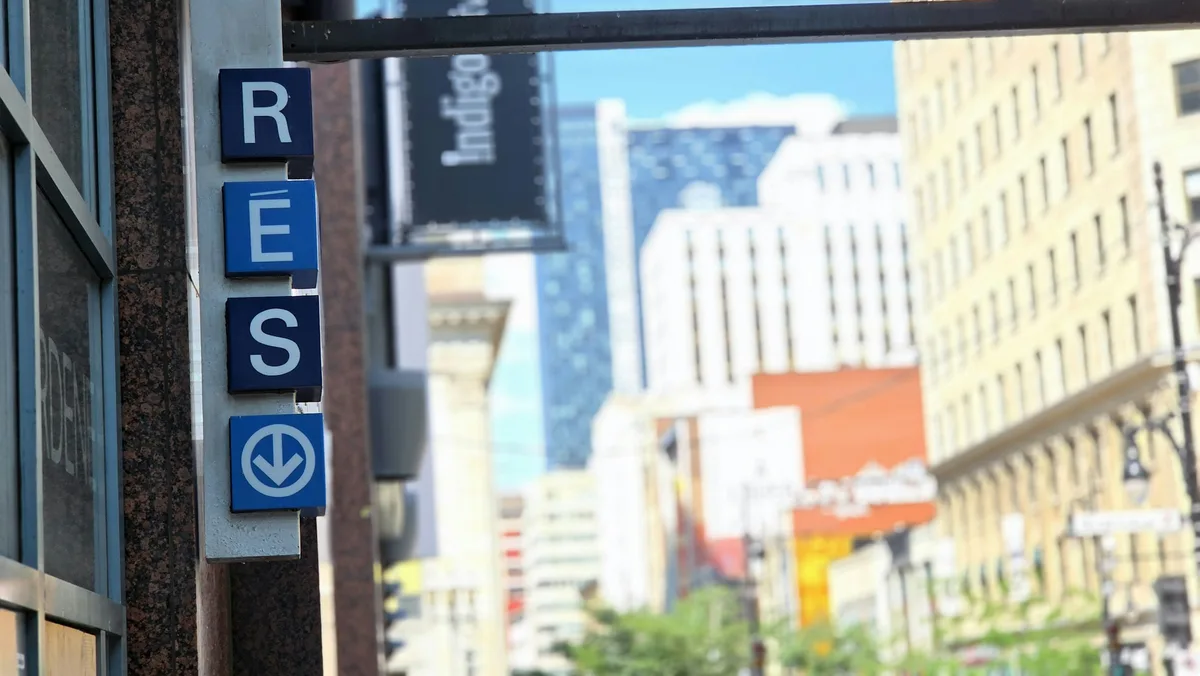
North America's largest underground complex, linking shops, restaurants, and metro stations beneath downtown Montreal.
Visitor guide
Montréal's Underground City, branded RÉSO since 2004, is a web of pedestrian passages, concourses and metro links connecting office towers, hotels, shopping centres, universities and cultural venues in the downtown core. The name is a play on the French word réseau, meaning network. It is better understood as an indoor city than a purely subterranean one, since many of its corridors sit at street level or in building atriums.
The first link is generally dated to 1962, when Place Ville Marie opened with an office tower and an underground mall built over the open railway cutting north of Central Station. Two passages tied it to Central Station and to the Queen Elizabeth Hotel. The urban planner Vincent Ponte is credited as the originator of the concept, and a plaque honouring him was unveiled in 2006.
The Montréal Metro opened in 1966, in time for Expo 67, and its stations became the backbone of further connections. Complexe Desjardins followed in 1974, creating what is often called a second downtown segment. Between 1984 and 1989 the network grew from roughly 12 km of passages to almost 22 km, and the 1980s and early 1990s added projects such as Cours Mont-Royal, Place Montréal Trust and Promenades Cathédrale. The Quartier international redevelopment of the early 2000s connected central segments further. Winter weather is the usual explanation for the whole enterprise, though the network grew just as much from the economics of linking developments to the metro.
Figures vary by source. Tourisme Montréal cites about 33 km of corridors and roughly 500,000 people a day; Wikipedia gives about 32 km and mentions both nearly 500,000 and well over half a million daily users on a typical winter day, along with more than 120 exterior access points. Its area is quoted inconsistently, so it is safest to treat any single size figure as approximate. The network is frequently described as among the largest of its kind in the world, but that is a claim rather than a settled ranking.
The system links several metro stations through its various segments (the City of Montréal's own page counts eight), along with Central Station, bus terminals, the Palais des congrès convention centre, the World Trade Centre, Place des Arts (home of the Opéra de Montréal and the Orchestre symphonique de Montréal), the Eaton Centre, Place Bonaventure and Complexe Desjardins. Public art is scattered throughout, and the World Trade Centre displays a section of the Berlin Wall. Central Station has stone murals depicting a rail journey across Canada, and the restored Art Nouveau restaurant Île de France is another curiosity along the way.
Do not expect one continuous tunnel: the network is made of segments, some joined only by a short stretch outdoors, and the signage can be confusing. One simple route suggested by Tourisme Montréal starts at Complexe Desjardins, takes the metro one stop west to McGill, and then walks east back toward the Palais des congrès. Opening hours depend on each building, so check with the individual centres and the operators for current access.
A Voyzo private tour can include the Underground City as a stop: your private vehicle and driver collects you door to door and can drop you at one end and meet you at another, which saves backtracking through the underground segments.
At street level, McGill College Avenue, Christ Church Cathedral and the Golden Square Mile area are close to the central stations, and Old Montréal is a short ride away.
See every tour and attraction we cover in Montreal.