TorontoOntario · 36 tours
 Niagara FallsOntario · 25 tours
 New York CityNew York · 30 tours
 Las VegasNevada · 8 tours
 San FranciscoCalifornia · 16 tours
 VancouverBritish Columbia · 17 tours
 DubaiUAE · 54 tours
 Abu DhabiUAE · 5 tours
 Buenos AiresArgentina · 23 tours
 AthensGreece · 31 tours
 AucklandNew Zealand · 38 tours
 CancunMexico · 54 tours
No destinations match “”. Try searching all tours instead — that search understands full questions, not just place names.
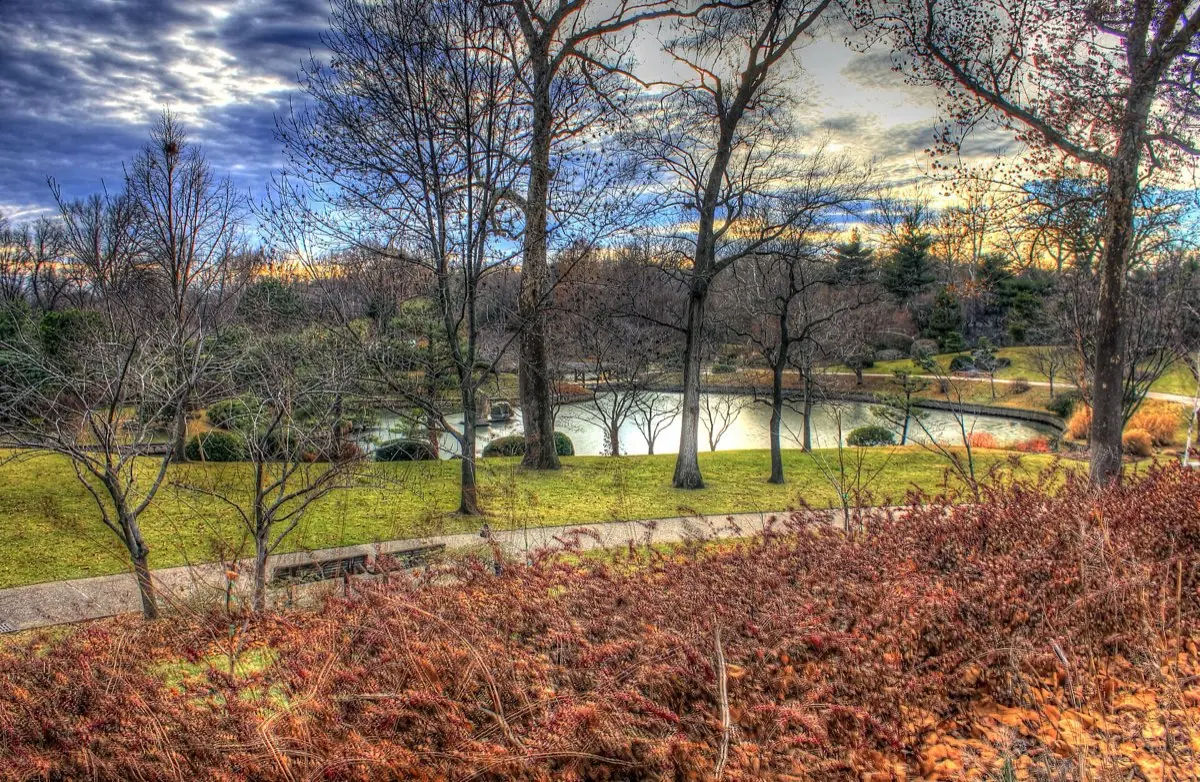
One of the oldest botanical gardens in the US, featuring a Japanese strolling garden.
Visitor guide
The Missouri Botanical Garden, known locally as Shaw's Garden, is a research botanical garden in St. Louis that opened to the public in 1859. It is a National Historic Landmark, home to the Climatron geodesic conservatory and one of the largest plant herbaria in North America.
Henry Shaw, an English-born businessman who moved to St. Louis in 1819, began developing the grounds by 1850; construction proceeded from 1855, and the garden opened in 1859. His Italianate country house, Tower Grove House, was completed in 1849 and still stands on the grounds, and the Linnean House, originally his orangery, dates from 1882. Shaw died in 1889. The garden was added to the National Register of Historic Places on November 19, 1971, and designated a National Historic Landmark on December 8, 1976.
The Climatron, completed in 1960, is a geodesic dome about 53 meters (175 feet) in diameter at the base and 21 meters (70 feet) high. The garden says the design was developed by the St. Louis architects Murphy and Mackey, while other sources credit T. C. Howard of Synergetics, Inc. of Raleigh, North Carolina with designing the dome; the garden's then-director Frits Went initiated the project. It is described as the world's first completely air-conditioned greenhouse and the first geodesic dome enclosed in rigid acrylic panels. Sources credit the dome's frame to aluminum tubes and rods, and the interior is unpartitioned, with climate zones controlled without interior walls. It recreates a lowland tropical rain forest. The garden describes the dome as incorporating the principles of R. Buckminster Fuller, while sources differ on whether the design credit goes to Murphy and Mackey or to Howard and Synergetics. Wikipedia notes that in 1976 it was named among the 100 most significant architectural achievements in American history.
Seiwa-en, the Japanese garden designed by Koichi Kawana, opened in 1977 around a four-acre lake and is described by Wikipedia as the largest Japanese garden in North America. The grounds also include Victorian-era buildings and formal plantings dating to Shaw's era.
The garden is as much a research institution as a public attraction. Its herbarium holds more than 7.5 million specimens, according to the garden's current herbarium page, which calls it one of the largest collections of its kind in the world, and the Peter H. Raven Library is reported to cover 85 percent of literature published on systematic botany. The garden publishes the Annals of the Missouri Botanical Garden and Novon, co-created the Plant List with Kew, and in 2017 joined the zoo and Washington University in the Living Earth Collaborative. Its Shaw Nature Reserve in Gray Summit began in 1925 as a plant storage site away from city pollution and now covers 2,400 acres, and the Butterfly House is in Chesterfield.
On a Voyzo private tour, your driver and vehicle handle door-to-door pickup, which leaves your group free to spend as long as you like in the dome and gardens. Check the garden directly for current hours, events and any exhibits.
See every tour and attraction we cover in St. Louis.