TorontoOntario · 36 tours
 Niagara FallsOntario · 25 tours
 New York CityNew York · 30 tours
 Las VegasNevada · 8 tours
 San FranciscoCalifornia · 16 tours
 VancouverBritish Columbia · 17 tours
 DubaiUAE · 54 tours
 Abu DhabiUAE · 5 tours
 Buenos AiresArgentina · 23 tours
 AthensGreece · 31 tours
 AucklandNew Zealand · 38 tours
 CancunMexico · 54 tours
No destinations match “”. Try searching all tours instead — that search understands full questions, not just place names.
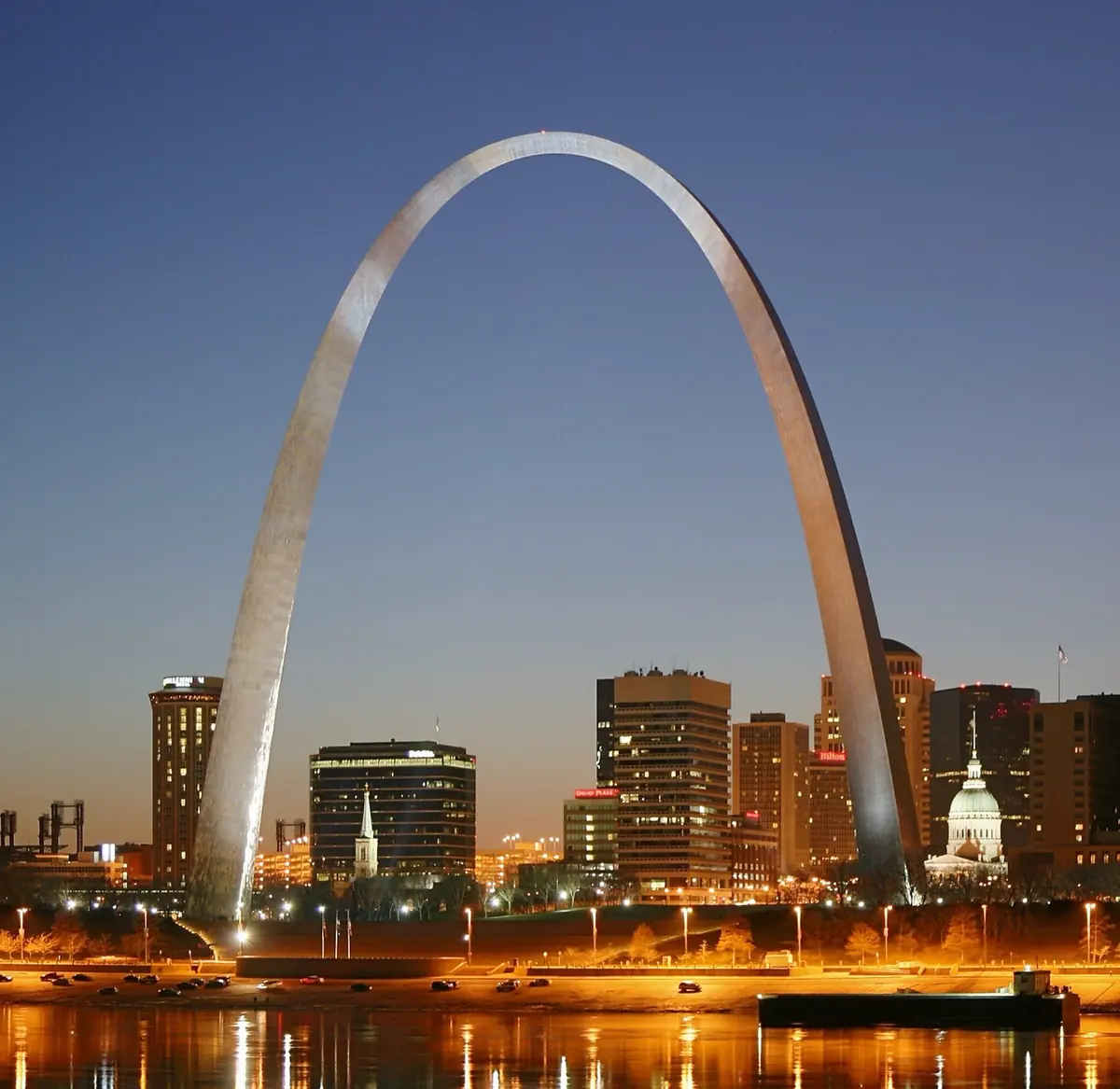
A riverboat cruise on the Mississippi River offering a different perspective of the Gateway Arch and skyline.
Visitor guide
St. Louis exists because of the Mississippi River. The city was founded on this stretch of the river in 1764, and the downtown riverfront below the Gateway Arch is where its steamboat-era commerce, its great fire, its landmark bridge and its modern national park all meet. Seeing the river from the levee, or from the water, is a way to understand why the city is where it is.
Wikipedia gives the Mississippi's length as 2,340 miles from its traditional source at Lake Itasca in northern Minnesota to the Gulf of Mexico, draining about 1,151,000 square miles. The Missouri joins it at St. Louis, and from there the stretch down to the Ohio at Cairo, Illinois, about 190 miles, is called the Middle Mississippi. Upstream, the river from St. Paul to St. Louis is managed as a series of pools created by 26 locks and dams.
According to the National Park Service, Pierre Laclede and Auguste Chouteau scouted the site in 1763 and returned in February 1764 to establish a fur-trading settlement. They chose high ground that guarded against flooding, with river access, about 18 miles south of where the Missouri and Mississippi meet. Early goods came by keelboat. In 1817 the steamboat Zebulon M. Pike made its first stop at St. Louis, and because the sandy beach landing could not handle steamboats, the levee was rebuilt as stone wharves with warehouses.
By the mid-19th century the levee was crowded with steamers. In 1849 a fire that began on the waterfront destroyed about 15 blocks and caused an estimated $6.1 million in damage; the stone Old Courthouse and the Old Cathedral survived, and the city was rebuilt largely in brick and iron.
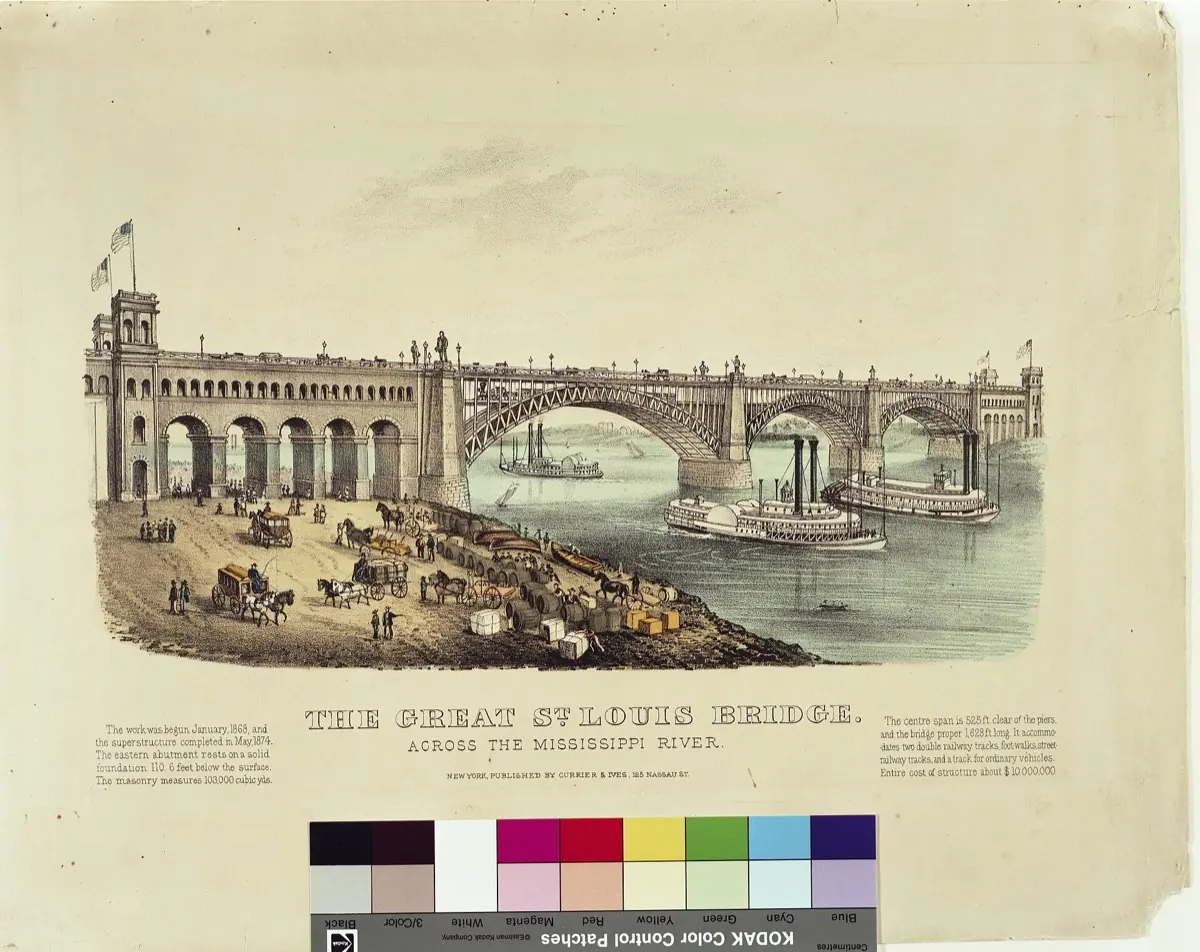
The Eads Bridge, designed and built by James B. Eads between 1867 and 1874, was dedicated by President Ulysses S. Grant on July 4, 1874. Its 520-foot center arch was the longest rigid span built up to that time, its foundations were sunk by pneumatic caissons about 100 feet below the river surface, and it is a National Historic Landmark, designated in 1964. Wikipedia notes that the arches used chromium steel, though later tests found its alloy content too low to affect strength. Before the opening, a circus elephant is reported to have been walked across to demonstrate safety, and 14 locomotives later crossed at once. The bridge was undercapitalized and sold at auction in 1875. Its lower deck carries MetroLink light rail, which began service over the bridge in 1993. It was the first bridge across the Mississippi south of the Missouri River.
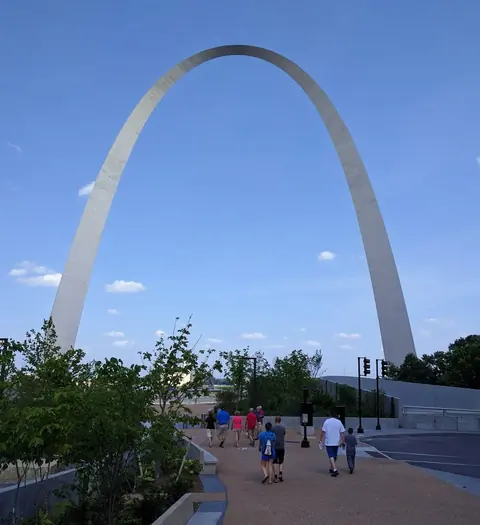
In the late 1930s the old commercial riverfront was cleared for the Jefferson National Expansion Memorial, now Gateway Arch National Park. Wikipedia reports that about 40 blocks and 486 buildings were demolished. A nationwide competition in 1947 chose Eero Saarinen's design, and the 630-foot stainless-steel Arch was built between 1963 and October 1965. Congress redesignated the memorial Gateway Arch National Park in 2018. The Old Courthouse, which stands on land deeded by Auguste Chouteau, was the site of the local trials in the Dred Scott case. The Eads Bridge forms the northern boundary of the park. North of the bridge, the Laclede's Landing district preserves remnants of the older riverfront, including portions of the original cast-iron viaduct, according to local railfan and district histories. Wikipedia describes the Landing's cobblestone streets and brick-and-cast-iron warehouses, dating from 1850 to 1900, as the only remaining section of St. Louis's 19th-century commercial riverfront, and the district was added to the National Register on August 25, 1976.
This is a working, fast-moving river, and boat cruises, walks on the levee and the Arch grounds all offer different angles. Sightseeing cruises are run by independent operators whose schedules, boats and availability change seasonally and with river conditions, so Voyzo does not rely on a specific vessel. On a private tour, your own driver can combine riverfront viewpoints with the Arch, the Old Courthouse and the Eads Bridge, with door-to-door pickup. Check the operator and the National Park Service for current schedules and access.
See every tour and attraction we cover in St. Louis.