TorontoOntario · 36 tours
 Niagara FallsOntario · 25 tours
 New York CityNew York · 30 tours
 Las VegasNevada · 8 tours
 San FranciscoCalifornia · 16 tours
 VancouverBritish Columbia · 17 tours
 DubaiUAE · 54 tours
 Abu DhabiUAE · 5 tours
 Buenos AiresArgentina · 23 tours
 AthensGreece · 31 tours
 AucklandNew Zealand · 38 tours
 CancunMexico · 54 tours
No destinations match “”. Try searching all tours instead — that search understands full questions, not just place names.
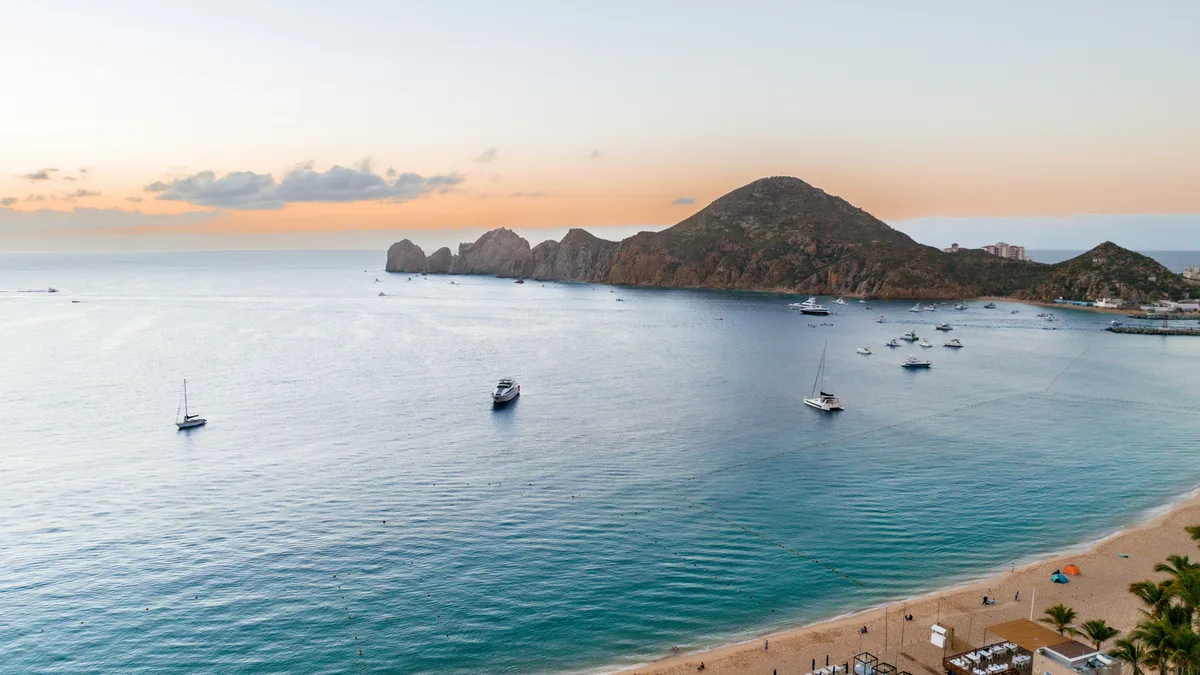
Médano Beach is Cabo San Lucas' main swimmable beach, a stretch of sand along the bay just steps from the marina, and one of the only beaches in the area calm enough for safe ocean swimming (unlike many of Baja's rougher Pacific-facing beaches). It's a popular launch point for jet skis and parasailing, with El Arco visible in the distance across the bay.
Visitor guide
Medano Beach is the main beach of Cabo San Lucas, a stretch of sand along the bay beside the marina, facing Land's End at the tip of Mexico's Baja California peninsula. It is known as one of the few places in Los Cabos where swimming is generally comfortable, thanks to its sheltered position.
The beach lies inside Cabo San Lucas Bay on the Sea of Cortez side. Travel guides describe it as shielded from the stronger Pacific swell by the granite rocks of Land's End, which is why it is regarded as a relatively calm place to swim. Conditions still vary with the day, and guides note that flags are used to indicate currents. Sources disagree on its length, with figures of about two miles appearing most often.
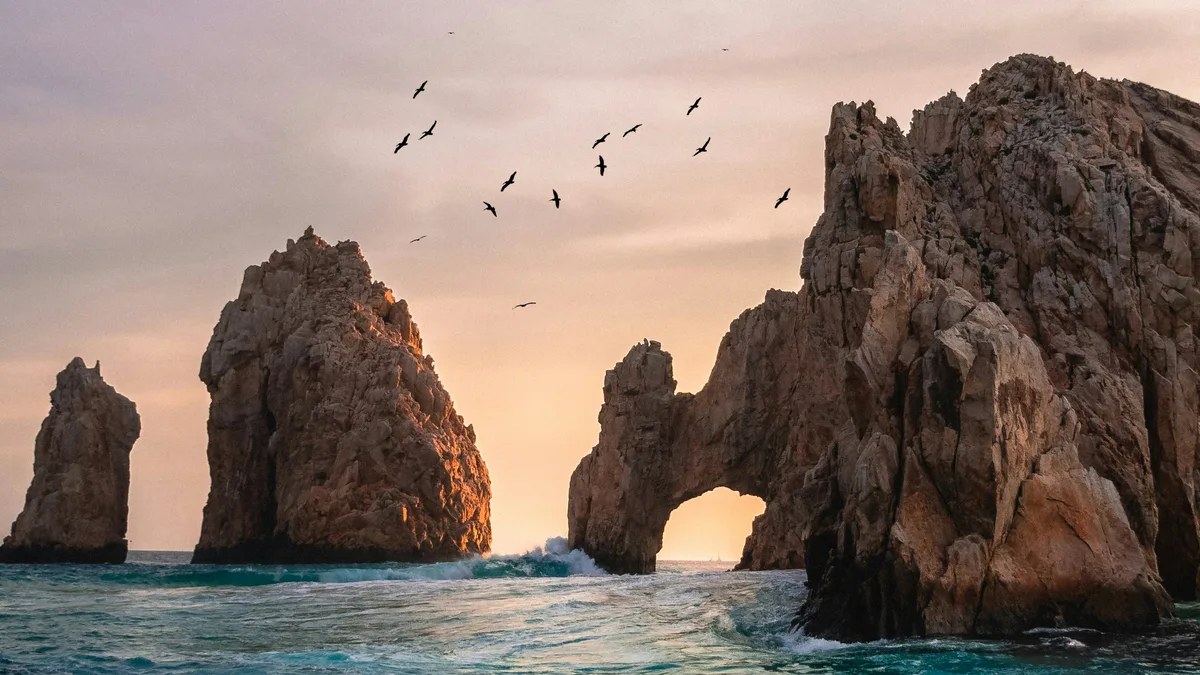
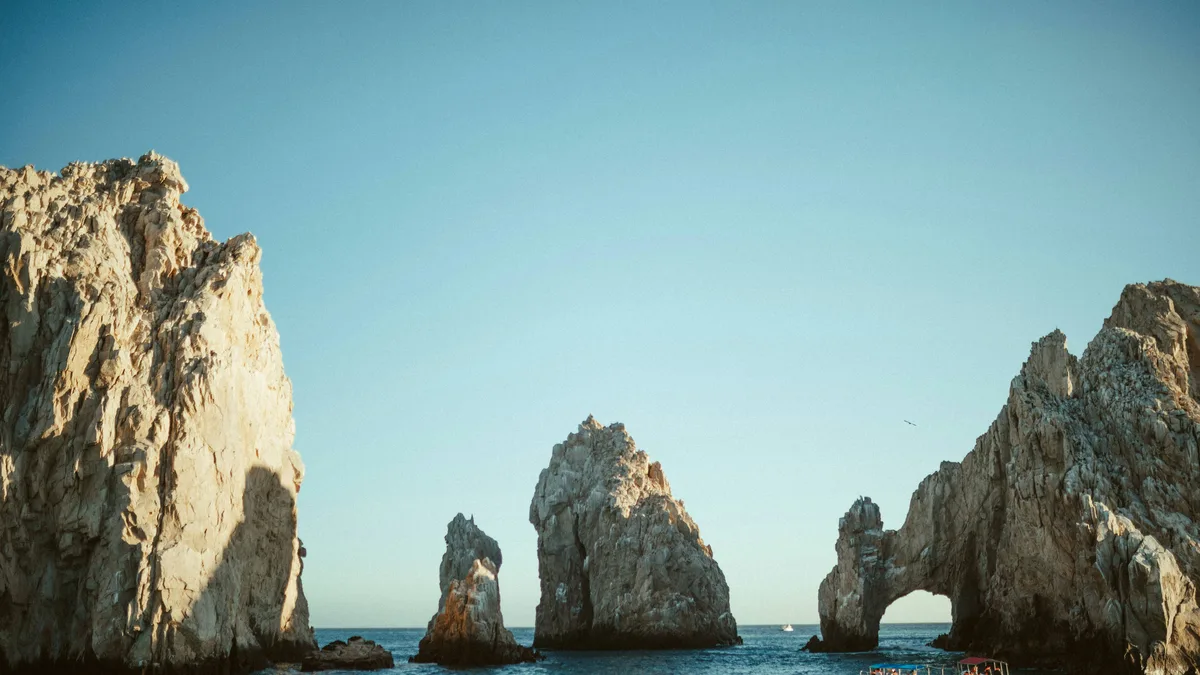
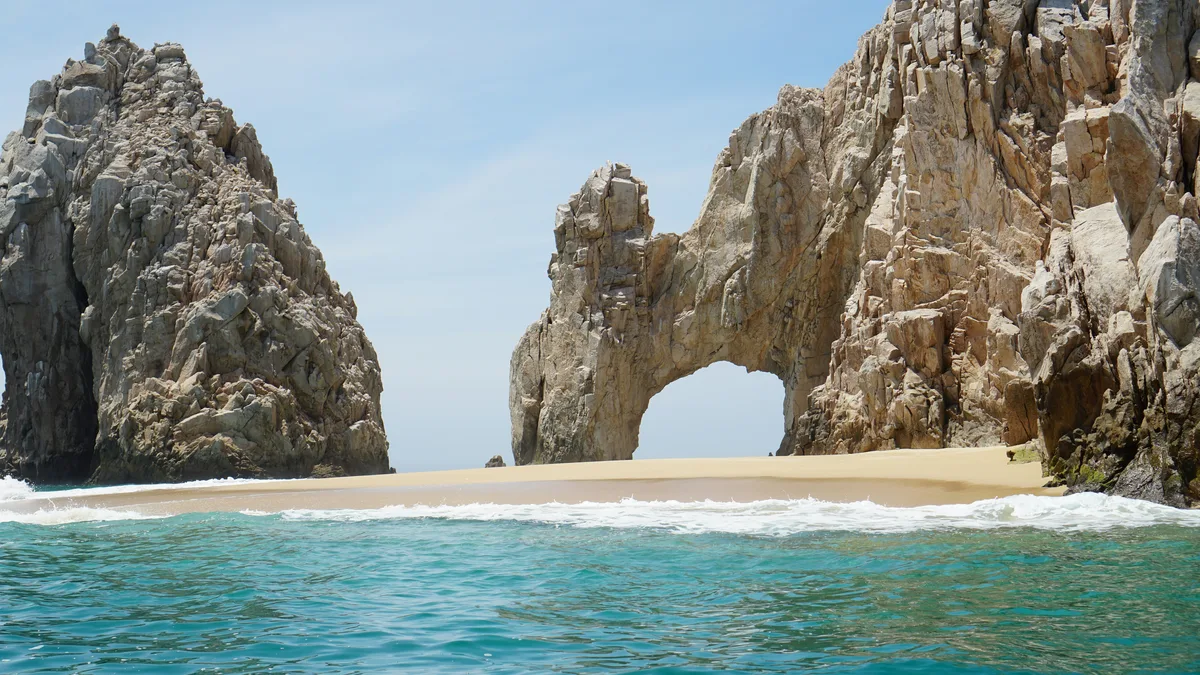
The beach faces Land's End, and the rock arch known as El Arco is visible from the sand. English Wikipedia describes the arch as a granitic formation about 61 metres high at the point where the Pacific Ocean becomes the Gulf of California, with Lover's Beach on its calmer Sea of Cortez side and Divorce Beach on the rougher Pacific side. Small boats and water taxis commonly depart from the beach and the nearby marina for trips around the point.
The bay and point lie within the Cabo San Lucas Flora and Fauna Protection Area, decreed in 1973 (sources give differing August and November dates) and covering about 3,996 hectares, roughly 95 percent of it sea, according to Spanish Wikipedia. That source lists over 800 plant and animal species, a sea lion colony of more than 30 animals, and seasonal visits by humpback, gray and blue whales. Spanish Wikipedia also links the area to the UNESCO site Islands and Protected Areas of the Gulf of California, but UNESCO's own property page does not name Cabo San Lucas, so treat that link as unconfirmed.
Evidence of human habitation in the area goes back at least 10,000 years, and the Pericu people lived there when Europeans arrived. Francisco de Bolanos named the cape on 18 October 1541, and Sebastian Vizcaino named the bay Bahia de San Bernabe in 1602 to 1603, according to Spanish Wikipedia. A tuna-canning operation ran from 1929 until 1979, and government tourism development in Los Cabos followed Cancun and Ixtapa. The 2020 census recorded 202,694 residents in Cabo San Lucas.
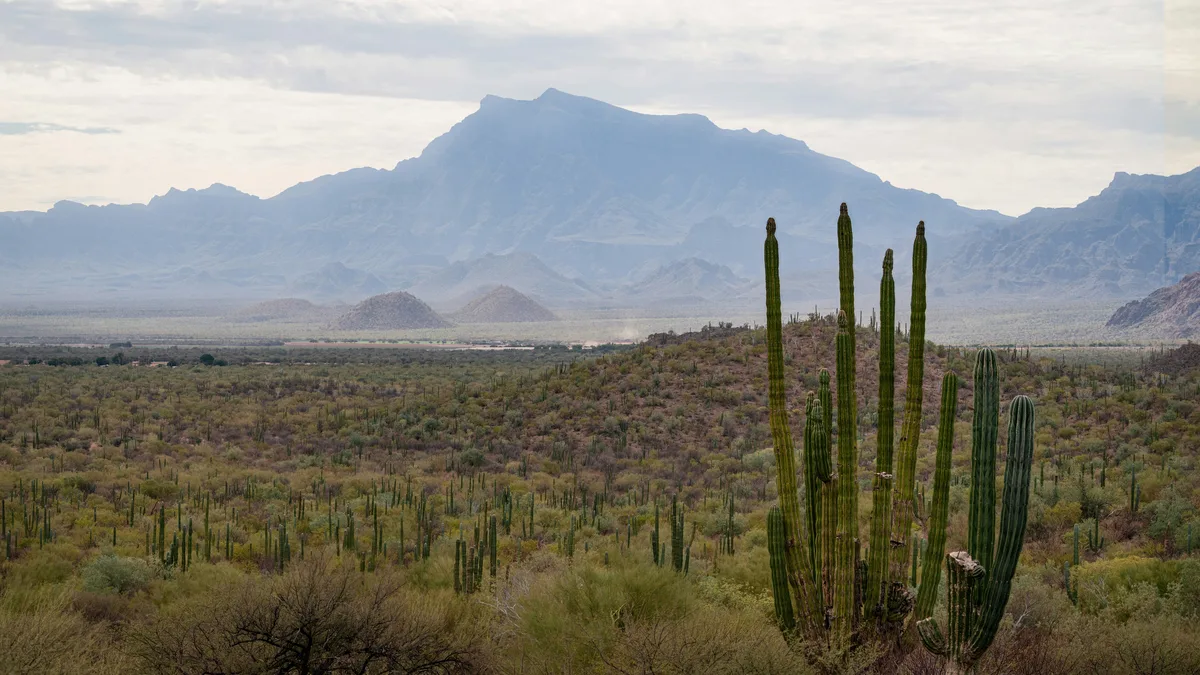
Cabo San Lucas has a hot desert climate. Wikipedia gives summer sea temperatures of about 28 to 29 degrees Celsius and winter lows of about 21 to 22 degrees, and whales travel to the warm Gulf of California in winter. Hurricane Odile made landfall on 14 September 2014.
The beach is a social, busy spot lined with restaurants, beach clubs and water-sports operators close to the marina. A private tour with a driver can include it alongside the marina and a boat trip to Land's End, with the transfers handled for the group.
See every tour and attraction we cover in Los Cabos.