TorontoOntario · 36 tours
 Niagara FallsOntario · 25 tours
 New York CityNew York · 30 tours
 Las VegasNevada · 8 tours
 San FranciscoCalifornia · 16 tours
 VancouverBritish Columbia · 17 tours
 DubaiUAE · 54 tours
 Abu DhabiUAE · 5 tours
 Buenos AiresArgentina · 23 tours
 AthensGreece · 31 tours
 AucklandNew Zealand · 38 tours
 CancunMexico · 54 tours
No destinations match “”. Try searching all tours instead — that search understands full questions, not just place names.
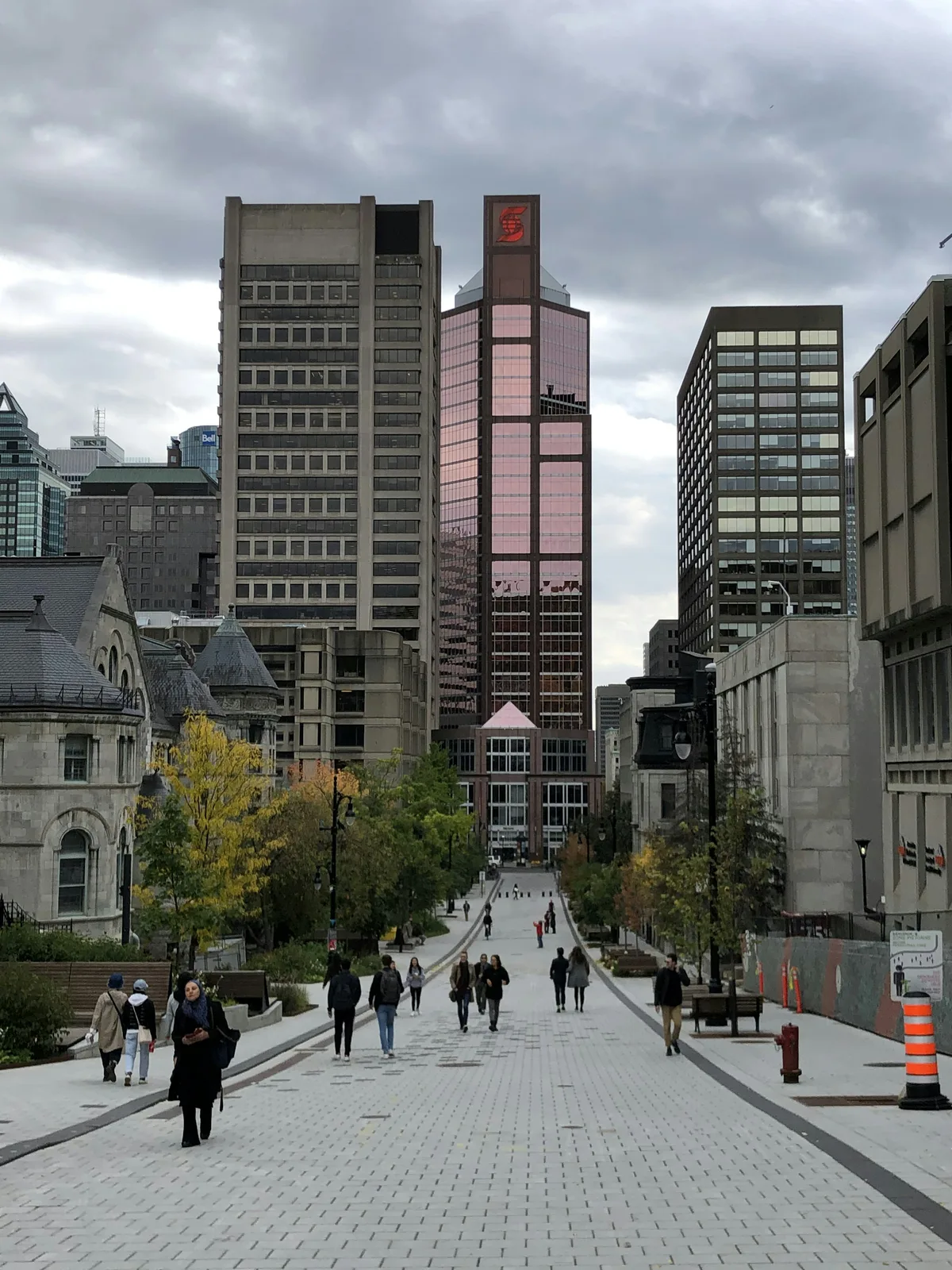
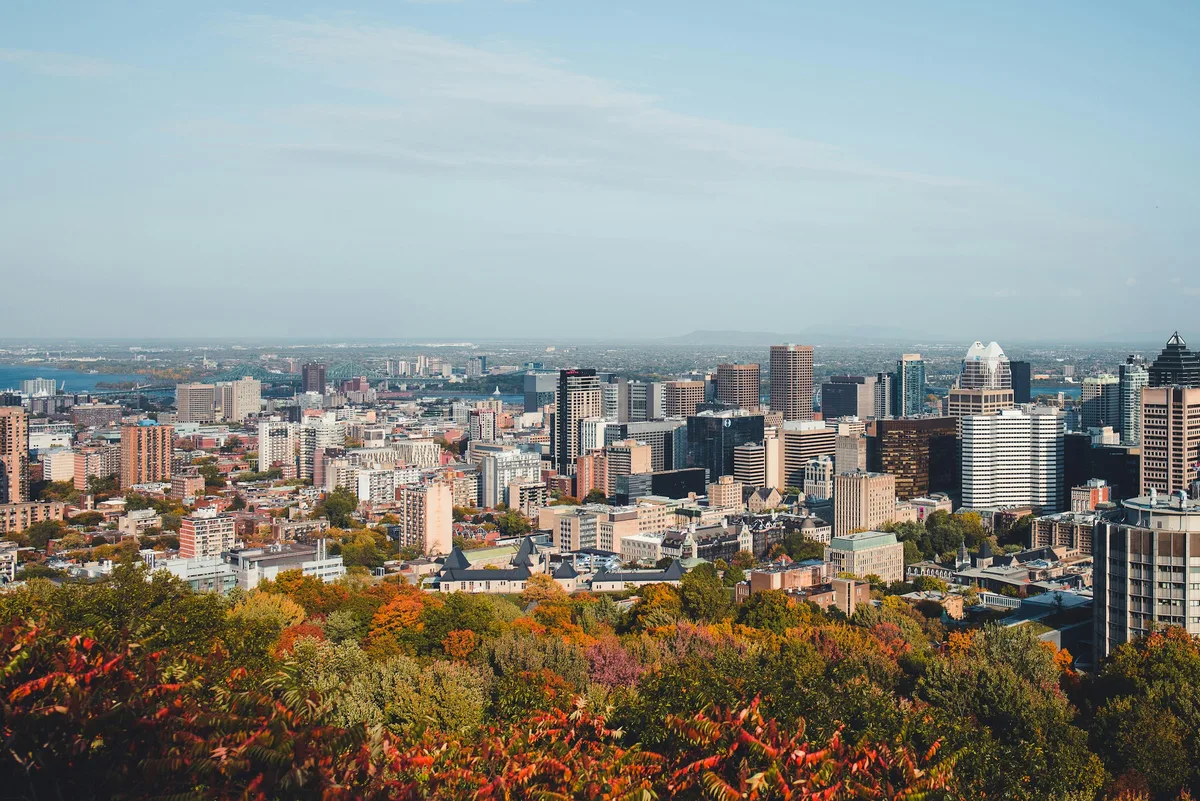
A tree-lined pedestrian promenade leading from McGill University's gates down through downtown Montreal's skyscrapers.
Visitor guide
McGill College Avenue is a short, wide boulevard in downtown Montréal that runs from the Roddick Gates of McGill University on Sherbrooke Street south to the plaza of Place Ville Marie. Standing at the gates and looking down the street, you see a clear line toward the office towers of the city centre; looking the other way from the plaza, the campus and the slopes of Mount Royal fill the view.
The street was first laid out in 1857, on the axis leading to the original McGill College building, today the university's Arts Building. The college itself traces to a royal charter of 1821 and a bequest from the fur merchant James McGill, who died in 1813; the name McGill University was adopted in 1885. For a long time the street was an ordinary downtown thoroughfare, and the idea of widening it into a grand approach was floated as early as 1952, when the French urban designer Jacques Greber submitted a design to the City.
The avenue took its present look in the 1980s, when it was widened and turned into a scenic route. The project was not entirely smooth. In 1983 a proposal for a concert hall inside Place Montréal Trust, together with an office tower that would have partly blocked the view of Mount Royal, drew public opposition, including from the architectural activist Phyllis Lambert. The concert hall idea was dropped, the building was redesigned with a wider setback, and the hall was eventually built elsewhere as part of the Place des Arts complex. In other words, the open view you see today was fought for.
The gates at the top of the avenue were a gift of Lady Amy Redpath Roddick in memory of her husband, Sir Thomas George Roddick, a McGill medical graduate who served as dean of medicine from 1901 to 1908. McGill's own archive pages describe a classical, colonnaded design by Grattan Thompson, with a clock tower on each side chosen because Sir Thomas was reputedly a punctual man. Sources differ slightly on the date: the gift is placed in 1924 and the formal opening in 1925.
The avenue is lined with office towers and shopping complexes, including Place Montréal Trust and the Centre Eaton, and 1981 McGill College, in front of which stands The Illuminated Crowd (La Foule illuminée), a sculpture by Raymond Mason. In summer the west sidewalk hosts photography exhibitions mounted with the nearby McCord Museum, and since 2001 the street has been the setting for the Montréal Fashion and Design Festival, held in early August. Beneath the pavement runs the Mount Royal railway tunnel, and the avenue's southern end connects into the Underground City network at Place Ville Marie.
The avenue is only about four blocks long, so it works best as a link rather than a destination: a stroll from the downtown core up to the gates, then a walk into the campus grounds, and onward toward Mount Royal Park if you have time. Check McGill and event organizers for current campus access, festival dates and any exhibitions before you go.
On a Voyzo private tour, a private vehicle and driver can collect you door to door and drop you at the Place Ville Marie end or beside the gates, so you can walk the avenue one way without retracing your steps.
Within a few minutes' walk are the McCord Stewart Museum, the Underground City concourses at Place Ville Marie and Eaton Centre, and the McGill campus with its historic stone buildings.
See every tour and attraction we cover in Montreal.