TorontoOntario · 36 tours
 Niagara FallsOntario · 25 tours
 New York CityNew York · 30 tours
 Las VegasNevada · 8 tours
 San FranciscoCalifornia · 16 tours
 VancouverBritish Columbia · 17 tours
 DubaiUAE · 54 tours
 Abu DhabiUAE · 5 tours
 Buenos AiresArgentina · 23 tours
 AthensGreece · 31 tours
 AucklandNew Zealand · 38 tours
 CancunMexico · 54 tours
No destinations match “”. Try searching all tours instead — that search understands full questions, not just place names.
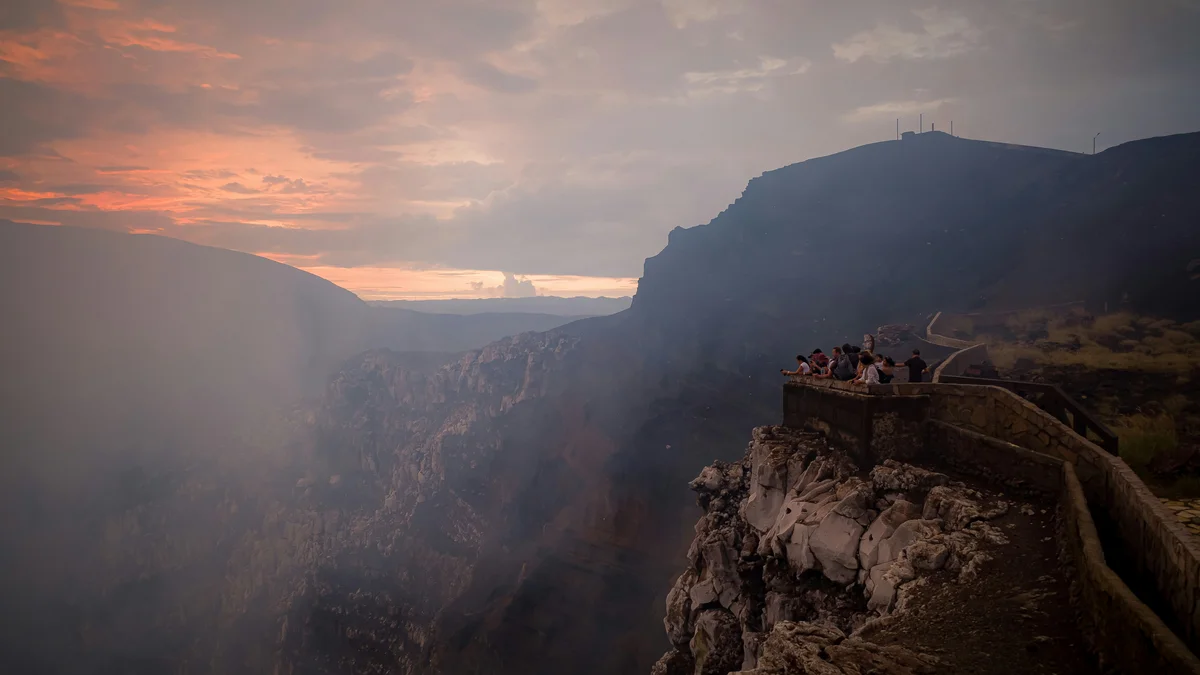
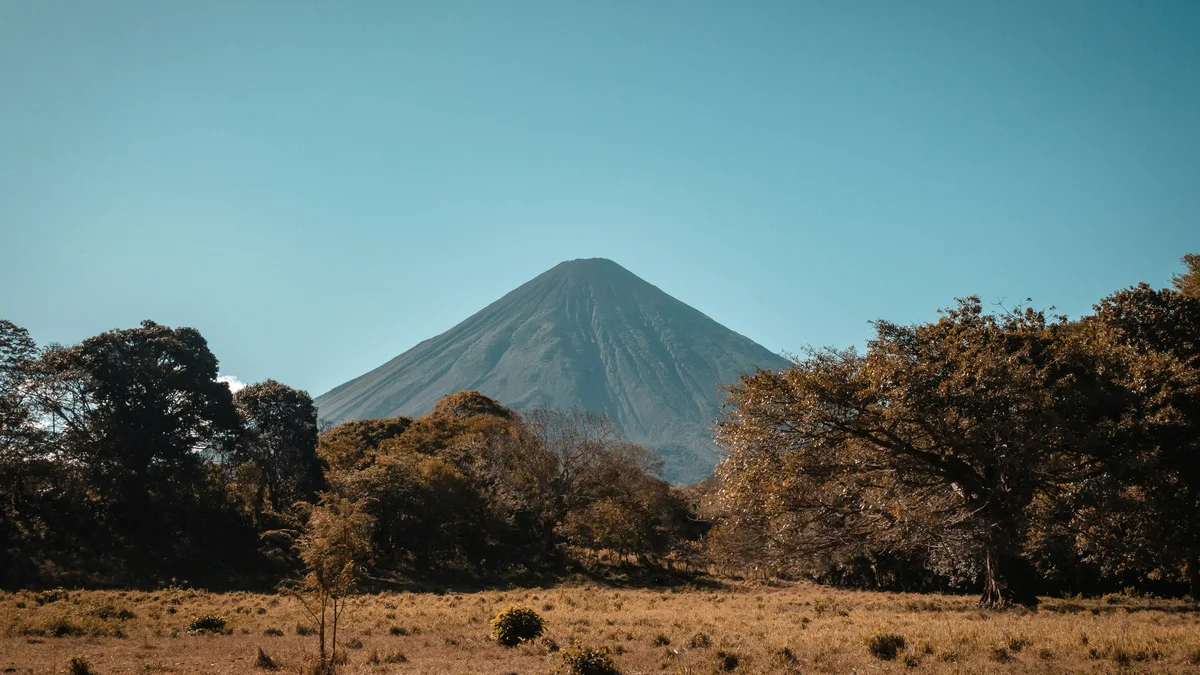
Masaya Volcano National Park protects one of the few volcanoes in the world where visitors can drive directly up to the rim of an active crater. The Santiago crater regularly holds a visible, glowing lava lake, especially after dark, and the park's rangers monitor gas levels closely given the volcano's ongoing activity. Nicaragua's indigenous Chorotega people once called it Popogatepe, the "mountain that burns," and it remains one of Central America's most accessible active volcanoes.
Visitor guide
Masaya Volcano National Park protects a complex of nested calderas and craters about 20 kilometres south of Managua, Nicaragua. In 1979 it became the country's first national park. Its Santiago crater is persistently active and is known for glowing lava visible from the crater edge.
According to Wikipedia, the park covers about 54 square kilometres and includes two volcanoes and five craters, with elevations from roughly 100 to 630 metres and a summit of 635 metres. The historical Indigenous name is Popogatepe, from Nawat. The volcano is a complex made of nested calderas and craters, the largest being the Las Sierras shield volcano and caldera.
The Masaya caldera formed about 2,500 years ago in a basaltic ignimbrite eruption estimated at 8 cubic kilometres. A newer basaltic complex then grew inside it from vents including the Masaya and Nindiri cones, and the pit craters of Masaya, Santiago, Nindiri and San Pedro are associated with these cones. A lake occupies the far eastern end of the caldera, and most of the caldera floor is covered by sparsely vegetated aa lava, suggesting resurfacing within the last 1,000 years.
In 1670 lava overflowed from Nindiri crater, which then held a lava lake about a kilometre wide. In 1772 lava erupted from a fissure on the flank of the Masaya cone. Since 1772, lava has surfaced mainly in the Santiago pit crater, which is active and persistently degassing, and may also have surfaced in Nindiri in 1852.
The volcano continuously emits large amounts of sulfur dioxide, mainly from the Santiago crater, and volcanologists study these emissions to understand its behaviour and assess acid rain and potential health effects. Wikipedia lists several explosive events in the last 50 years, including a hot spot noted by satellite on 22 November 1999, an explosion on 23 April 2001 that formed a new vent and threw rocks up to 60 centimetres across as far as 500 metres, and an eruption cloud rising about 4.6 kilometres on 4 October 2003. Ash and steam were emitted in 2008. The volcano is monitored with gas instruments, and visitor access to the crater edge depends on current conditions and park decisions.
The park contains a lava tube formed by lava flows, and Wikipedia mentions bats and the glow of lava from the dark crater mouth. In March 2020 tightrope walker Nik Wallenda crossed a steel cable over the caldera, a stunt that drew international attention to the park.
The name Popogatepe is commonly rendered as the mountain that burns, a translation that appears in travel sources, though the Wikipedia article gives only the Nawat name itself. Because activity changes over time, current conditions at the crater should always be confirmed locally.
A private guided visit can combine the crater with Masaya's other attractions and Granada, and a guide can explain the gas monitoring and the history of the lava lake.
See every tour and attraction we cover in Nicaragua.