TorontoOntario · 36 tours
 Niagara FallsOntario · 25 tours
 New York CityNew York · 30 tours
 Las VegasNevada · 8 tours
 San FranciscoCalifornia · 16 tours
 VancouverBritish Columbia · 17 tours
 DubaiUAE · 54 tours
 Abu DhabiUAE · 5 tours
 Buenos AiresArgentina · 23 tours
 AthensGreece · 31 tours
 AucklandNew Zealand · 38 tours
 CancunMexico · 54 tours
No destinations match “”. Try searching all tours instead — that search understands full questions, not just place names.
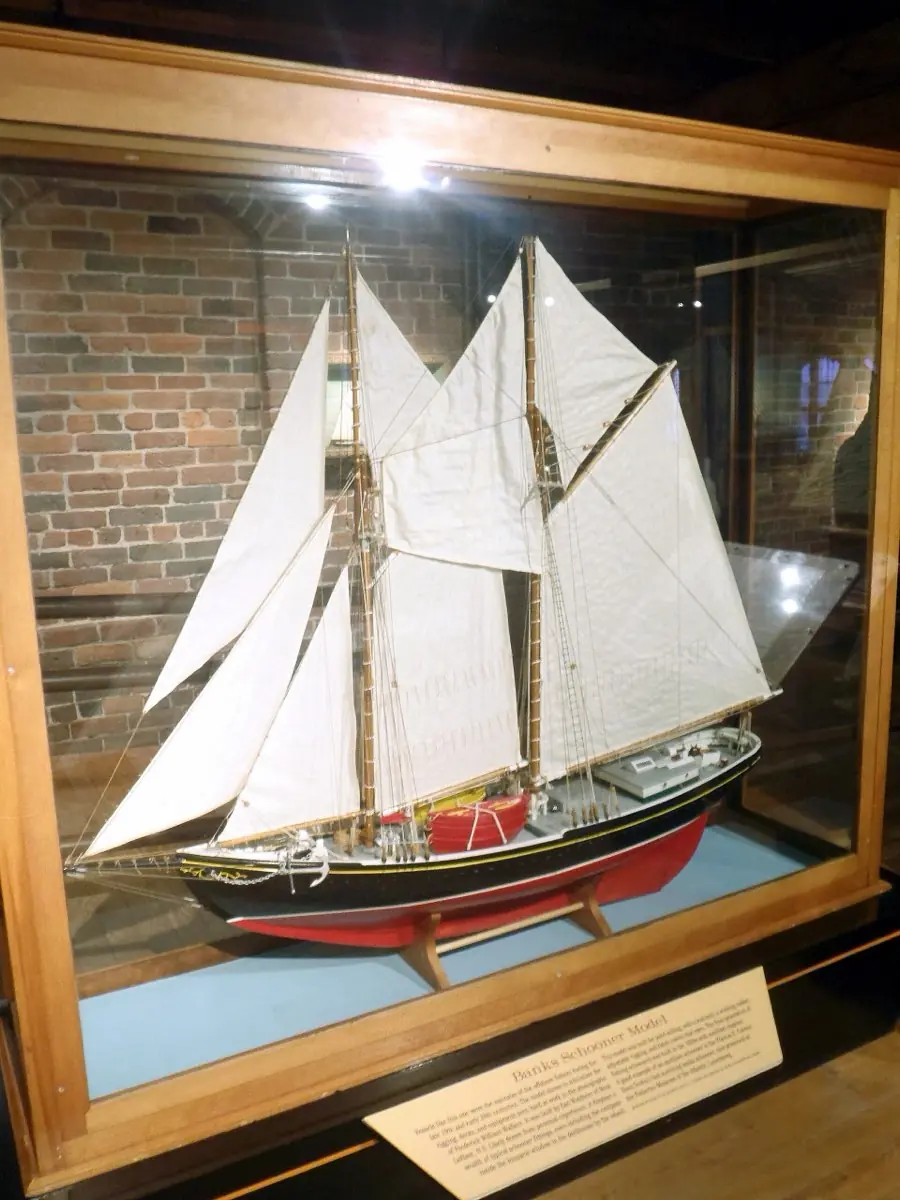
A museum on the Halifax waterfront holding one of the world's major Titanic artifact collections.
Visitor guide
The Maritime Museum of the Atlantic, at 1675 Lower Water Street on the Halifax waterfront, is part of the Nova Scotia Museum family and tells the story of the region's links with the sea. It holds more than 30,000 artifacts, including about 70 small craft, and the museum ship CSS Acadia is moored at its wharf.
According to the museum, it began in 1948 with a small space at the Halifax Dockyard, moved to the Halifax Citadel in 1952 and became the Maritime Museum of Canada in 1957, and its first director from 1959, Niels Jannasch, served until 1985. After several moves it settled on the waterfront in the early 1980s: Wikipedia says the current building was completed in 1981, while Nova Scotia's own information says it opened in January 1982. It occupies the site of the Robertson & Son ship chandlery, and the restored 1880s Robertson Store sits alongside the modern Devonian Wing, which houses the main galleries. The museum is commonly described as Canada's oldest and largest maritime museum, a billing worth treating as the institution's own description.
The permanent exhibit "Titanic: The Unsinkable Ship and Halifax" covers the ship's construction and sinking and Halifax's role, since survivors went to New York but most of the dead were brought to Halifax. Cable ships chartered from the White Star Line, beginning with the Mackay-Bennett, recovered bodies; the Maritime Museum's figures are that 337 bodies were recovered in total, with 209 brought to Halifax, and 150 buried there after 59 were sent to families, while the Nova Scotia Archives gives a slightly higher total. Burials took place from May 3 to June 12, 1912 across three cemeteries, with 121 at Fairview Lawn, 19 at Mount Olivet and 10 at Baron de Hirsch.
The exhibit includes over 50 objects including wooden flotsam, carved woodwork and photographs, a reproduction deck chair, and a pair of children's leather shoes believed to belong to Body No. 4, the "Unknown Child", later identified as Sidney Leslie Goodwin. Wikipedia describes the museum's wooden Titanic artifacts as a foremost collection. A 2012 exhibit covered the Halifax cable ships.
A gallery covers the explosion of December 6, 1917, when the French ship Mont-Blanc, carrying munitions, was involved in a collision with the Imo and exploded just before 9:05 a.m. Melted and twisted fragments of Mont-Blanc's hull are displayed, and the exhibit "Explosion in the Narrows", updated in 2019, follows the effects on Mi'kmaw, African Nova Scotian, migrant and military communities.
CSS Acadia, a steam hydrographic survey ship launched in 1913 at Newcastle upon Tyne by Swan Hunter and Wigham Richardson, is the museum's largest artifact. It worked as a research vessel and served in both World Wars, was retired in 1969, and joined the museum in 1982. It was designated a National Historic Site in 1976, and sources describe it as the last ship afloat that was present at the 1917 explosion. Other galleries cover the Age of Sail, Age of Steam, small craft, the Canadian Navy and shipwrecks, including the Battle of the Atlantic convoy story.
Check the Nova Scotia Museum's site for current hours, admission, tours of Acadia and any seasonal exhibits. HMCS Sackville, a Second World War corvette, berths nearby in the summer, but it is not run by the museum.
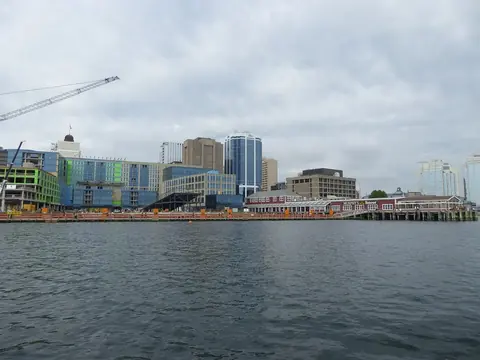
The museum is at the centre of the boardwalk, so a Voyzo private tour can combine it with a harbourfront walk, with the private driver collecting you afterward.
See every tour and attraction we cover in Halifax.