TorontoOntario · 36 tours
 Niagara FallsOntario · 25 tours
 New York CityNew York · 30 tours
 Las VegasNevada · 8 tours
 San FranciscoCalifornia · 16 tours
 VancouverBritish Columbia · 17 tours
 DubaiUAE · 54 tours
 Abu DhabiUAE · 5 tours
 Buenos AiresArgentina · 23 tours
 AthensGreece · 31 tours
 AucklandNew Zealand · 38 tours
 CancunMexico · 54 tours
No destinations match “”. Try searching all tours instead — that search understands full questions, not just place names.
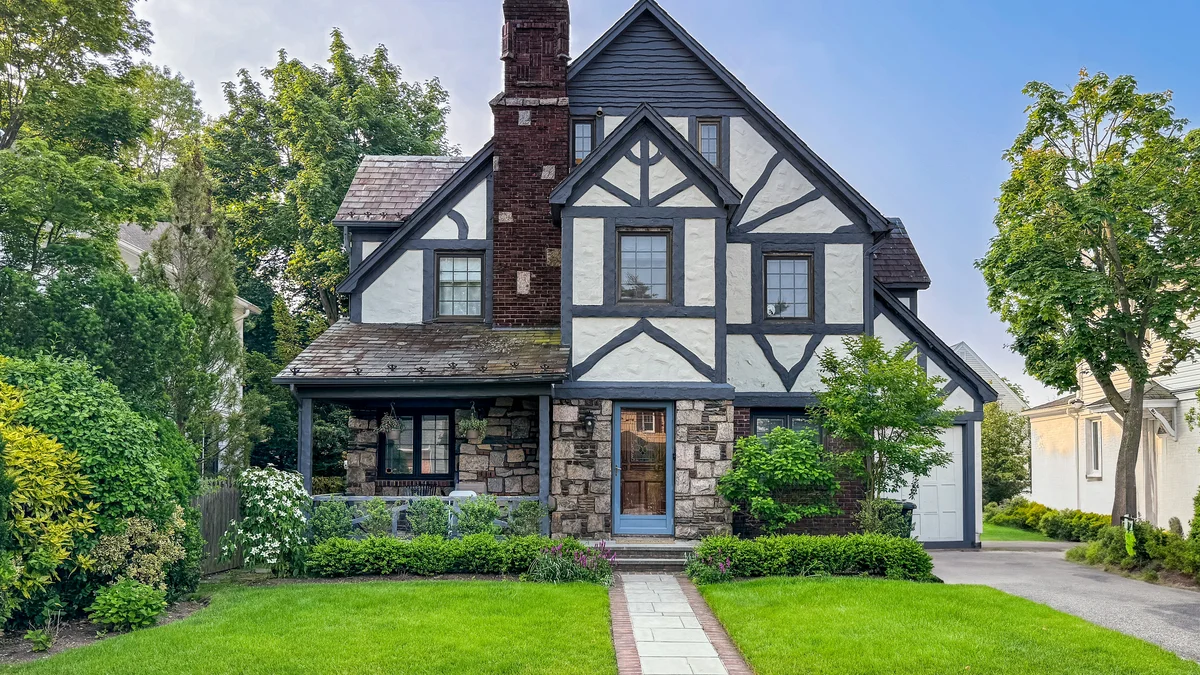
The Margaret Mitchell House is the restored Atlanta apartment building where Mitchell lived while writing 'Gone with the Wind,' the 1936 novel that went on to win the Pulitzer Prize and become one of the best-selling books in American history. Mitchell referred to her cramped ground-floor apartment as 'The Dump,' and it's now preserved as a small museum alongside exhibits on the novel and its famous 1939 film adaptation. The building itself survived two fires before being restored and reopened to the public.
Visitor guide
The Margaret Mitchell House is the restored Midtown Atlanta building where Margaret Mitchell and her husband John Marsh lived in Apartment 1 from 1925 to 1932. Mitchell wrote most of Gone with the Wind there. Today it anchors the Atlanta History Center's Midtown campus as a small house museum.
The house was built in 1899 for Cornelius J. Sheehan as a single-family home, originally at 806 Peachtree Street, and the National Register database lists its style as Tudor Revival. The Sheehan family left in 1907. In the winter of 1913 to 1914 it was moved onto a new basement story at the rear of the lot and given a Crescent Avenue address, and in 1919 it was remodeled into a ten-unit apartment building known as the Crescent Apartments. A Digital Library of Georgia record gives a different construction year, so 1899 is the figure from the National Park Service and Wikipedia.
Mitchell and Marsh married in July 1925 and settled in the ground-floor apartment, about 650 square feet, which she called The Dump because of its poor upkeep. Mitchell, born in Atlanta in 1900, was a former Atlanta Journal reporter whose first Sunday Magazine story ran at the end of 1922, and she wrote well over a hundred feature articles before leaving journalism. She wrote the bulk of the novel between 1926 and 1930 at a small table in the living-room alcove overlooking Crescent Avenue, working on a Remington portable typewriter that Marsh bought her. The Atlanta History Center tells the origin story this way: after a foot injury, Mitchell read heavily, and Marsh suggested she write something of her own once she had worked through the library's fiction. The couple moved to a larger apartment in spring 1932, to the Russell Apartments on 17th Street according to one local history.
Macmillan editor Harold Latham read the manuscript in April 1935, and Mitchell spent roughly six more months checking historical details and rewriting the opening chapter. The novel was published on June 30, 1936, and sales reached about a million copies by the end of that year. It won the Pulitzer Prize for Fiction in 1937. Mitchell had considered titles including Tomorrow Is Another Day before the final one, taken from a poem by Ernest Dowson. The 1939 film adaptation premiered in Atlanta on December 15, 1939, at Loew's Grand Theatre, and went on to win ten Academy Awards, including one for Hattie McDaniel, the first African American to win an Oscar.
The building declined through the Depression era, the porches on the Crescent Avenue side were removed in 1946, and it was renovated in 1964 as the Windsor House Apartments. In 1977 the last tenants left and it was boarded up. In 1987 a developer proposed demolishing the building for an office complex; public opposition followed and Mayor Andrew Young declined to sign the demolition permit, which bought time for preservation supporters to organize. It was designated a city landmark in 1989 and added to the National Register of Historic Places on June 21, 1996, under the name Crescent Apartments, with literature as its area of significance.
Arson fires severely damaged the building in 1994 and 1996, but Mitchell's apartment survived the second. Daimler-Benz became lead restoration sponsor, giving a donation reported at $4.5 million, and the house was dedicated on May 16, 1997 (some sources give May 17 for the public opening). In 2024 the museum reopened with a revised exhibit that places the 1936 novel and 1939 film in context, covering their impact and legacy.
The Atlanta History Center says the novel and film, though popular worldwide, present an inaccurate picture of the Old South, including a benevolent view of slavery and demeaning portrayals of Black characters. The museum states that it encourages open discussion of the book, the film, the historical evidence and Mitchell's life, and that its interpretation changes as new research emerges.
The Atlanta History Center places the house in Midtown at the corner of 10th Street and Peachtree Street, and the Clio entry notes that Mitchell's manuscripts and typewriter are shown in the museum. Check the Atlanta History Center for current hours, tours and exhibits. A private vehicle and driver with door-to-door pickup makes Midtown stops like this one easy to combine with other Atlanta sights.
See every tour and attraction we cover in Atlanta.