TorontoOntario · 36 tours
 Niagara FallsOntario · 25 tours
 New York CityNew York · 30 tours
 Las VegasNevada · 8 tours
 San FranciscoCalifornia · 16 tours
 VancouverBritish Columbia · 17 tours
 DubaiUAE · 54 tours
 Abu DhabiUAE · 5 tours
 Buenos AiresArgentina · 23 tours
 AthensGreece · 31 tours
 AucklandNew Zealand · 38 tours
 CancunMexico · 54 tours
No destinations match “”. Try searching all tours instead — that search understands full questions, not just place names.
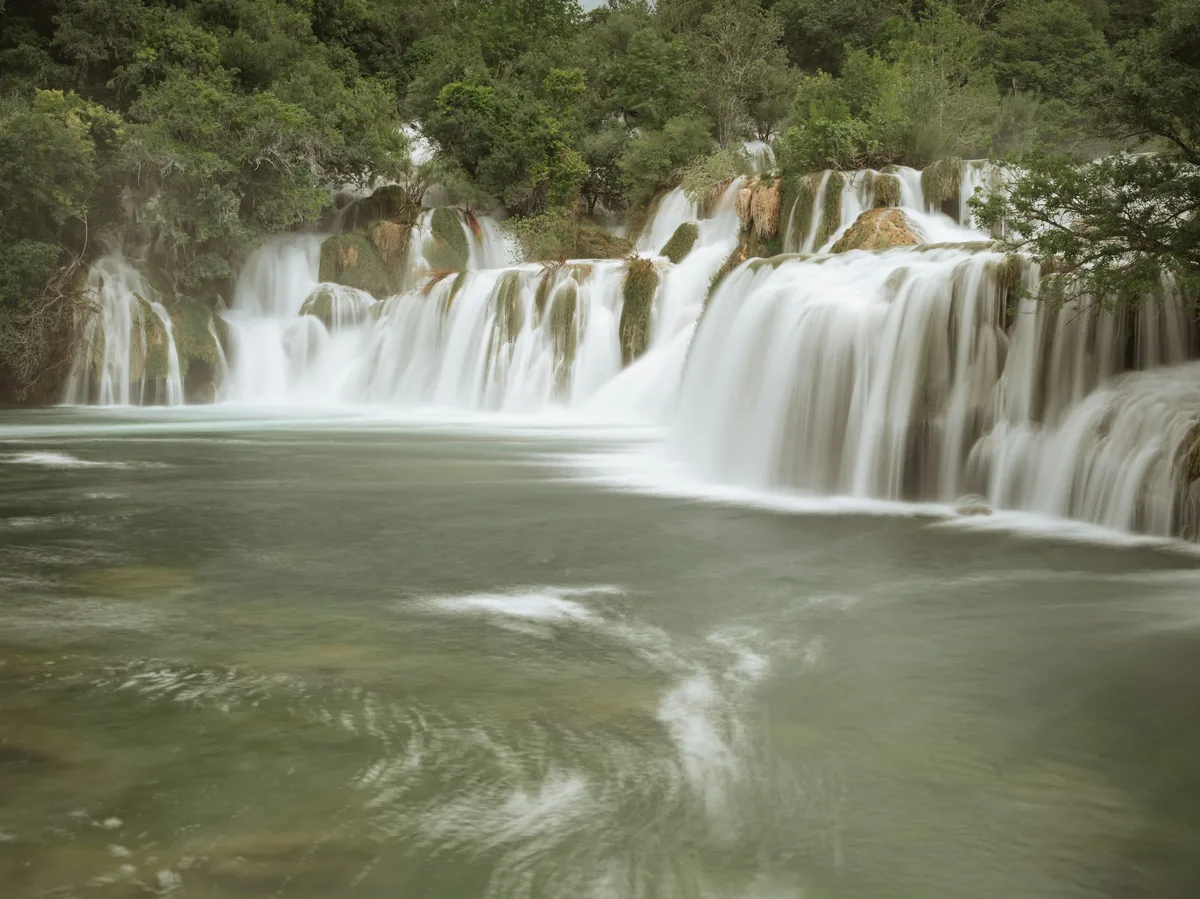
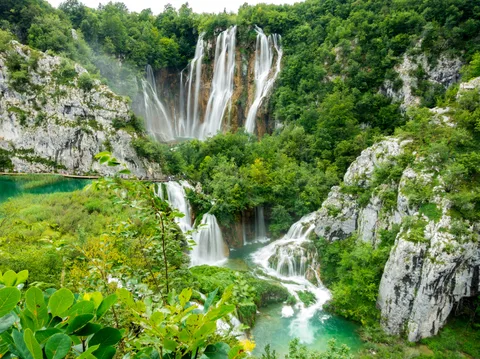
A river canyon national park near Šibenik known for its travertine waterfalls, designated swimming areas downstream of the Skradinski Buk cascade (swimming at the falls themselves has been banned since 2021), and boat trips to Visovac Monastery.
Visitor guide
Krka National Park is a protected river landscape in Sibenik-Knin County in central Dalmatia, Croatia, a short distance northeast of the city of Sibenik. Proclaimed in 1985 and covering about 109 square kilometres, it follows the middle and lower course of the Krka River and is best known for its travertine waterfalls.
The park protects the stretch of the Krka River from near Knin down to Skradin, along with the lower part of its tributary, the Cikola. At its seaward end the river forms a ria, a river mouth drowned when sea levels rose after the last glaciation. Wikipedia says this ria is about 23.5 kilometres long and that seawater reaches up to the base of the Skradinski buk waterfalls. The Krka's clean water supports a rich mix of freshwater and marine life. The town of Skradin, which sits at the entrance to the park, was already a Roman administrative and military centre known as Scardona.
Skradinski buk is the lowest of the river's waterfall sets. It consists of seventeen steps spread along about 800 metres, with a total height difference of about 45.7 metres, according to the park. Wikipedia describes it as one of the most impressive travertine cascades in Europe. Roski slap, near Miljevci, is a second major waterfall site with its own walking trail. Park rules on swimming and access have changed over the years, so it is wise to check current regulations before travelling.
Beside Skradinski buk stands the site of the Jaruga hydroelectric plant. Its first plant began operating on 28 August 1895 and sent power along a line of about 11.5 kilometres to Sibenik, where street lighting was among the early uses. The Krka-Sibenik system is regarded as one of the early complete polyphase alternating-current systems and has been recognised as an IEEE Milestone, a distinction that makes the park of interest to engineering history as well as nature.
The small island of Visovac, roughly 170 by 120 metres, sits in a lake-like widening of the river. Augustinian monks founded a monastery there in the 14th century, and in 1445 Franciscans who had left parts of Bosnia enlarged it. The monastery holds a library with rare manuscripts, including a 1487 printed edition of Aesop's fables. Elsewhere in the park stands the Krka Monastery, an Eastern Orthodox monastery founded in 1345 and first mentioned in documents in 1402, which remains a spiritual centre of the Orthodox Dalmatian diocese.
At the edge of the park lie the remains of Burnum, a Roman legionary fortress begun during the reign of Augustus. Different legions garrisoned it over time, and its amphitheatre was cut into the bedrock and could reportedly hold around 6,000 spectators. Locals call the site the Hollow Church. The fortress was destroyed in the 6th century.
About 860 plant species and subspecies have been recorded in the park, among them several Illyrian-Adriatic endemics. The Krka holds 18 fish species, ten of them endemic. The park lists 222 bird species and is important for migration, with birds of prey such as the osprey, golden eagle and peregrine falcon. Eighteen bat species and the European otter also live here.
The park lies close to the coast, so a private guided day with a driver can combine it with Sibenik or Skradin.
See every tour and attraction we cover in Croatia.