TorontoOntario · 36 tours
 Niagara FallsOntario · 25 tours
 New York CityNew York · 30 tours
 Las VegasNevada · 8 tours
 San FranciscoCalifornia · 16 tours
 VancouverBritish Columbia · 17 tours
 DubaiUAE · 54 tours
 Abu DhabiUAE · 5 tours
 Buenos AiresArgentina · 23 tours
 AthensGreece · 31 tours
 AucklandNew Zealand · 38 tours
 CancunMexico · 54 tours
No destinations match “”. Try searching all tours instead — that search understands full questions, not just place names.
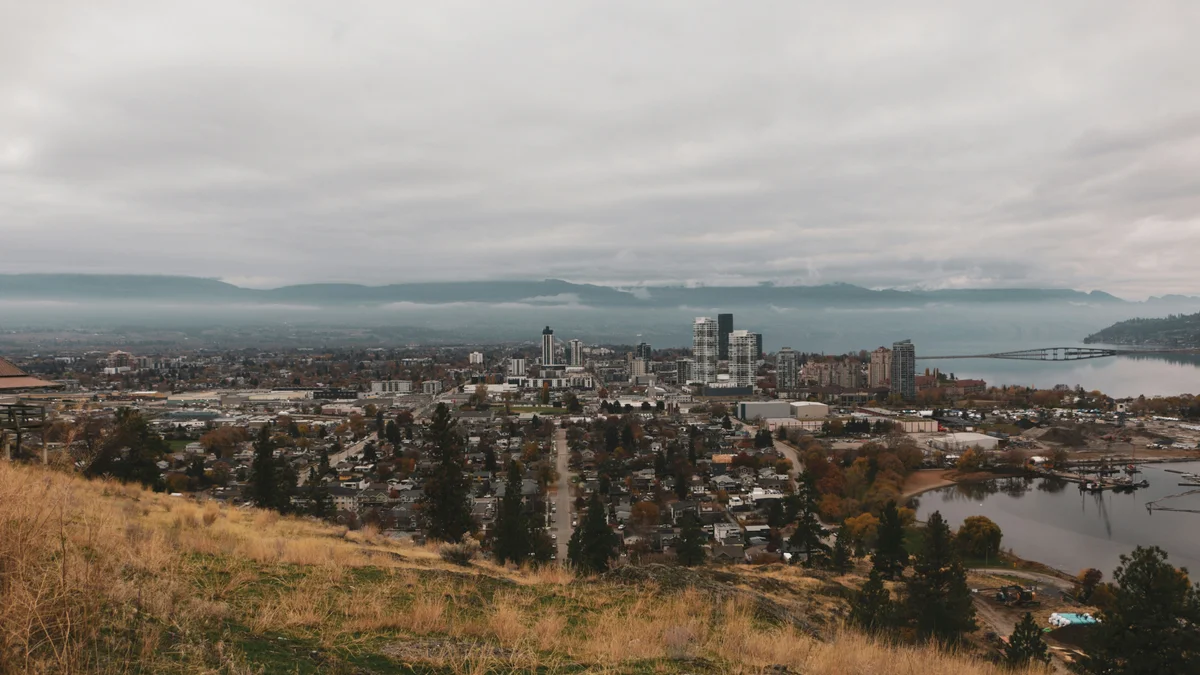
Knox Mountain Park is Kelowna's largest natural park, rising above the north end of downtown along Okanagan Lake. Hiking and biking trails wind up to several lookout points, including Crown Point and the park's summit, both offering panoramic views over the lake, the city, and the surrounding vineyards.
Visitor guide
Knox Mountain Park is the natural-area park that rises above Kelowna's north end, looking out over Okanagan Lake, the downtown and the bridge. It is a local favourite for short hikes, sunset views and wildflower season, and it carries a surprising amount of civic history.
The mountain is named for Arthur Booth Knox, a rancher who received a Crown grant for cattle range in 1874. Wikipedia and local history record that he was convicted of burning rivals' haystacks and sentenced to three years of hard labour. The land passed to the Okanagan Fruit and Land Company and was subdivided around 1906. In 1912, Kelowna's first doctor, Dr. Benjamin deFurlong Boyce, bought 190.82 acres covering the mountain, and in 1939 he donated it to the city for one dollar, according to the City of Kelowna's park brochure.
The park has grown since. A trust fund set up in 1967 by Stanley Simpson paid for improvements including a paved road, and the city acquired the Paul's Tomb properties between 1989 and 1992 and the Kathleen Lake lands in 2006, with Knox Mountain East dedicated in 2010. The Friends of Knox Mountain Park formed in 1999 to promote stewardship.
The City of Kelowna's park brochure gives the park, including Knox Mountain East, as 310 hectares (766 acres); Wikipedia gives about 235 hectares and other city pages give larger figures, so treat any single figure as approximate. The City of Kelowna describes the main body of the park as its largest contiguous natural-area park. The summit sits roughly 300 metres above the lake by one trail description. The park protects fragile ecosystems, including ponderosa pine and bunchgrass slopes, dry Douglas-fir forest, wetland and riparian areas, so staying on designated trails matters.
Wikipedia counts 10 trails of varying difficulty. The Apex Trail climbs to the summit and is described as a 4 km out-and-back walk, while Paul's Tomb Trail is shorter and passes the 1910 family vault built by Rembler Paul, now mostly covered with earth. Two lookouts, including the summit, can be reached by road as well as on foot, though road access is managed by the city and may be restricted at times. Kathleen Lake, about 2 hectares, is a small wetland feature.
In late April or early May, arrowleaf balsamroot, the Okanagan sunflower and Kelowna's official flower, colours south-facing slopes yellow. Mule deer, coyotes, marmots and many birds live on the mountain, and bears and moose are occasional visitors, so keep distance and follow posted wildlife guidance. Summers are hot and dry, so water and sun protection are wise.
The city's timeline records the first Knox Mountain Hill Climb in 1958. This paved hill-climb race on the park road has run for more than six decades, and organizers bill it as a premier event of its kind in Canada. Race weekends affect road access, so check the event and city schedules.
Parking at the summit is limited when the road is open, so having a private vehicle and driver with door-to-door pickup is a convenient way to see the lookouts, then continue to the waterfront or a winery without a second parked car. Check the City of Kelowna for current park hours, road access and trail conditions.
See every tour and attraction we cover in Kelowna.