TorontoOntario · 36 tours
 Niagara FallsOntario · 25 tours
 New York CityNew York · 30 tours
 Las VegasNevada · 8 tours
 San FranciscoCalifornia · 16 tours
 VancouverBritish Columbia · 17 tours
 DubaiUAE · 54 tours
 Abu DhabiUAE · 5 tours
 Buenos AiresArgentina · 23 tours
 AthensGreece · 31 tours
 AucklandNew Zealand · 38 tours
 CancunMexico · 54 tours
No destinations match “”. Try searching all tours instead — that search understands full questions, not just place names.
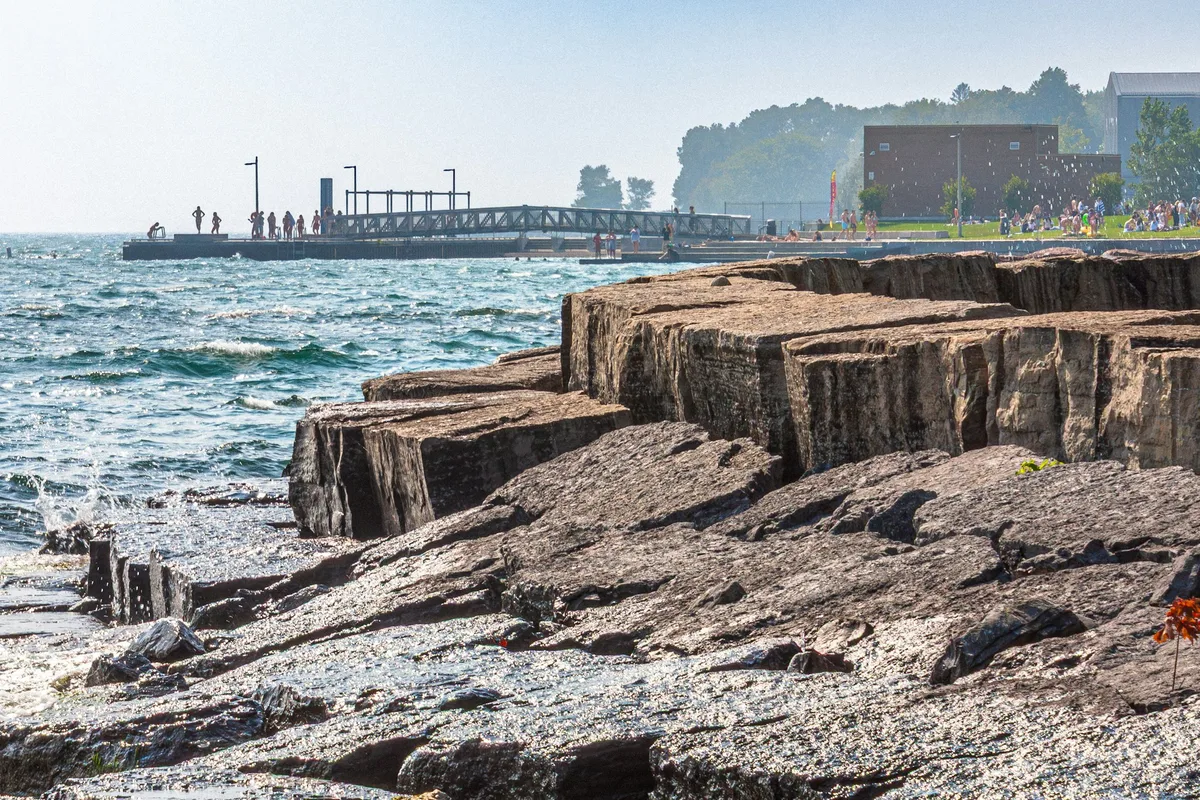
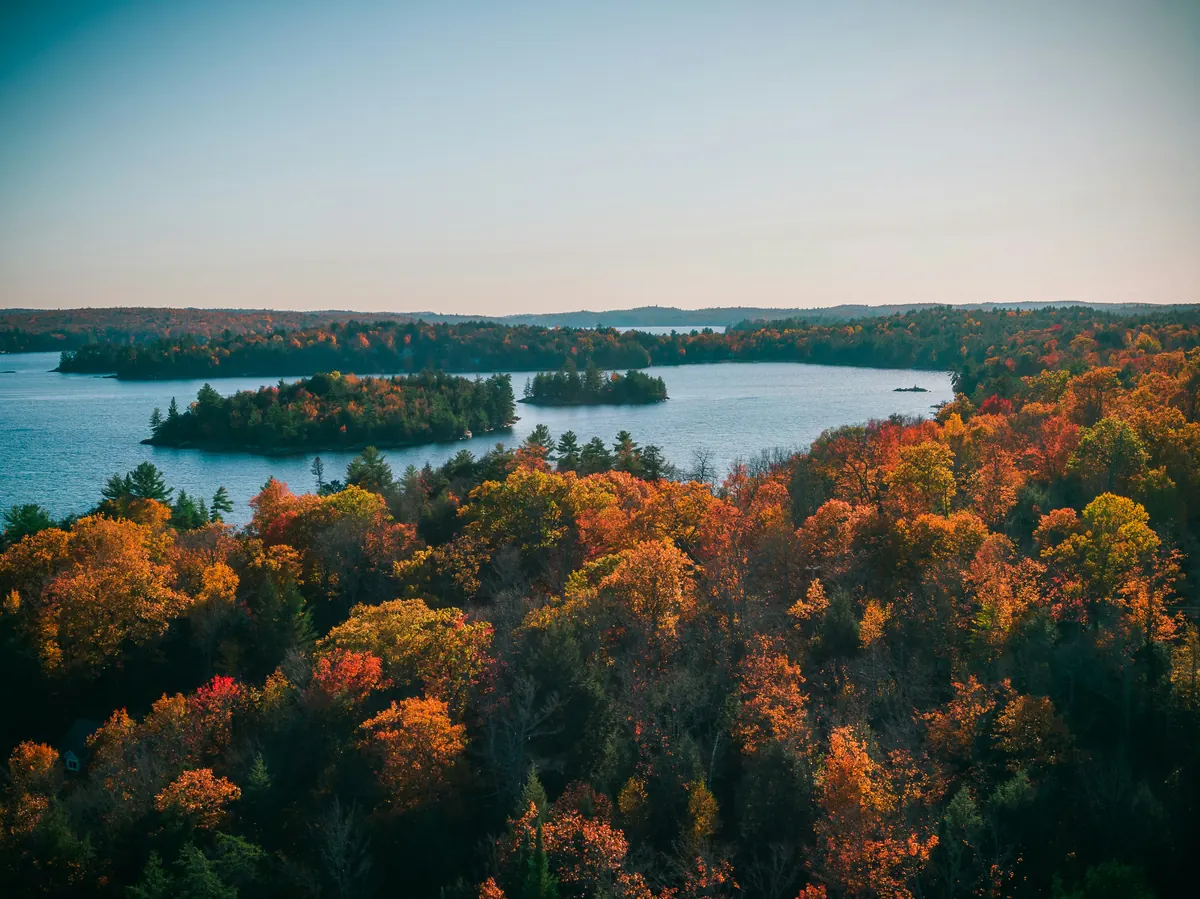
The limestone harbourfront of Ontario's first capital, where 19th-century stone buildings, a marina, and Lake Ontario meet the start of the Thousand Islands.
Visitor guide
Kingston's waterfront lies where the St. Lawrence River leaves Lake Ontario and the Cataraqui River and Rideau Canal meet the lake. The city was the first capital of the Province of Canada, and its limestone downtown, harbour and fortifications make a compact area to walk.
The French founded Fort Cataraqui, later Fort Frontenac, here in 1673; the British destroyed it in 1758 and rebuilt in 1783. Loyalist settlement began in the 1780s, and the name Kingston was set in 1788. A 1783 British survey judged the harbour good in every respect and well placed to command Lake Ontario. Military ships were built at the Point Frederick naval dockyard from 1788 to 1853, and because lake cargo was unloaded here for transfer to St. Lawrence vessels, the port became a transshipment centre for goods such as wheat, flour and potash.
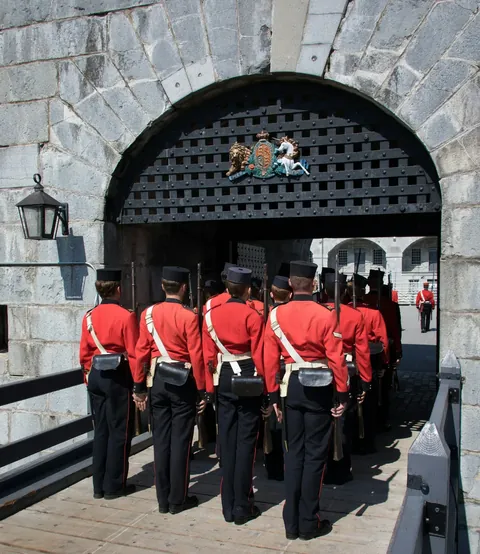
During the War of 1812 the harbour was a major naval base on Lake Ontario, and in November 1812 American ships attacked the British sloop Royal George in the harbour before withdrawing. The Rideau Canal opened in 1832 with Kingston at its lake end, and the present Fort Henry was built from 1832 to 1836 to protect the canal terminus and harbour.
A dock fire and gunpowder explosion in 1840 destroyed much of downtown, and rebuilding in limestone and brick led to the nickname Limestone City. Kingston was capital of the Province of Canada from 1841 to 1844, and City Hall was completed in 1844. The Royal Military College opened on Point Frederick in 1876.
Fort Frontenac was founded in July 1673 at the mouth of the Cataraqui River under Governor Frontenac, and La Salle, who administered it, rebuilt it in stone in 1675 as a base for fur-trade and exploration. Lieutenant-Colonel John Bradstreet's British force took it in August 1758 and destroyed much of it; it lay abandoned for about 25 years before the British rebuilt it in 1783 to house a garrison for the settling Loyalists. The Canadian Army Command and Staff College now occupies the site, so check access before planning to visit.
The harbour is also ringed by Martello towers built in the 1840s during the Oregon boundary crisis between Britain and the United States. Murney Tower was built in 1846 of local limestone, with a much thicker south wall because a naval attack was thought the likeliest threat. Shoal Tower, finished in 1847 and originally named Victoria Tower, stands in the Confederation Basin directly across from City Hall. According to Parks Canada, Shoal Tower was designated a National Historic Site in 1924 and Murney Tower in 1930, while the combined Kingston Fortifications site was designated in 1989.
The Rideau Canal and the Kingston Fortifications were inscribed together as a UNESCO World Heritage Site on 27 June 2007. The Kingston elements are Fort Henry, Fort Frederick, Cathcart Tower, Shoal Tower and Murney Tower. The fortifications are also a National Historic Site of Canada, designated in 1989 according to Parks Canada documents. Check each operator for access.
Kingston City Hall was designed by George Browne in a Neoclassical style, built of limestone on a T-shaped plan with a dome rising above a drum. Its cornerstone was laid on 5 June 1843 and the building was finished by November 1844, grand because Kingston was then the capital. After the seat of government moved to Montreal, the city rented space to tenants such as the post office and customs. A fire in 1908 burned the cupola and part of the dome, which was rebuilt with a new clock and bell (the City of Kingston gives 1909 for the rebuilt cupola; Parks Canada says the dome was rebuilt in 1910). Memorial Hall holds twelve stained glass windows honouring First World War battles, and Sir John A. Macdonald lay in state here after his death in 1891. It was designated a National Historic Site in 1961. Behind it, Springer Market Square still hosts the Kingston Public Market seasonally, said by Wikipedia to be the oldest public market in the province.
Confederation Park, beside City Hall, opened in 1967 for the centennial of Confederation, on the site of a former Canadian Pacific rail yard and the earlier Market Battery. It holds Confederation Basin marina and the Visitor Information Centre in the former Kingston and Pembroke Railway station. On display is CPR locomotive 1095, a 4-6-0 built in Kingston by the Canadian Locomotive Company in 1913 and named the Spirit of Sir John A. It was donated to the city in 1965, rededicated in 2013 after restoration.
Kingston is known for freshwater sailing. Portsmouth Harbour, west of downtown, was redeveloped as Portsmouth Olympic Harbour and hosted the sailing events of the 1976 Summer Olympics, held on Lake Ontario. The CORK regatta is held each August. A provincial ferry, the Wolfe Islander IV, links downtown with Wolfe Island, and Thousand Islands cruises depart from the harbour. Operators and schedules change, so check each for current departures.
Kingston is small enough to walk the waterfront and downtown in a few hours, with more time for Fort Henry. A Voyzo private tour with a private vehicle and driver offers door-to-door pickup, handy for combining the waterfront with other Thousand Islands stops.
Fort Henry, Royal Military College and the Thousand Islands are within a short distance.
See every tour and attraction we cover in 1000 Islands.