TorontoOntario · 36 tours
 Niagara FallsOntario · 25 tours
 New York CityNew York · 30 tours
 Las VegasNevada · 8 tours
 San FranciscoCalifornia · 16 tours
 VancouverBritish Columbia · 17 tours
 DubaiUAE · 54 tours
 Abu DhabiUAE · 5 tours
 Buenos AiresArgentina · 23 tours
 AthensGreece · 31 tours
 AucklandNew Zealand · 38 tours
 CancunMexico · 54 tours
No destinations match “”. Try searching all tours instead — that search understands full questions, not just place names.
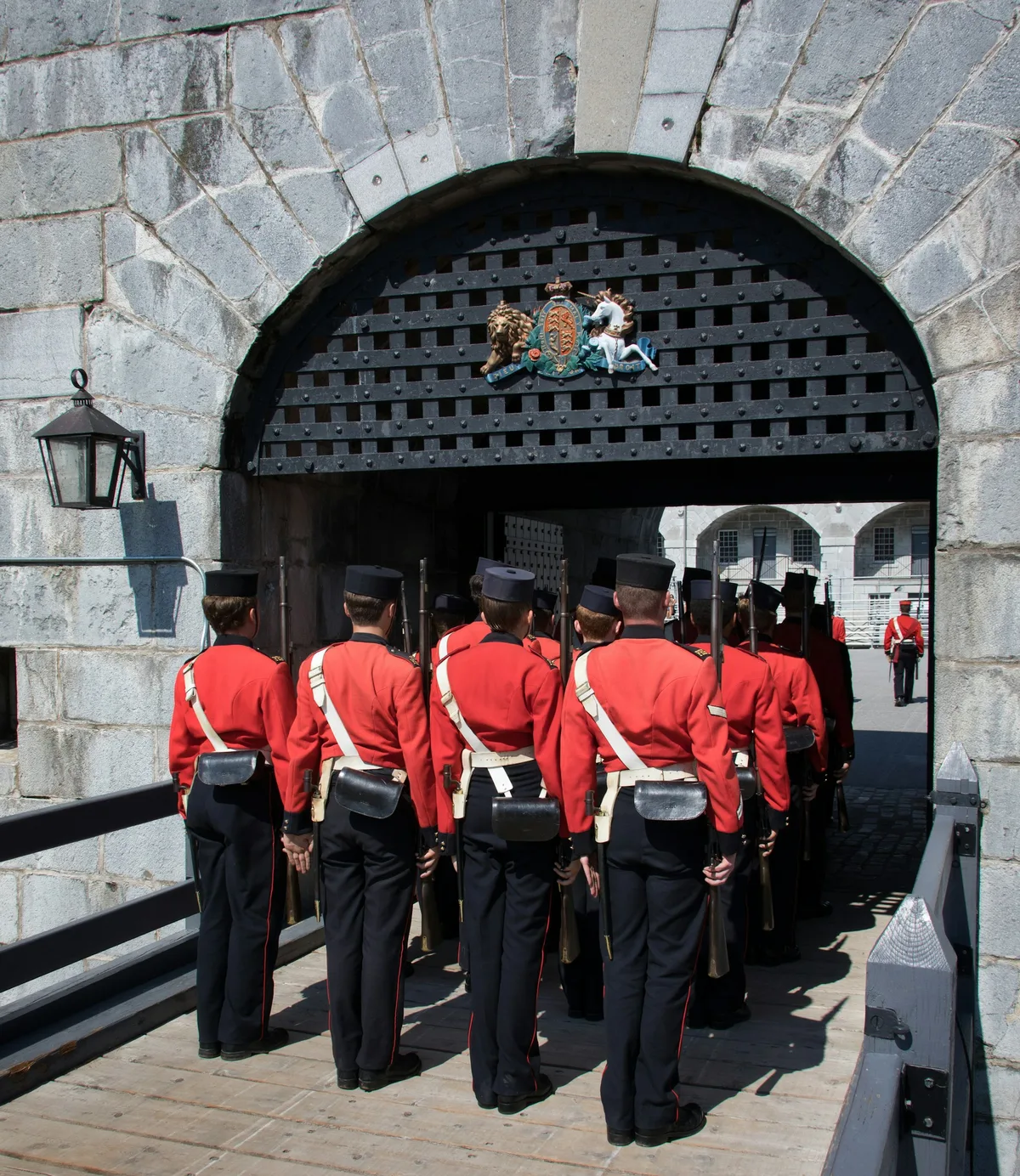
A restored 19th-century British fortress overlooking Kingston's harbour, built to defend the entrance to the Rideau Canal, with costumed military demonstrations in summer.
Visitor guide
Fort Henry is a 19th-century British military fortress on Point Henry in Kingston, Ontario, on a high limestone headland where the eastern end of Lake Ontario meets the start of the St. Lawrence River. Parks Canada describes it as part of the wider Kingston Fortifications National Historic Site, and it is also included in the Rideau Canal UNESCO World Heritage Site listed in 2007.
The first Fort Henry was a modest affair. When the War of 1812 began, local militia threw up a blockhouse and battery on the point to protect the naval dockyard at nearby Point Frederick. On 10 November 1812 that battery helped drive off American warships that had chased the Provincial Marine sloop Royal George into the harbour. The point is named for Henry Hamilton, a former lieutenant governor of the Province of Quebec. Batteries and barracks were added from 1813.
The fortress visitors see today dates from a second, much larger building campaign that began in 1832. Its purpose was to guard the Lake Ontario end of the newly built Rideau Canal, along with Kingston harbour and the dockyard. Parks Canada's heritage statement dates the main construction to 1832 onward, with the advanced battery and casemated stores finishing in the early 1840s. Four Martello towers were built to support it, though some planned works were trimmed back because of cost overruns on the canal. The fort was sometimes called the Citadel of Upper Canada, and it was never attacked.
British Army troops were stationed here from 1813 until 1870, after which Canadian forces held the fort; Parks Canada's plaque text says it was garrisoned until 1890. Its walls also served as a prison. Parks Canada notes that it held prisoners captured during the 1837-38 Rebellions, and again during both World Wars. In the First World War it was one of the sites used for internment under the Canadian government's wartime measures, and in the Second World War it held German prisoners of war.
By the early twentieth century the fort was in poor repair. It was recognized as a National Historic Site on 25 May 1923, and a major restoration in the 1930s turned it into a heritage attraction. It opened as a living-history museum in August 1938, staffed by costumed interpreters who have been known as the Fort Henry Guard. Student recruits in the Guard are trained in the drill, music and artillery handling of a mid-nineteenth-century British regiment. Parks Canada owns the site, but its page says it is operated privately, and the operator's own website is the place for programming details.
Parks Canada's list of character-defining features gives a good checklist for a visit. It points to the fort's symmetrical footprint, large-scale stone construction and skilled masonry, the redoubt, the advanced battery, the glacis (the sloping cleared ground in front of the walls) and the ditch towers. Original cisterns and drains, gun sheds, a barracks store and the hospital guardhouse also survive. The walls look out over Kingston harbour, which is a big part of the appeal: you can read the strategic logic of the place in the view itself.
Programs have included daily drill and artillery demonstrations and, in summer, an evening Sunset Ceremony with period music, drill and a mock battle. Schedules change, so confirm anything specific with the operator.
Fort Henry sits on a hill just east of downtown Kingston, within easy reach of the waterfront, Kingston's other fortifications such as Fort Frederick and the Martello towers, and the Queen's University campus. Wear shoes that handle stone, ramps and steps, and allow time for the walk up to the redoubt and the views from the ramparts. Check the operator and Parks Canada for current hours, tickets and access before you go.
Voyzo runs Kingston and Thousand Islands outings as private tours, with a private vehicle and driver and door-to-door pickup, so the fort can be paired with the harbour front or a river cruise at a pace your group sets.
See every tour and attraction we cover in 1000 Islands.