TorontoOntario · 36 tours
 Niagara FallsOntario · 25 tours
 New York CityNew York · 30 tours
 Las VegasNevada · 8 tours
 San FranciscoCalifornia · 16 tours
 VancouverBritish Columbia · 17 tours
 DubaiUAE · 54 tours
 Abu DhabiUAE · 5 tours
 Buenos AiresArgentina · 23 tours
 AthensGreece · 31 tours
 AucklandNew Zealand · 38 tours
 CancunMexico · 54 tours
No destinations match “”. Try searching all tours instead — that search understands full questions, not just place names.
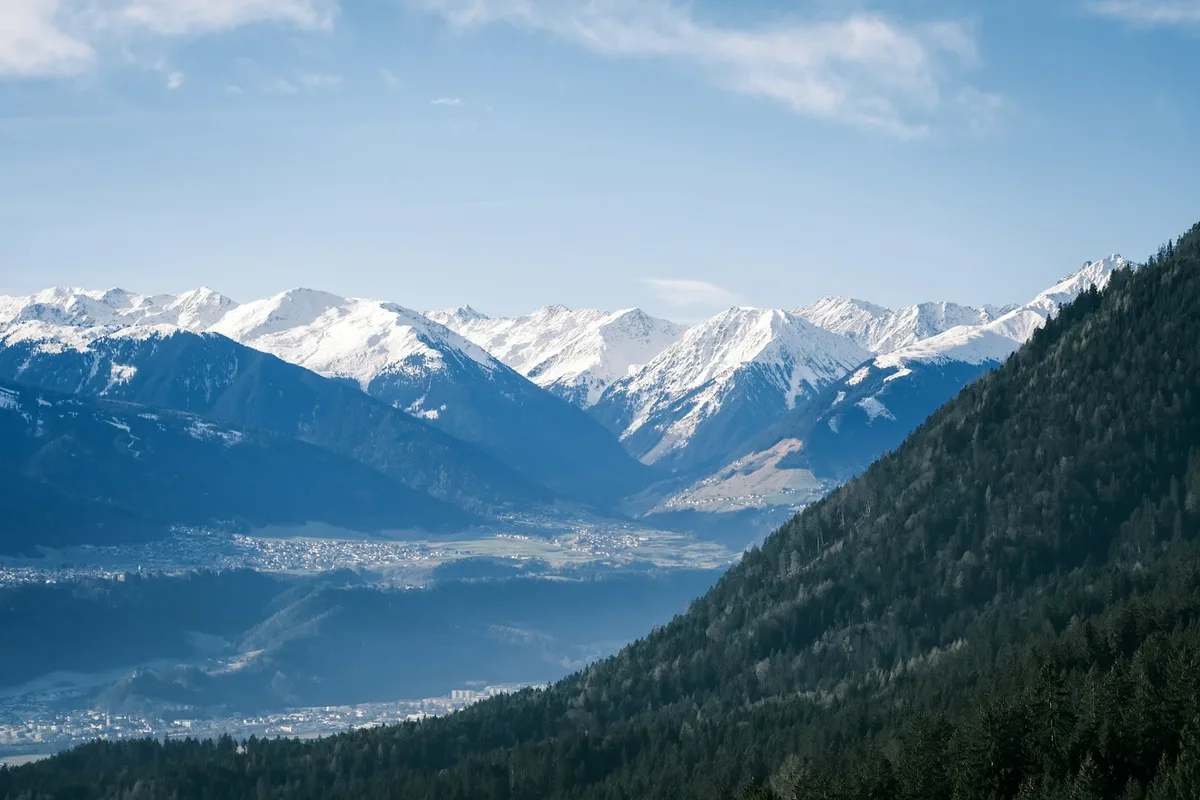
The capital of the Tyrol, set directly beneath the Nordkette mountain range, with a cable car rising from the historic centre to alpine terrain in a matter of minutes.
Visitor guide
Innsbruck is the capital of the Austrian state of Tyrol and the fifth-largest city in Austria, lying on the River Inn beneath the Nordkette, the southernmost chain of the Karwendel Alps. The Nordkette Cable Car rises from the Hungerburg district to Seegrube and the Hafelekar top station at roughly 2,300 metres, putting alpine terrain within reach of the city centre.
The name Innsbruck means bridge over the Inn. The Romans established the army station Veldidena, remembered in today's Wilten district, to protect the road from Verona over the Brenner to Augsburg. The counts of Andechs acquired the town in 1180, and in 1248 it passed to the counts of Tyrol. Revenue from transit on the Brenner route allowed the medieval city to flourish.
Innsbruck came under Habsburg control in 1363, became capital of all Tyrol in 1429, and was a residence of Emperor Maximilian I in the 1490s. The Hofkirche holds his cenotaph with bronze statues of real and mythical ancestors, and the Golden Roof is another landmark linked to Maximilian. In 1564 Archduke Ferdinand II received Tyrol and built Schloss Ambras. Wikipedia also records the first opera house north of the Alps being erected here in the 1620s, and the university founded in 1669.
During the Napoleonic Wars Tyrol was ceded to Bavaria. Andreas Hofer led a Tyrolean peasant army to victory in the Battles of Bergisel against combined Bavarian and French forces and made Innsbruck the centre of his administration. He was later executed and became a martyr for the locals; his remains were returned to Innsbruck in 1823. Austrian rule was restored by the Congress of Vienna in 1814 to 1815.
The Nordkette, also called the North Chain, is the range just north of the city. Its highest summit is the Kleiner Solstein at 2,637 metres. The cable car runs in two sections from Hungerburg via Seegrube at 1,905 metres to Hafelekar, and is the heart of the local ski area. Hiking features include the Innsbruck Klettersteig, a protected climbing route, and the Goetheweg ridge path from Hafelekar. A mountain-bike route, the Nordkette Singletrail, runs below the Hungerburg to Seegrube section.
The Hungerburgbahn funicular, reopened in December 2007 after a major rebuild, connects the centre with Hungerburg. Its stations were designed by architect Zaha Hadid and are considered a new emblem of the city.
Surrounded by the Nordkette to the north and Patscherkofel and Serles to the south, Innsbruck is an internationally renowned winter sports centre. It hosted the Winter Olympics in 1964 and 1976 and the Winter Paralympics in 1984 and 1988, as well as the first Winter Youth Olympics in 2012. The Bergisel ski jump is among its landmarks.
Innsbruck has a humid continental climate with cold, snowy winters and variable summers, where days may be cool and rainy or hot, and nights stay cool. Because mountain conditions differ greatly from the valley, a private guided visit helps in planning around the weather.
See every tour and attraction we cover in Austria.