TorontoOntario · 36 tours
 Niagara FallsOntario · 25 tours
 New York CityNew York · 30 tours
 Las VegasNevada · 8 tours
 San FranciscoCalifornia · 16 tours
 VancouverBritish Columbia · 17 tours
 DubaiUAE · 54 tours
 Abu DhabiUAE · 5 tours
 Buenos AiresArgentina · 23 tours
 AthensGreece · 31 tours
 AucklandNew Zealand · 38 tours
 CancunMexico · 54 tours
No destinations match “”. Try searching all tours instead — that search understands full questions, not just place names.
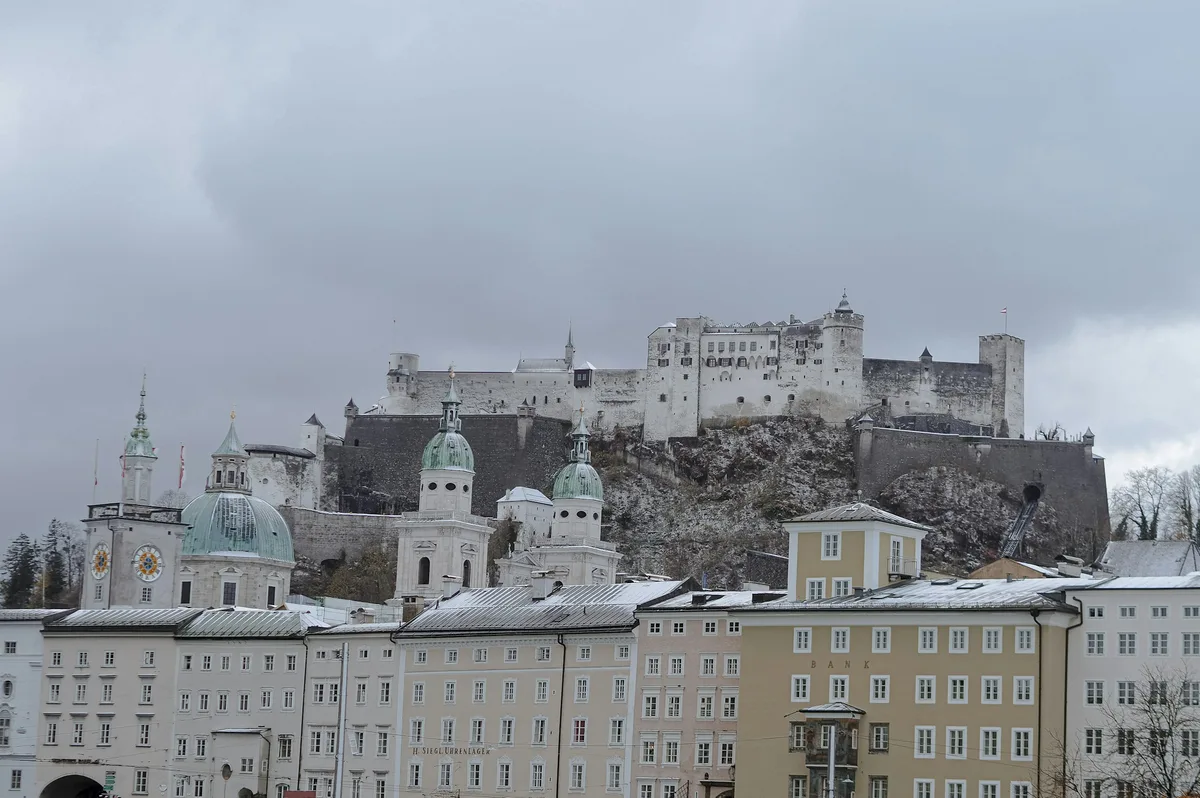
One of Europe's largest surviving medieval castles, perched above Salzburg's baroque old town with sweeping views over the city and the Alps beyond.
 Multi-Day Tours
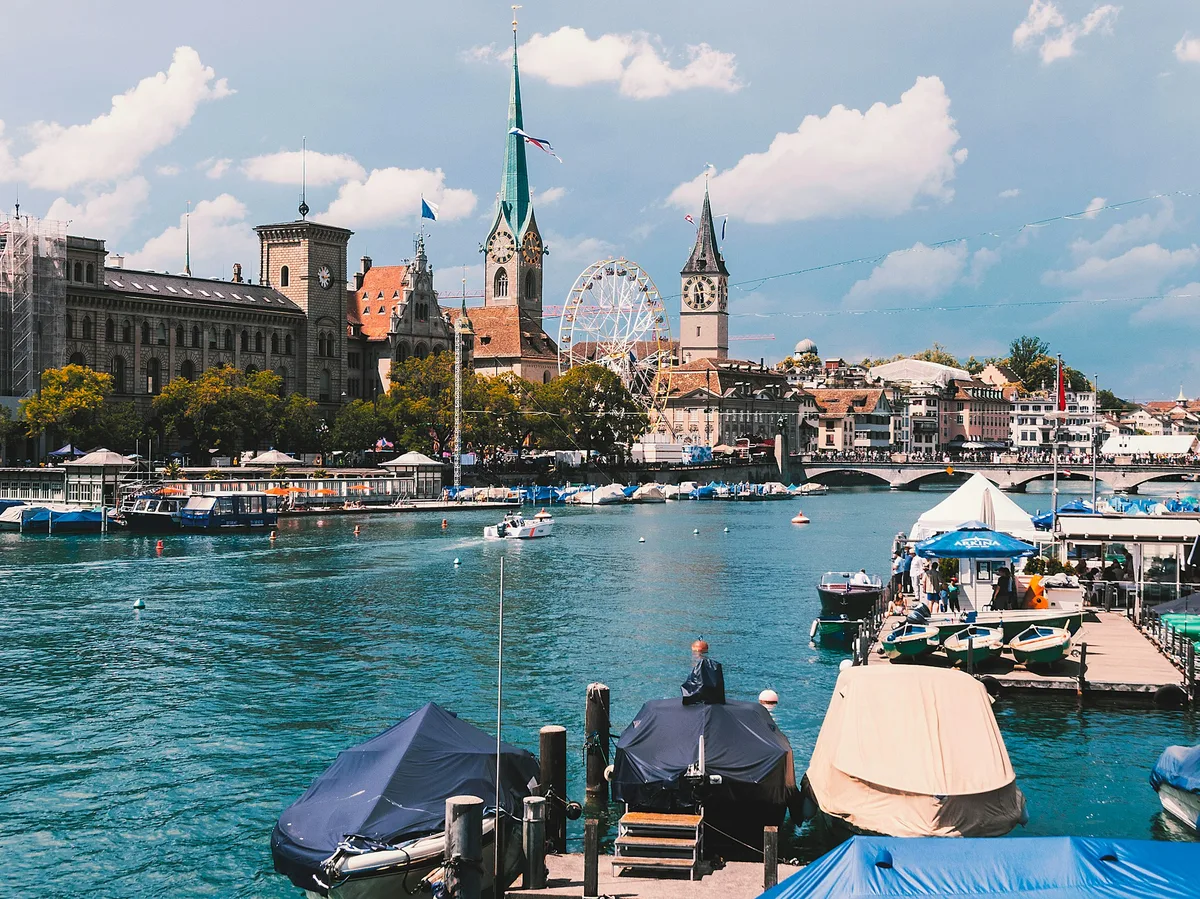
A 9-day private circuit through Central Europe's icons — Vienna and the Wachau Valley, Salzburg's Sound of Music sights, Munich and Neuschwanstein Castle, finishing in Zurich.
 Multi-Day Tours
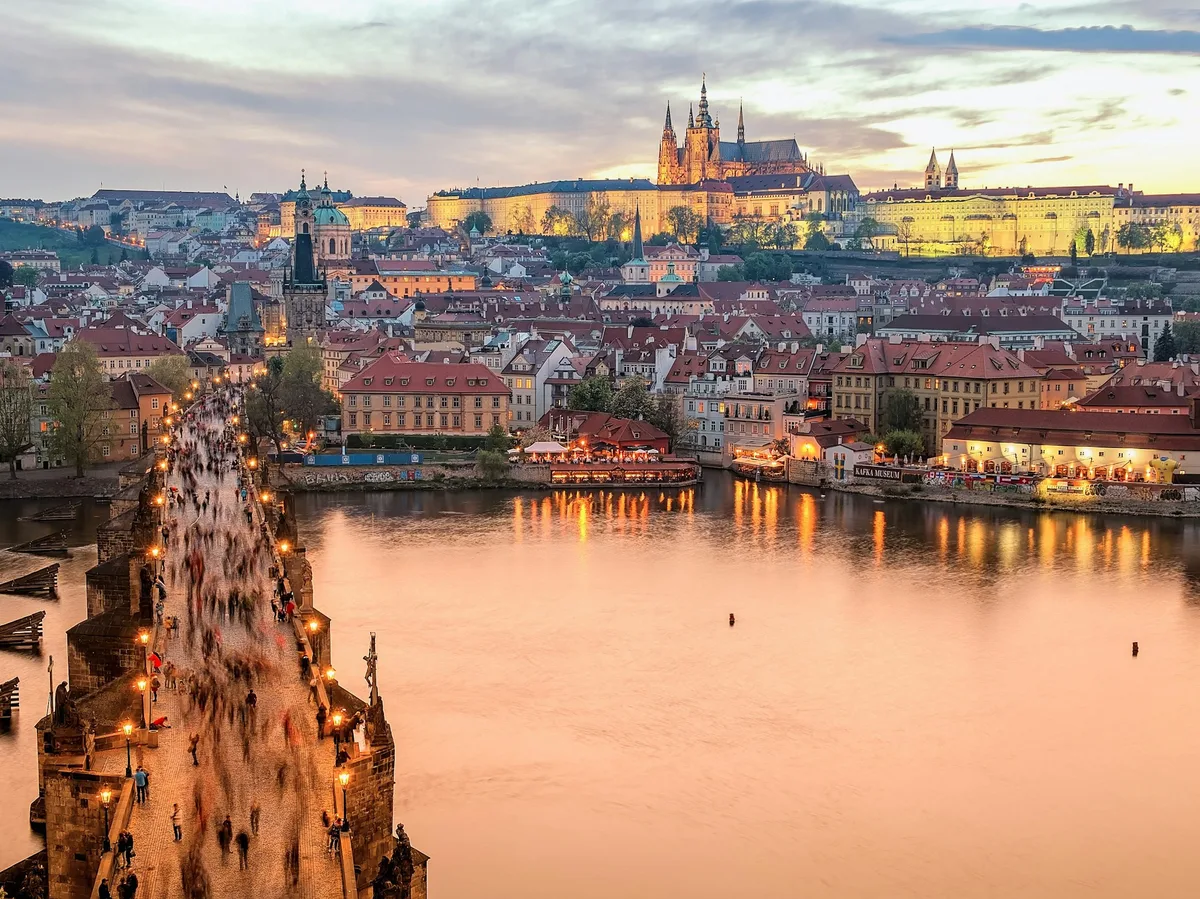
A 15-day private circuit through Austria, Germany, and Czechia's Christmas markets — starting and ending in Vienna, by way of Salzburg, Munich, Dresden, Prague, and Český Krumlov.
Visitor guide
Hohensalzburg Fortress (Festung Hohensalzburg) is a large medieval fortress on the Festungsberg above the city of Salzburg, Austria, at an altitude of about 506 metres. Built for the prince-archbishops of Salzburg, it measures roughly 250 metres long and 150 metres wide, which Wikipedia notes makes it one of the largest medieval castles in Europe.
Archaeological excavations show that a Roman fort once stood at the highest point of the site. Construction of the present fortress began in 1077 under Archbishop Gebhard von Helfenstein, who took the side of Pope Gregory VII in the conflict with Emperor Henry IV known as the Investiture Controversy. The first design was a basic bailey with a wooden wall, and later archbishops, as powerful political figures of the Holy Roman Empire, expanded it over the centuries to protect their interests.
The ring walls and towers were built in 1462 under Prince-Archbishop Burkhard II von Weissriach. Leonhard von Keutschach, archbishop from 1495 to 1519, expanded the fortress further, and the external bastions begun in the 16th century and completed in the 17th were added out of fear of a Turkish invasion.
Wikipedia describes a siege during the German Peasants' War in 1525, when miners, farmers and townspeople tried to oust Prince-Archbishop Matthäus Lang and failed, although the fortress's own history says it was never taken by military means. The deposed Archbishop Wolf Dietrich von Raitenau died in the fortress prison in 1617. During the Thirty Years' War Archbishop Paris of Lodron strengthened the defences, adding gunpowder stores and gatehouses.
In 1800 the fortress was surrendered without a fight to French troops in the Napoleonic wars, and the last prince-archbishop fled to Vienna. In the 19th century it served as barracks, storage depot and dungeon before being abandoned as a military outpost in 1861. In the early 20th century it held Italian prisoners of war in World War I and, later, Nazi activists before Austria's annexation in 1938.
A very early funicular, the Reisszug, was described in 1515 and provided freight access to the upper courtyard. Wikipedia says it still exists in updated form and is probably the oldest operational railway in the world, a claim worth treating cautiously. The passenger Festungsbahn funicular, opened in 1892, links the town to the fortress and helped turn it into a visitor attraction after refurbishment from the late 19th century.
The Krautturm houses a large mechanical organ of more than 200 pipes called the Salzburg Bull, built in 1502 by Keutschach and renewed in 1735. Among the state apartments, the Golden Hall has a coffered ceiling studded with gold buttons representing stars and a 17-metre beam painted with coats of arms. The nearby chapel has a star vault, and the Golden Chamber has benches carved with vines, grapes and animals. The bedchamber contains a medieval toilet described as highly modern sanitation for its day.
The fortress sits above the baroque old town and is among the best-preserved castles in Europe. It was chosen as the main motif of Austria's Nonnberg Abbey commemorative coin in 2006, and the Austrian Mint issued a coin for its 900th anniversary in 1977. A private guided visit can combine the fortress with the old town below, and the funicular approach gives straightforward access for many visitors.
See every tour and attraction we cover in Austria.