TorontoOntario · 36 tours
 Niagara FallsOntario · 25 tours
 New York CityNew York · 30 tours
 Las VegasNevada · 8 tours
 San FranciscoCalifornia · 16 tours
 VancouverBritish Columbia · 17 tours
 DubaiUAE · 54 tours
 Abu DhabiUAE · 5 tours
 Buenos AiresArgentina · 23 tours
 AthensGreece · 31 tours
 AucklandNew Zealand · 38 tours
 CancunMexico · 54 tours
No destinations match “”. Try searching all tours instead — that search understands full questions, not just place names.
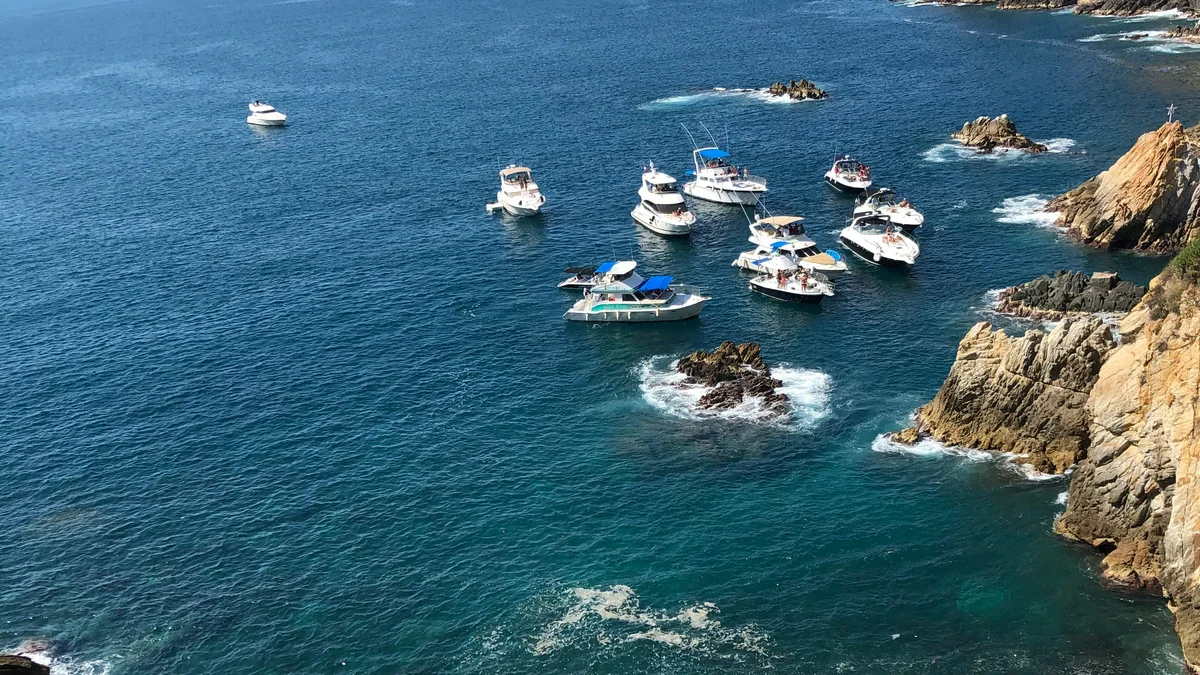
A pentagonal 17th-century fortress originally built in 1616 to defend Acapulco's port from pirate attacks on ships returning from Asia, rebuilt in 1776 after an earthquake, and now home to the Acapulco Historical Museum covering centuries of the city's history.
Visitor guide
The Fuerte de San Diego, or Fort of San Diego, is a star-shaped Spanish fortress overlooking the bay of Acapulco in Guerrero, Mexico. Built to protect the port, it now houses the Acapulco Historic Museum, run by Mexico's National Institute of Anthropology and History (INAH).
The Spanish built the fort to defend Acapulco from pirate attacks. Acapulco was an important trading port and the departure and arrival point of the Manila galleons, which carried goods across the Pacific between the Philippines and New Spain. According to Wikipedia, the fort was one of the most important Spanish fortifications on the Pacific coast.
The first fort was built from 1616 to 1617 under Viceroy Diego Fernandez de Cordoba, Marquis of Guadalcazar, to designs by the Dutch military engineer Adrian Boot. It had an irregular pentagonal shape with five bastions named for the King, the Prince, the Duke, the Marquis and Guadalcazar.
An earthquake in 1776 heavily damaged the first fort, and it was demolished. The Spanish rebuilt it between 1778 and 1783 to designs by Ramon Panon as a regular pentagon with bastions named San Jose, San Antonio, San Luis, Santa Barbara and la Concepcion. The new fort was renamed San Carlos in honor of King Carlos III, but most people kept calling it San Diego, and the new name eventually fell out of use.
During the Mexican War of Independence, the Spanish garrison under Pedro Antonio Velez held out against insurgent attacks for several months. The fort fell to the forces of Jose Maria Morelos on 19 August 1813. It later remained a Mexican Army installation, under the Secretariat of War and Navy in the late 19th century.
In the 20th century the fort changed hands several times. In 1949 it was transferred to be converted into a military museum and administered by INAH until 1964, then passed to other cultural bodies, before returning to INAH in 1980. It opened to the public as a museum focused on Acapulco's history in 1986.
Inside, the museum displays archaeological remains of the Mezcala culture, objects related to the Manila galleons and piracy, and exhibits on the War of Independence and on the fort itself. The ramparts and bastions can be walked, and from them the visitor can see how the fort commanded the harbor. Opening arrangements change, so visitors should check locally.
Many travelers pair the fort with the old center of Acapulco, the cathedral on the Zocalo and the La Quebrada cliff divers. A private guided visit lets a local guide explain the galleon trade and piracy background while the driver handles the hilly streets.
See every tour and attraction we cover in Acapulco.