TorontoOntario · 36 tours
 Niagara FallsOntario · 25 tours
 New York CityNew York · 30 tours
 Las VegasNevada · 8 tours
 San FranciscoCalifornia · 16 tours
 VancouverBritish Columbia · 17 tours
 DubaiUAE · 54 tours
 Abu DhabiUAE · 5 tours
 Buenos AiresArgentina · 23 tours
 AthensGreece · 31 tours
 AucklandNew Zealand · 38 tours
 CancunMexico · 54 tours
No destinations match “”. Try searching all tours instead — that search understands full questions, not just place names.
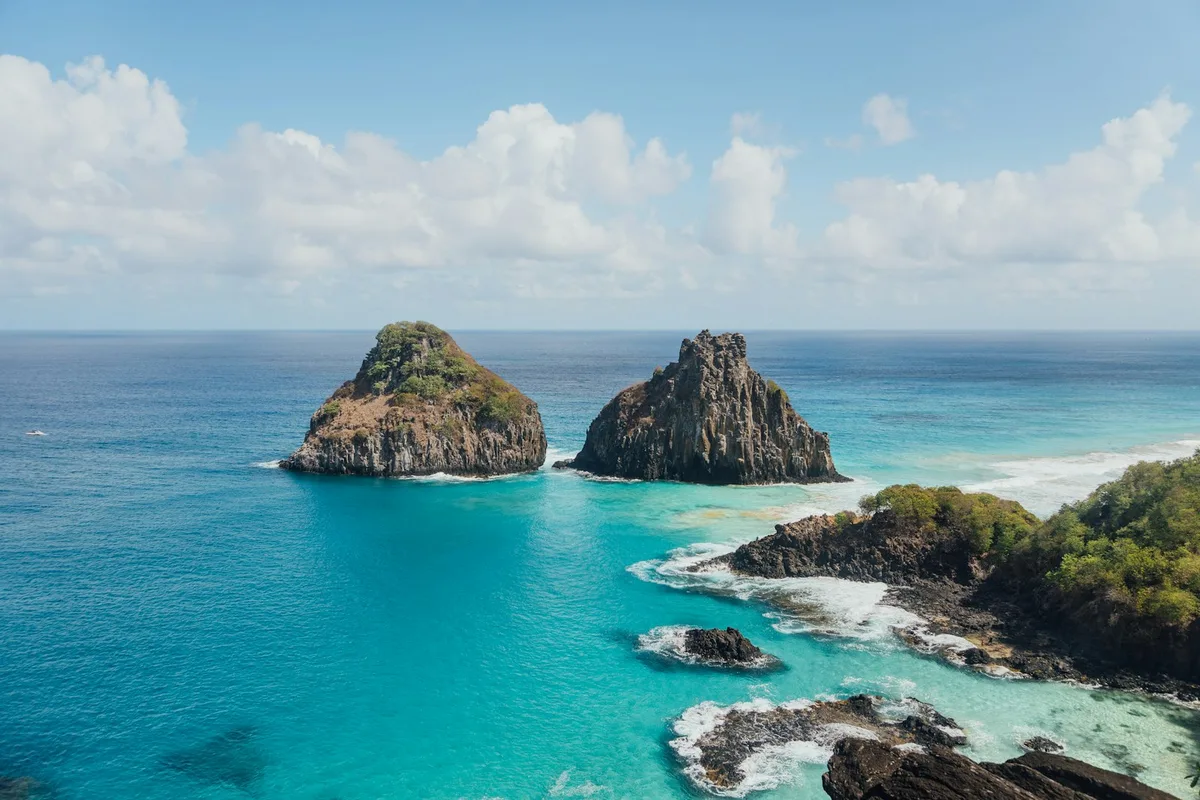
A volcanic archipelago off Brazil's northeast coast with a strict visitor cap to protect its reefs and beaches, known for the twin-peaked Morro Dois Irmãos and resident spinner dolphin pods.
Visitor guide
Fernando de Noronha is a volcanic archipelago of 21 islands and islets in the Atlantic Ocean, about 354 kilometres off the northeast coast of Brazil. It is administered as a state district of Pernambuco and is a UNESCO World Heritage Site known for its marine life, beaches and the twin rock formation of Morro Dois Irmãos.
The archipelago covers around 26 square kilometres, with the main island about 18 square kilometres in extent. Its islands are volcanic in origin, and the highest point is Morro do Pico, at 323 metres. Wikipedia estimated the main island's population at about 3,100 people in 2020.
Although the islands lie closer to Rio Grande do Norte, they form a district administered directly by the government of Pernambuco. Until 5 October 1988 they were a federal territory, after which they were added to Pernambuco, apart from Rocas Atoll, which went to Rio Grande do Norte.
In 1988 about 70 percent of the archipelago became a marine national park. In 2001 UNESCO listed the islands, together with Rocas Atoll, as a World Heritage Site. The listing highlights their role as a feeding ground for tuna, billfish, cetaceans, sharks and marine turtles, a resident spinner dolphin population, and protection for endangered species such as the critically endangered hawksbill turtle.
Spinner dolphins are the most common cetaceans, followed by humpback whales and other species, while sea turtles and seabirds are frequently seen. Beaches named by Wikipedia include Baía do Sancho, Baía dos Porcos, Baía dos Golfinhos, Sueste Bay and Praia do Leão. Morro Dois Irmãos is the archipelago's best-known landmark. Warm water allows diving without a wetsuit, and visibility is reported to reach 50 metres.
Access is controlled to protect the environment, so visits are usually planned in advance. A private guide can explain the ecology and history, though day-to-day arrangements on the islands depend on local rules.
See every tour and attraction we cover in Brazil.