TorontoOntario · 36 tours
 Niagara FallsOntario · 25 tours
 New York CityNew York · 30 tours
 Las VegasNevada · 8 tours
 San FranciscoCalifornia · 16 tours
 VancouverBritish Columbia · 17 tours
 DubaiUAE · 54 tours
 Abu DhabiUAE · 5 tours
 Buenos AiresArgentina · 23 tours
 AthensGreece · 31 tours
 AucklandNew Zealand · 38 tours
 CancunMexico · 54 tours
No destinations match “”. Try searching all tours instead — that search understands full questions, not just place names.
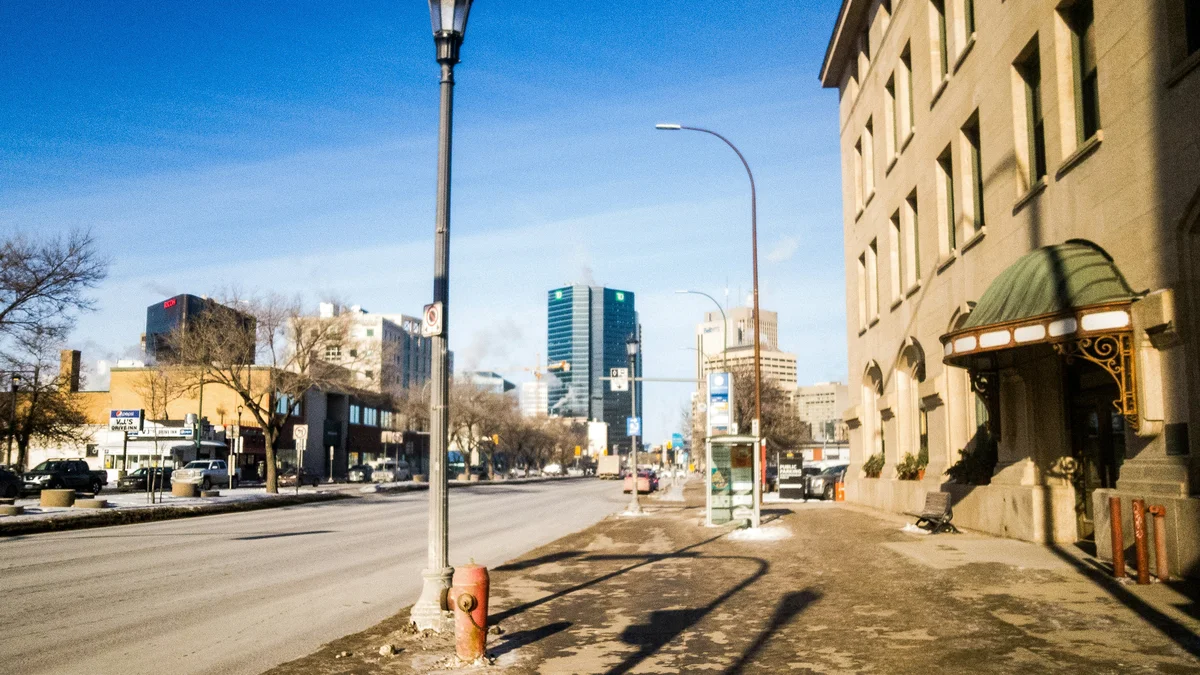
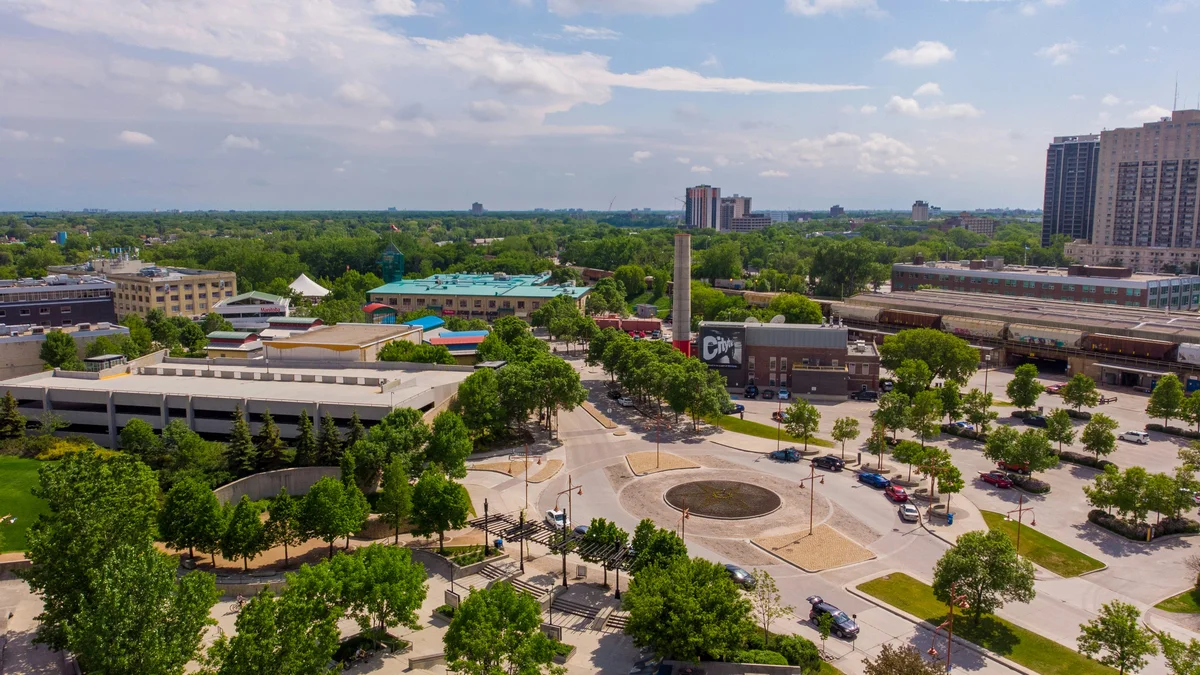
The Exchange District National Historic Site is one of the best-preserved collections of early 20th-century warehouse and terra-cotta architecture in North America, built during Winnipeg's boom years as a grain-trading hub. Its cobblestone streets and cast-iron facades are frequently used as a film and TV backdrop, and the district is now home to galleries, theatres and independent shops.
Visitor guide
The Exchange District is a district of warehouses, banks and early skyscrapers just north of Portage and Main in downtown Winnipeg. It was designated a National Historic Site of Canada in 1997 and covers about 20 city blocks with roughly 150 heritage buildings. It takes its name from the Winnipeg Grain Exchange, the former centre of Canada's grain industry.
Wikipedia dates the district's start to 1881, when the area was a warehouse zone, and the Winnipeg Grain and Produce Exchange was founded in 1887. The City of Winnipeg says the city was the fastest-growing of its size in North America in 1905. By 1910 about 20 banks clustered on Main Street, known as Bankers Row. By 1911 Winnipeg was Canada's third-largest city, with 24 rail lines and over 200 wholesale businesses, and was nicknamed the Chicago of the North. The city says more than half the world's wheat sales were completed in Winnipeg in the 1920s, and three daily newspapers were on McDermot Avenue by the end of the First World War. The opening of the Panama Canal in 1914 and the First World War slowed growth by changing shipping routes, and changes to freight rates after 1920 ended the city's transport-cost advantage. After the Second World War downtown development moved south of Portage Avenue, which left much of the district intact. Many warehouses were converted to garment-trade use by the 1940s.
The federal designation recognises the district for illustrating Winnipeg's role in grain and wholesale trade, finance and manufacturing between 1880 and 1913. Sources disagree on the exact date in September 1997: the Canadian Register gives September 22 and the City of Winnipeg and the Exchange District BIZ give September 27. Parks Canada's statement stresses the intact, densely built grid, the many compact masonry buildings of limited height, and the intensive use of urban lots. The commemorative plaque speaks of Winnipeg's growth from a modest pioneer settlement to western Canada's largest metropolitan centre between 1878 and 1913. Building counts differ by source: a Manitoba History article cites about 149 buildings, 117 of them from before 1914, while the City describes more than 100. The City issued a commemorative integrity statement in 2001, and the downtown zoning by-law of 2004 set the site's boundaries.
Manitoba History says some Chicago architects moved to Winnipeg and local architects often adopted the Chicago style. Because growth slowed after 1914, few such buildings were demolished. The City also points to stone and brick warehouses, narrow angled streets and covered alleys, and notes that wholesalers' names are still etched or painted on some buildings.
The Union Bank Building, from 1903, is an 11-storey structure that now houses the Paterson GlobalFoods Institute of Red River College Polytechnic. Darling and Pearson designed it in the Chicago School manner with an Italian Renaissance palazzo-style exterior and a terra-cotta base. The site was a former creek bed with bedrock about 70 feet down, so engineers used concrete caissons to create a stable foundation. The bank moved its headquarters from Quebec City to Winnipeg in 1912 and merged with the Royal Bank in 1925. The Winnipeg Grain Exchange building of 1906 was also designed by Darling and Pearson.
Old Market Square began as a public market in 1889, though its original buildings were removed in 1964 and 1965 for the Civic Centre, and its cobblestone streets have made it a popular period backdrop for film, including The Assassination of Jesse James by the Coward Robert Ford. The Manitoba Centennial Centre, a 34-acre arts district, links the Concert Hall, the Manitoba Theatre Centre and the Manitoba Museum and Planetarium; the Concert Hall is home to the Winnipeg Symphony Orchestra, Royal Winnipeg Ballet and Manitoba Opera. The City calls the Pantages Playhouse one of Canada's finest early 20th-century vaudeville venues.
The Exchange District BIZ, established in 1989, runs historic walking tours, food and drink tours and events such as First Fridays in the Exchange and Lights On The Exchange. Streetscape improvements in the early 1980s added wider sidewalks, period street furniture and decorative paving.
The district is best on foot. Check the BIZ at exchangedistrict.org for current tours and event dates, and for current hours of individual venues.
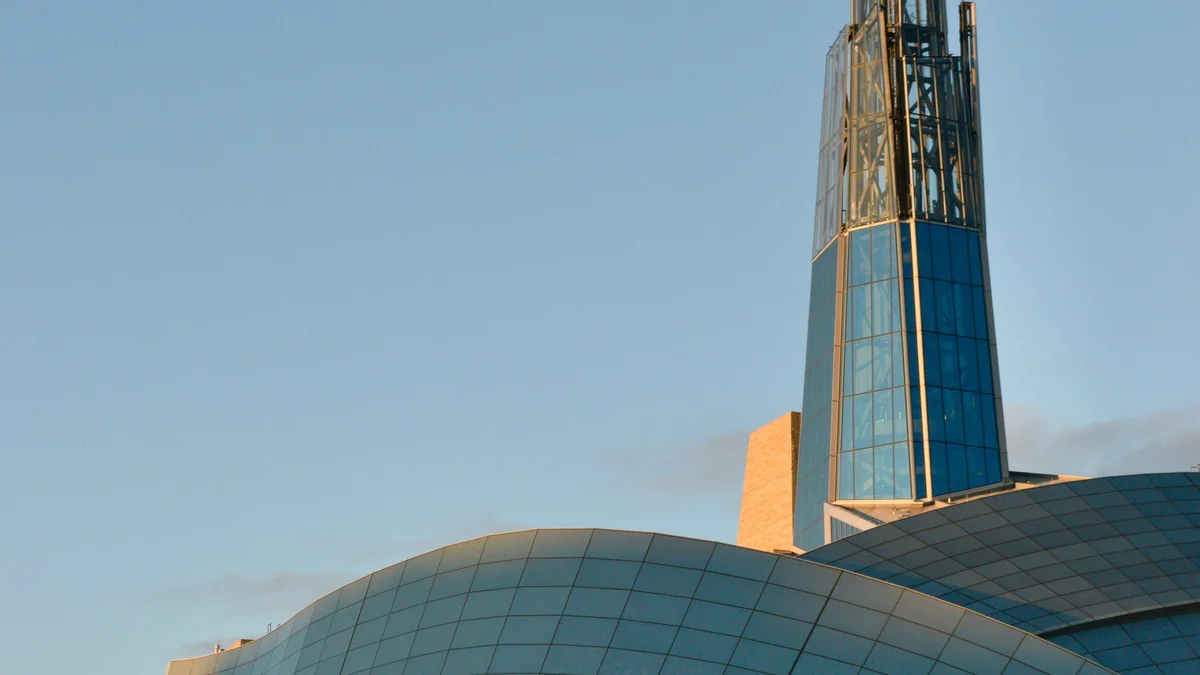
The Forks and the Canadian Museum for Human Rights are a short distance to the south-east. On a private Voyzo tour of Winnipeg, a private vehicle and driver with door-to-door pickup means you can park the logistics and spend time looking up at the facades.
See every tour and attraction we cover in Winnipeg.