TorontoOntario · 36 tours
 Niagara FallsOntario · 25 tours
 New York CityNew York · 30 tours
 Las VegasNevada · 8 tours
 San FranciscoCalifornia · 16 tours
 VancouverBritish Columbia · 17 tours
 DubaiUAE · 54 tours
 Abu DhabiUAE · 5 tours
 Buenos AiresArgentina · 23 tours
 AthensGreece · 31 tours
 AucklandNew Zealand · 38 tours
 CancunMexico · 54 tours
No destinations match “”. Try searching all tours instead — that search understands full questions, not just place names.
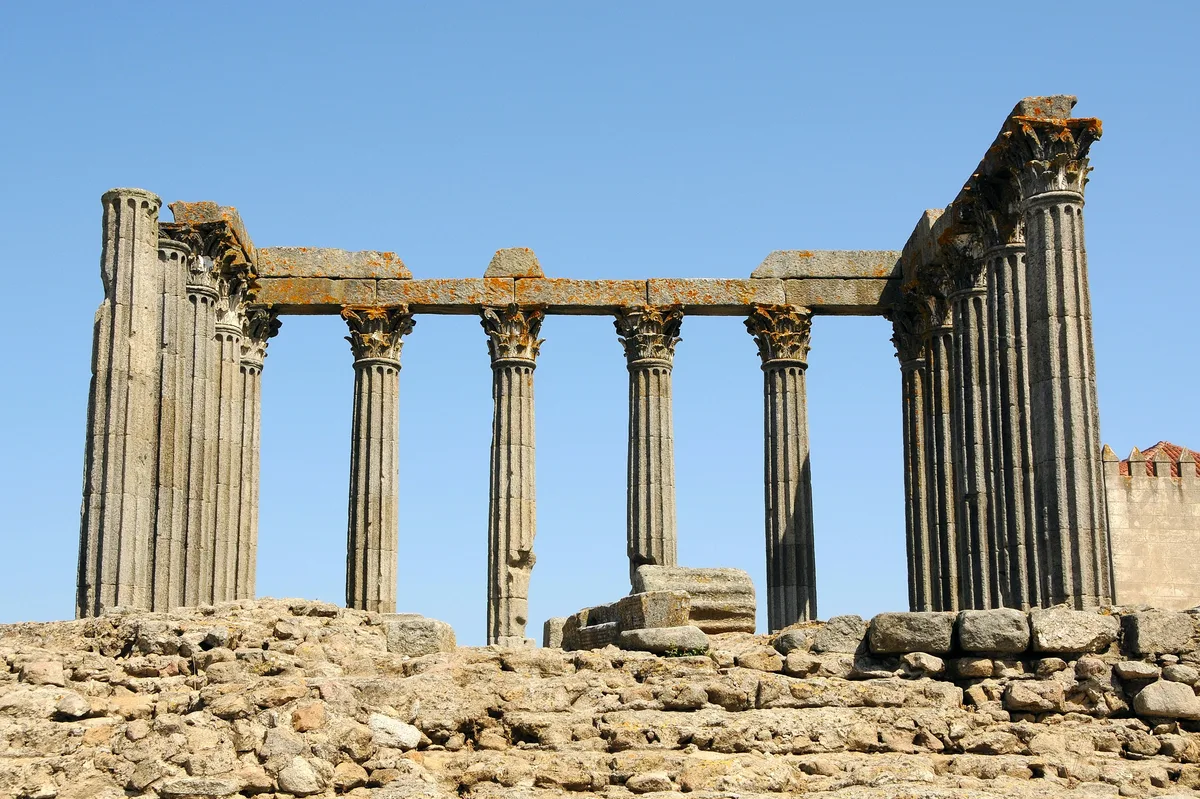
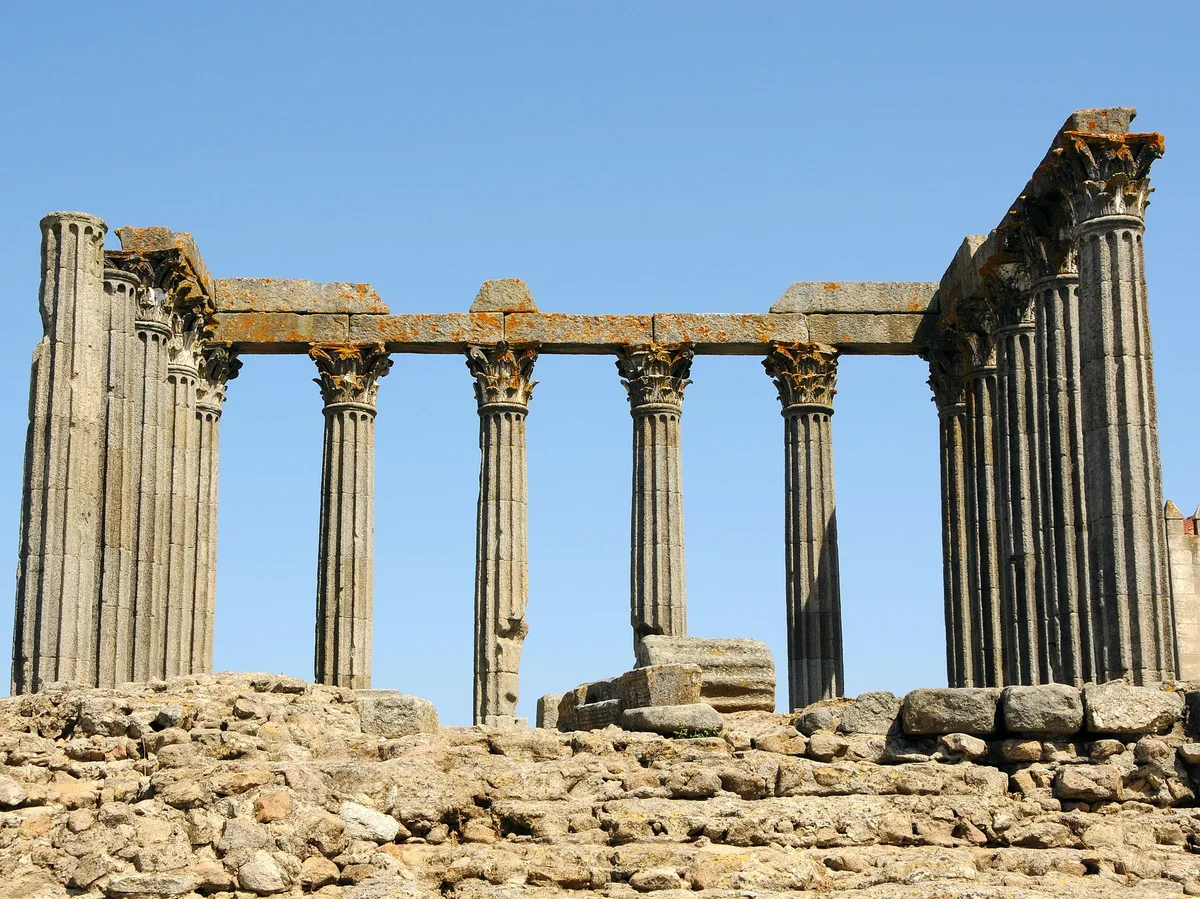
A well-preserved 1st-century Roman temple, popularly known as the Temple of Diana, standing at the center of Évora's UNESCO-listed old town in the Alentejo region.
Visitor guide
The Roman Temple of Évora is an ancient temple standing in the centre of Évora, in Portugal's Alentejo region. Popularly called the Temple of Diana, it is believed to date from around the 1st century CE and sits within the historic centre of Évora, which UNESCO inscribed as a World Heritage Site in 1986.
According to Wikipedia, the temple was built in honour of Emperor Augustus, who was venerated as a god during and after his reign. It stood in the main public square, or forum, of the Roman city, then called Liberalitas Iulia, and it was modified in the 2nd and 3rd centuries as part of a wider reorganisation of the city centre. The structure was damaged in the 5th century during invasions by Germanic peoples.
Excavations led by the German archaeologist Theodor Hauschild between 1989 and 1994 suggest that the complex once included a reflecting pool and a monumental portico with six columns across the front. The temple probably resembled the Maison Carrée in Nîmes, France.
The name Temple of Diana is not based on archaeological evidence. A 16th-century royal charter mentions the temple, and at the time oral tradition linked it to the Lusitanian general Quintus Sertorius. The name Diana first appeared in the 17th century, promoted by the priest Manuel Fialho, and it comes from legend rather than inscription. Other scholars have suggested the temple may have been dedicated to Jupiter, so the true dedication remains uncertain.
In the 14th century the temple became part of a stronghouse for the town's castle, and in 1467 King Afonso V authorised the removal of stones from it for building and defence. The ruins were incorporated into a castle tower, with the base, columns and architraves embedded in medieval walls. From the 14th century until 1836 the building was used as a butcher shop, and Wikipedia notes that this reuse helped protect its remains from total destruction.
In 1840 Cunha Rivara, director of Évora's Public Library, obtained the right to clear buildings attached to the monument, an operation considered the first major archaeological excavation in Portugal. Around 1872 the Italian architect Giuseppe Cinatti removed the medieval additions and restored the temple in the Romantic style of the day. It is a classified Portuguese national monument, listed in the decree of 16 June 1910.
The temple rises on a granite and masonry podium about 25 metres long, 15 metres wide and 3.5 metres high, with a double lateral staircase facing south. The surviving structure includes six columns along the north side, further columns on the east and part of the west facade. The fluted Corinthian columns stand on circular white marble pedestals from Estremoz, and their capitals are carved with flower motifs such as marigolds, sunflowers and roses. The rest of the entablature is granite. Wikipedia describes the temple as one of the best-preserved Roman ruins in the Iberian Peninsula, while noting that its appearance owes much to 19th-century restoration.
The temple occupies the central square of the old town, likely the highest point of the Roman acropolis. Around it stand the Sé Cathedral, the Palace of the Inquisitor, the Palace of the Dukes of Cadaval, the Lóios Convent and church, the Public Library and the Museum of Évora. The compact old town is well suited to a private guided visit with a local driver and guide.
See every tour and attraction we cover in Portugal.