TorontoOntario · 36 tours
 Niagara FallsOntario · 25 tours
 New York CityNew York · 30 tours
 Las VegasNevada · 8 tours
 San FranciscoCalifornia · 16 tours
 VancouverBritish Columbia · 17 tours
 DubaiUAE · 54 tours
 Abu DhabiUAE · 5 tours
 Buenos AiresArgentina · 23 tours
 AthensGreece · 31 tours
 AucklandNew Zealand · 38 tours
 CancunMexico · 54 tours
No destinations match “”. Try searching all tours instead — that search understands full questions, not just place names.
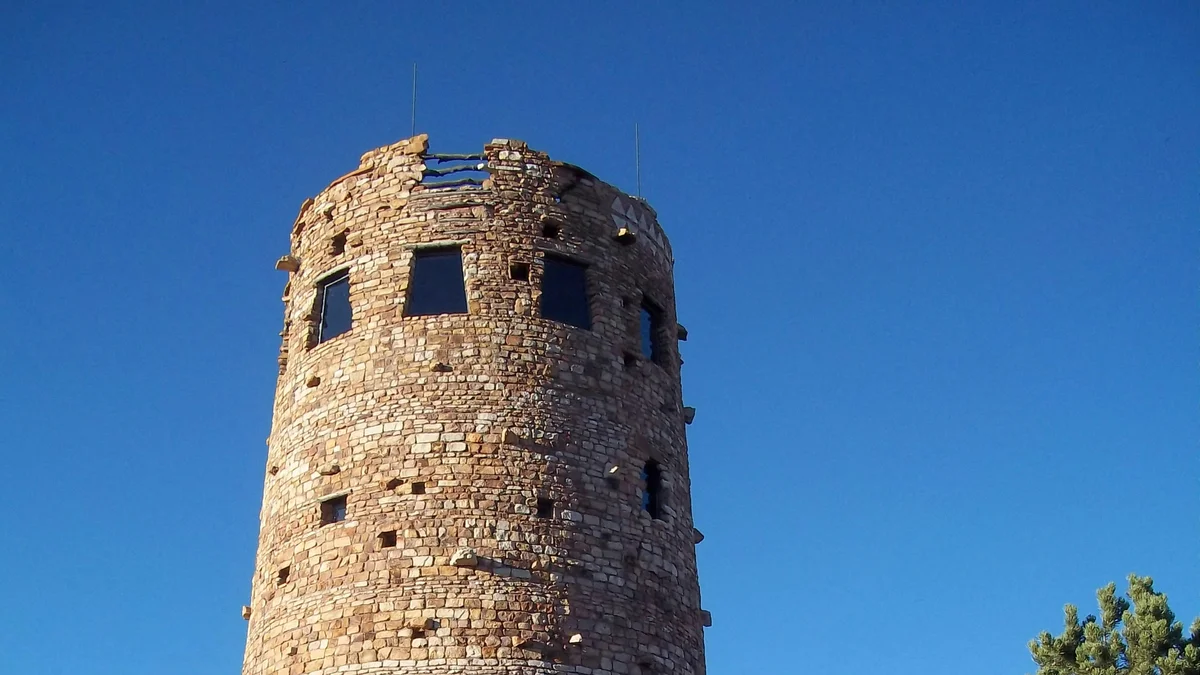
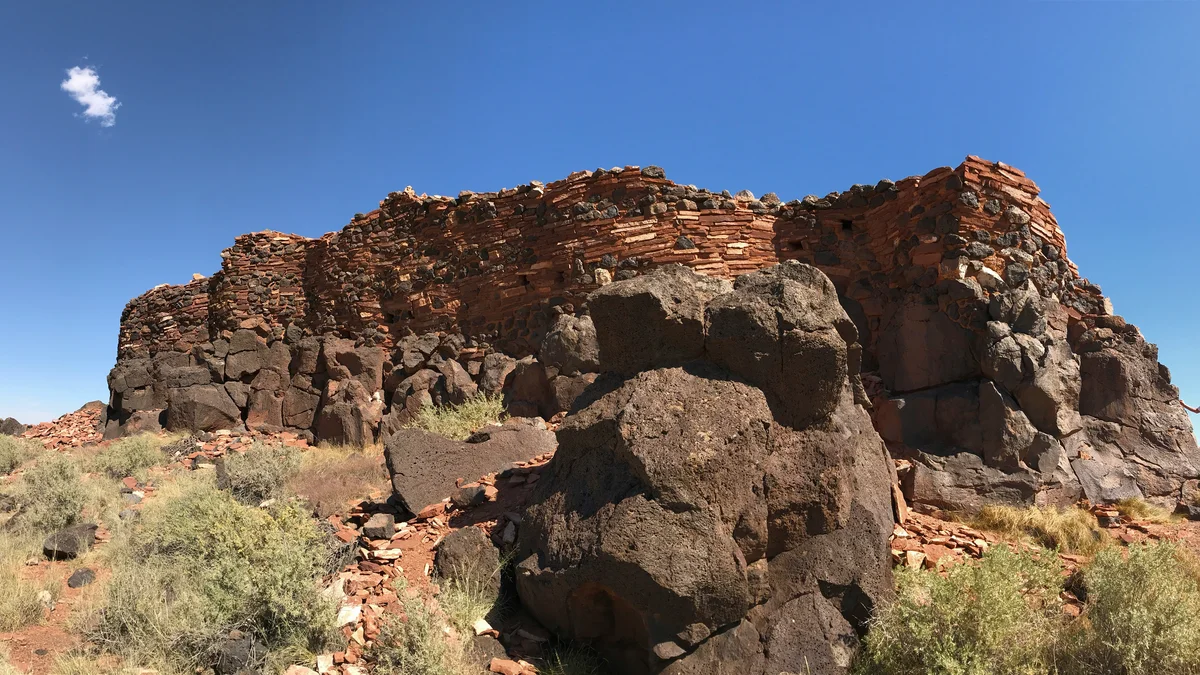
Standing 70 feet tall at the Grand Canyon's eastern entrance, this stone tower was designed in 1932 by architect Mary Colter, who modeled it on ancestral Puebloan watchtowers of the Southwest. Inside, its walls are decorated with murals by Hopi artist Fred Kabotie, and the top floor offers one of the most sweeping views in the park, looking out over the Colorado River and the canyon's eastern reaches.
Visitor guide
Desert View Watchtower is a 70-foot stone tower at the eastern end of Grand Canyon's South Rim, about 23 miles (37 km) east of Grand Canyon Village near the park's east entrance. Completed in 1932 and designed by architect Mary Colter for the Fred Harvey Company, it is one of the best-known buildings in the park and offers a long view of the Colorado River's great bend.
Colter, chief architect and decorator for the Fred Harvey Company from 1902 to 1948, based the tower on ancestral Puebloan watchtowers of the Colorado Plateau. According to the National Park Service, she drew on towers at Hovenweep and the Round Tower at Mesa Verde but said she copied none of them directly. Other accounts say she spent months on research and built a clay model, and had a 70-foot platform raised on the site to test the views before the final design.
Colter wanted the building to settle into its setting rather than stand out, and the stones were deliberately left uncut so the walls look weathered. The tower has four stories and a steel frame hidden inside the masonry; the Park Service notes the framework was designed and supervised by Santa Fe Railway bridge builders. The base was styled to look as though an older ruin lay beneath it. Some of the stones carry petroglyphs and came from near Ash Fork, Arizona, and the decorative white stones near the top were inspired by Chaco Canyon.
The ground-level View Room, which the Park Service says is modeled after a traditional kiva, is the main space, with a fireplace designed so it does not block the view and a ceiling of logs that, according to Wikipedia, were salvaged from the old Grandview Hotel. A first-floor gallery was painted by Hopi artist Fred Kabotie of Second Mesa and depicts Hopi origins and beliefs. Ceiling images by Fred Geary, selected by Colter, recreate designs from Abo Rockshelter in New Mexico. Black mirrors known as reflectoscopes, placed around the tower, give abstract reflected views of the canyon. The top floor is left undecorated so the panorama is unobstructed.
From the upper levels you can see the Colorado River's large bend, the North Rim more than 10 miles away, and, on clear days, according to the Park Service, well over 100 miles. The tower stands at the end of a rim road that passes a series of viewpoints, so it often serves as the last or first stop on an eastern approach to the park.
The tower is part of the Mary Jane Colter Buildings National Historic Landmark, designated May 28, 1987, along with Hopi House, Lookout Studio, and Hermit's Rest. The surrounding Desert View Watchtower Historic District also includes support buildings from the Fred Harvey era.
Interior access and hours vary, and some parts of the structure may be closed, so check the National Park Service for current conditions. Allow time for the viewpoints along East Rim Drive on the way here.
Navajo Point and Lipan Point lie along the road toward Grand Canyon Village, and Cameron and the Navajo Nation lie east of the park entrance. On a Voyzo private tour, a private driver and vehicle can cover the long rim drive without anyone needing to navigate or park, and the tower pairs naturally with sunset or a full eastern-rim itinerary.
See every tour and attraction we cover in Grand Canyon.