TorontoOntario · 36 tours
 Niagara FallsOntario · 25 tours
 New York CityNew York · 30 tours
 Las VegasNevada · 8 tours
 San FranciscoCalifornia · 16 tours
 VancouverBritish Columbia · 17 tours
 DubaiUAE · 54 tours
 Abu DhabiUAE · 5 tours
 Buenos AiresArgentina · 23 tours
 AthensGreece · 31 tours
 AucklandNew Zealand · 38 tours
 CancunMexico · 54 tours
No destinations match “”. Try searching all tours instead — that search understands full questions, not just place names.
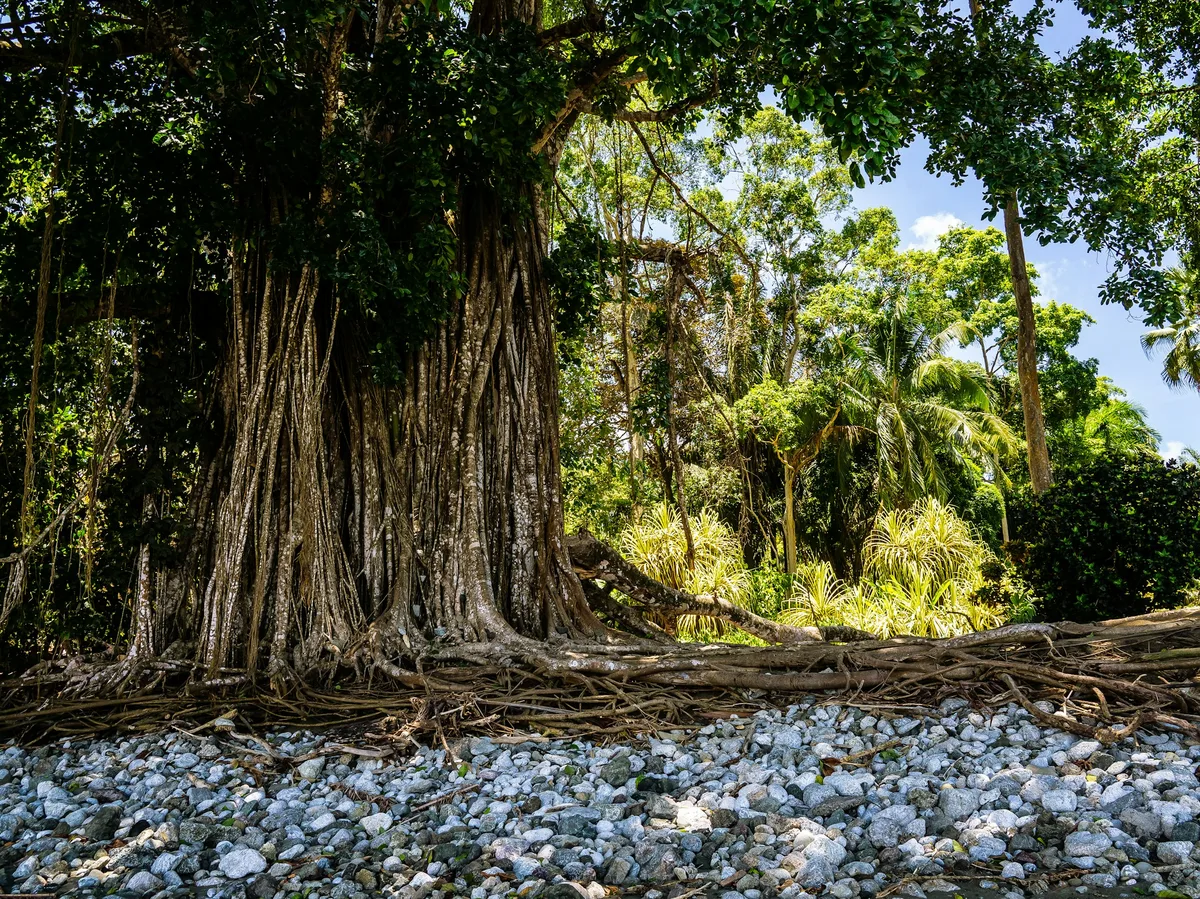
A remote, biodiversity-rich rainforest on the Osa Peninsula, often described as one of the most biologically intense places on Earth, home to tapirs, scarlet macaws, and all four of Costa Rica's monkey species.
Visitor guide
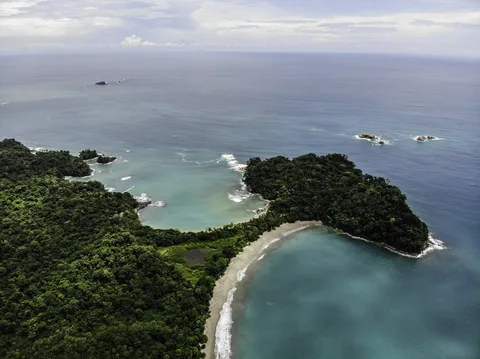
Corcovado National Park is a protected rainforest on the Osa Peninsula in southwestern Costa Rica. Established in 1975 and covering about 424 square kilometres, it is one of the country's largest national parks and is known for its biodiversity.
Before 1975 the Osa Peninsula had fewer than 7,000 residents, but the Interamerican Highway South and logging in the 1960s brought farmers, loggers and gold miners. According to Wikipedia, plans for a major international logging operation prompted researchers to petition President Daniel Oduber, who made the area a national park on 24 October 1975. He later received the Albert Schweitzer Award from the Animal Welfare Institute for the decision.
Gold miners were initially allowed to remain, and about 1,000 were active by 1986, when the decision was made to evict them. Wikipedia reports that illegal mining continues in smaller numbers using more destructive methods.
A figure often repeated is that the Osa Peninsula holds about 2.5 percent of the world's biodiversity, but Wikipedia attaches that statistic to a hectare area that does not match the park's stated size, so it is best treated as a commonly quoted claim rather than a settled fact.
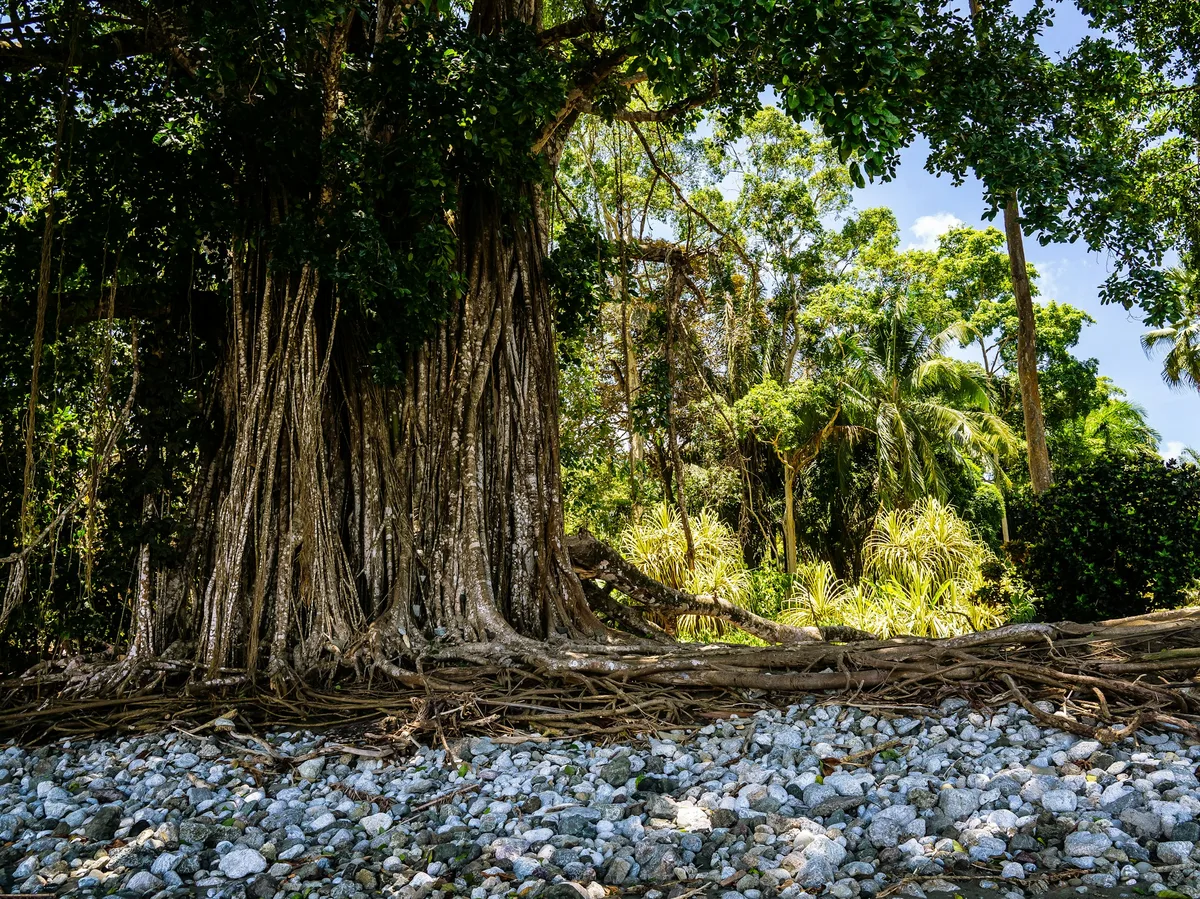
The park occupies about a third of the peninsula and protects what Wikipedia describes as the largest primary forest on the American Pacific coast. At least thirteen vegetation zones exist, from montane and cloud forest to palm swamp, alluvial plain forest, freshwater swamp and mangrove. More than 500 tree species grow here, including purple heart, cow tree, espave and crabwood.
The peninsula's position on the land bridge between North and South America is cited as one reason for its high biodiversity.
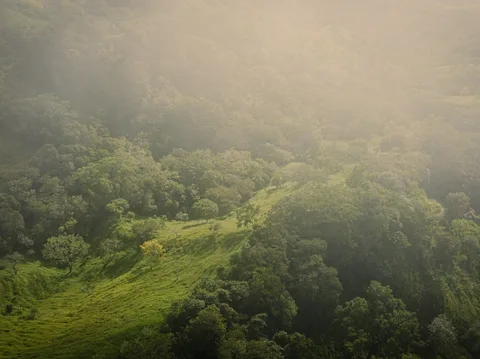
Wikipedia adds that montane forest covers more than half of the park, while the lowlands near the coast hold alluvial plain forest and swamps. Dense, layered vegetation like this creates many niches, from the canopy, where macaws and monkeys feed, to the leaf litter, where poison dart frogs and insects live.
Corcovado shelters the endangered Baird's tapir and all four of Costa Rica's monkey species, including the endangered Central American squirrel monkey. Jaguars, ocelots, margays, jaguarundis and pumas are present, along with sloths, peccaries, tamanduas and giant anteaters. Wikipedia notes that the park has the largest scarlet macaw population in the country, and a small number of harpy eagles.
Reptiles include American crocodiles, spectacled caimans and venomous snakes such as the fer-de-lance. Four sea turtle species nest on the beaches, humpback whales winter along the coast, and about 220 butterfly species have been recorded.
Mining, deforestation and hunting have pressured the ecosystem. Conservation groups such as Osa Conservation have invested in surveillance, camera traps and joint patrols since 2019, and a grassroots group in Puerto Jimenez protects turtle nesting sites.
Since 2014 visitors must be accompanied by certified guides. Two tracks run through the park, a coastal one and an inland one, and ranger stations offer overnight stays. Parts of the park close during the wet months. Because rivers and conditions can be demanding, travelling with a licensed guide is required and a private guided arrangement helps with planning.
See every tour and attraction we cover in Costa Rica.