TorontoOntario · 36 tours
 Niagara FallsOntario · 25 tours
 New York CityNew York · 30 tours
 Las VegasNevada · 8 tours
 San FranciscoCalifornia · 16 tours
 VancouverBritish Columbia · 17 tours
 DubaiUAE · 54 tours
 Abu DhabiUAE · 5 tours
 Buenos AiresArgentina · 23 tours
 AthensGreece · 31 tours
 AucklandNew Zealand · 38 tours
 CancunMexico · 54 tours
No destinations match “”. Try searching all tours instead — that search understands full questions, not just place names.
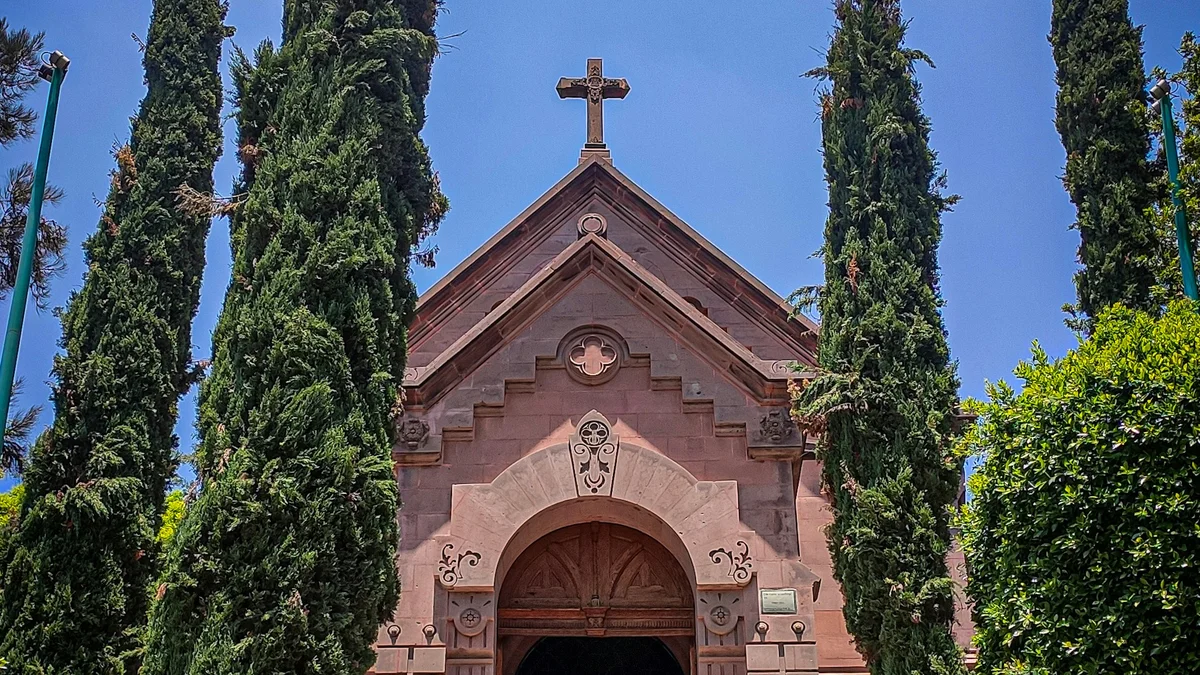
A real hill on the western edge of Querétaro city, historically significant as the site where Emperor Maximilian I was executed in 1867, ending the French intervention in Mexico. Today it holds a monument to Mexican president Benito Juárez and remains one of the country's most historically important sites tied to the fall of the Second Mexican Empire.
Visitor guide
Cerro de las Campanas, meaning Hill of the Bells, is a hill and national park in the city of Queretaro, Mexico. It is best known as the place where Emperor Maximilian I and Generals Miguel Miramon and Tomas Mejia were executed on 19 June 1867, ending the Second Mexican Empire and the French intervention.
The hill takes its name from a semi-metallic, chime-like sound its rocks make when they strike each other or are hit with metal. The Spanish Wikipedia article calls these rocks fonolitas, or sound stones. It says many tourists carried off fragments and only two remain on display. The hill once lay on the outskirts of Queretaro but has been absorbed by the growing city and now sits almost in the centre.
During the republican siege of Queretaro, led by General Mariano Escobedo, Maximilian and his remaining French and conservative troops were trapped. Wikipedia says the republican generals intercepted him on 15 May 1867 after a siege that began in March, and the Spanish article says he surrendered his sword at the eastern foot of the hill, where an obelisk now marks the spot.
Maximilian, Miramon and Mejia were tried by a war tribunal at the Teatro de la Republica and sentenced to death. Miramon had been president of Mexico for most of 1859 and 1860, and Mejia was a cavalry general born in Queretaro. Early on 19 June 1867 they were taken up the hill and executed by firing squad on the eastern slope, about 350 metres from the place of surrender according to the Spanish article. The episode ended five years of French intervention and led into the Restored Republic.
Stone piles topped with crosses first marked the place, followed by wooden crosses that are now kept in the museum on the hill. In 1886 the first formal monument was built, with three inscribed stone columns carrying the names of the dead inside an iron railing. After Mexico and Austria resumed relations, the Emperor Maximilian Memorial Chapel was built, commissioned by Emperor Franz Joseph I in memory of his brother. Spanish Wikipedia credits the Viennese architect Maximilian von Mitzel with the neo-Gothic design and says construction began in 1900; the chapel was dedicated on 10 April 1901. The same article says the chapel is closed to visitors and can be seen only from outside.
The Spanish article says President Lazaro Cardenas declared the area a national park on 7 July 1937, with about 58 hectares today, whereas English Wikipedia dates the national-park designation of the east side and summit to 15 May 1967, so the dates differ by source. On 15 May 1967, the centenary of the republic's victory, a statue of Benito Juarez by the sculptor Juan Fernando Olaguibel was unveiled on a stone esplanade at the summit. The Spanish article gives the statue's height as 13 metres.
In the 1950s the Queretaro fairgrounds were built on the western slope, and the fair moved away in the early 1970s. The southern and western slopes then passed to the Autonomous University of Queretaro, whose central campus now surrounds the hill. A municipal museum opened in 2003 with five permanent exhibit rooms. CONABIO data cited by the Spanish article list more than 240 plant and animal species in the park.
Queretaro was founded in 1531, served briefly as Mexico's capital in 1847, and hosted the Constituent Congress that approved the Constitution on 5 February 1917. Its historic centre was inscribed by UNESCO in 1996, though the hill itself is not described as part of that listing. A private guided visit can combine the hill with the historic centre and the Teatro de la Republica.
See every tour and attraction we cover in Queretaro.