TorontoOntario · 36 tours
 Niagara FallsOntario · 25 tours
 New York CityNew York · 30 tours
 Las VegasNevada · 8 tours
 San FranciscoCalifornia · 16 tours
 VancouverBritish Columbia · 17 tours
 DubaiUAE · 54 tours
 Abu DhabiUAE · 5 tours
 Buenos AiresArgentina · 23 tours
 AthensGreece · 31 tours
 AucklandNew Zealand · 38 tours
 CancunMexico · 54 tours
No destinations match “”. Try searching all tours instead — that search understands full questions, not just place names.
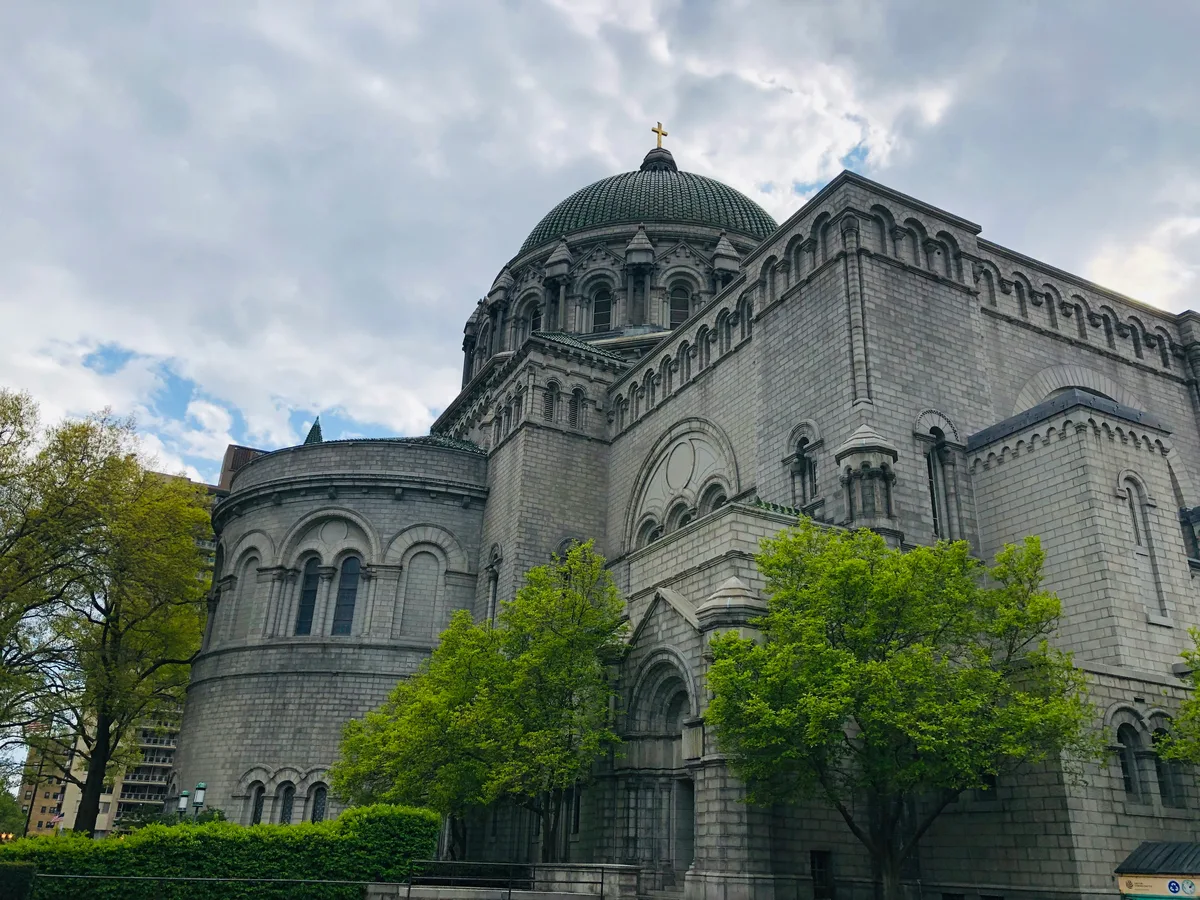
A Romanesque Revival cathedral on Lindell Boulevard known for its interior — one of the largest mosaic collections in the world, covering about 83,000 square feet in roughly 41.5 million pieces of glass tile.
Visitor guide
The Cathedral Basilica of Saint Louis is the mother church of the Archdiocese of St. Louis, a Neo-Byzantine and Romanesque Revival landmark in the Central West End that is best known for its interior mosaics. The parish and Wikipedia both cite roughly 41.5 million glass tesserae in more than 7,000 colors covering about 83,000 square feet, a body of work billed as one of the largest mosaic collections anywhere.
Planning for a new cathedral reaches back to Archbishop Peter Richard Kenrick in the 1870s and 1880s; the St. Louis Cathedral Building Association was formed on April 28, 1871. Ground was broken on May 1, 1907, and the cornerstone was laid on October 18, 1908. The architects were the firm Barnett, Haynes & Barnett; the cathedral's own history credits the design to George Barnett of the firm, while Wikipedia names Thomas P. Barnett. The first Mass in the new building was celebrated on October 18, 1914, at a reported cost of about $3 million, and the cathedral was consecrated on June 29, 1926. It replaced the older Basilica of Saint Louis, King of France, on the riverfront, which is why this building is often called the New Cathedral.
Pope John Paul II designated the cathedral a minor basilica in 1997, which is why the name now carries both words.
The exterior is granite, in a style usually described as Neo-Byzantine with Romanesque Revival elements, topped by a large dome. Wikipedia gives the building as about 365 feet long and 204 feet wide, with seating for roughly 2,500 on the floor and about 5,000 including the galleries.
Mosaic installation inside began around 1912 and, with pauses during the Great Depression and World War II, was not finished until 1988. Different artists handled different areas. Tiffany Studios designed the mosaics in the side chapels and sanctuary, while August Oetken designed those in the main body of the cathedral. Wikipedia credits Jan Henryk de Rosen with the main dome and lists Hildreth Meiere, Ravenna Mosaic, Inc., and Emil Frei, Inc. among the contributors. Paul Heuduck and his son Arno worked on the project for most of their careers; Paul's work is described as including the red-and-gold transept galleries, the Arch of Triumph, the Arch of Creation, and the pendentives beneath the main dome showing the Doctors of the Church.
The scenes draw on the Bible, on the life of King Louis IX of France, the city's namesake, and on episodes from St. Louis history. According to the cathedral's own history, the mosaics showing the life of Saint Louis in the narthex were completed in 1930. Most of the work uses small glass tesserae with gold in the Byzantine manner, which makes the surfaces shift in the light as you move.
Beyond the main nave and dome, look for the side chapels and the sanctuary, the narthex mosaics on Louis IX, and the basement museum, which Wikipedia says presents the story of the mosaics along with other artifacts. A chapel below holds the tombs of former archdiocesan leaders. The cathedral's own history says a Kilgen organ was dedicated in 1915 and later replaced; that original instrument is now displayed in the Mosaic Museum, and the cathedral's current pipe organ is a feature in its own right.
Because this is an active cathedral, services take priority over sightseeing. Check the cathedral's official site for current visiting hours, tour arrangements, and any restrictions before you go.
The mosaics reward unhurried looking, which suits a private tour: with a private vehicle and driver and door-to-door pickup, you can build in as much time under the dome as your group wants and pair it with other parts of the city without managing parking or transfers.
See every tour and attraction we cover in St. Louis.