TorontoOntario · 36 tours
 Niagara FallsOntario · 25 tours
 New York CityNew York · 30 tours
 Las VegasNevada · 8 tours
 San FranciscoCalifornia · 16 tours
 VancouverBritish Columbia · 17 tours
 DubaiUAE · 54 tours
 Abu DhabiUAE · 5 tours
 Buenos AiresArgentina · 23 tours
 AthensGreece · 31 tours
 AucklandNew Zealand · 38 tours
 CancunMexico · 54 tours
No destinations match “”. Try searching all tours instead — that search understands full questions, not just place names.
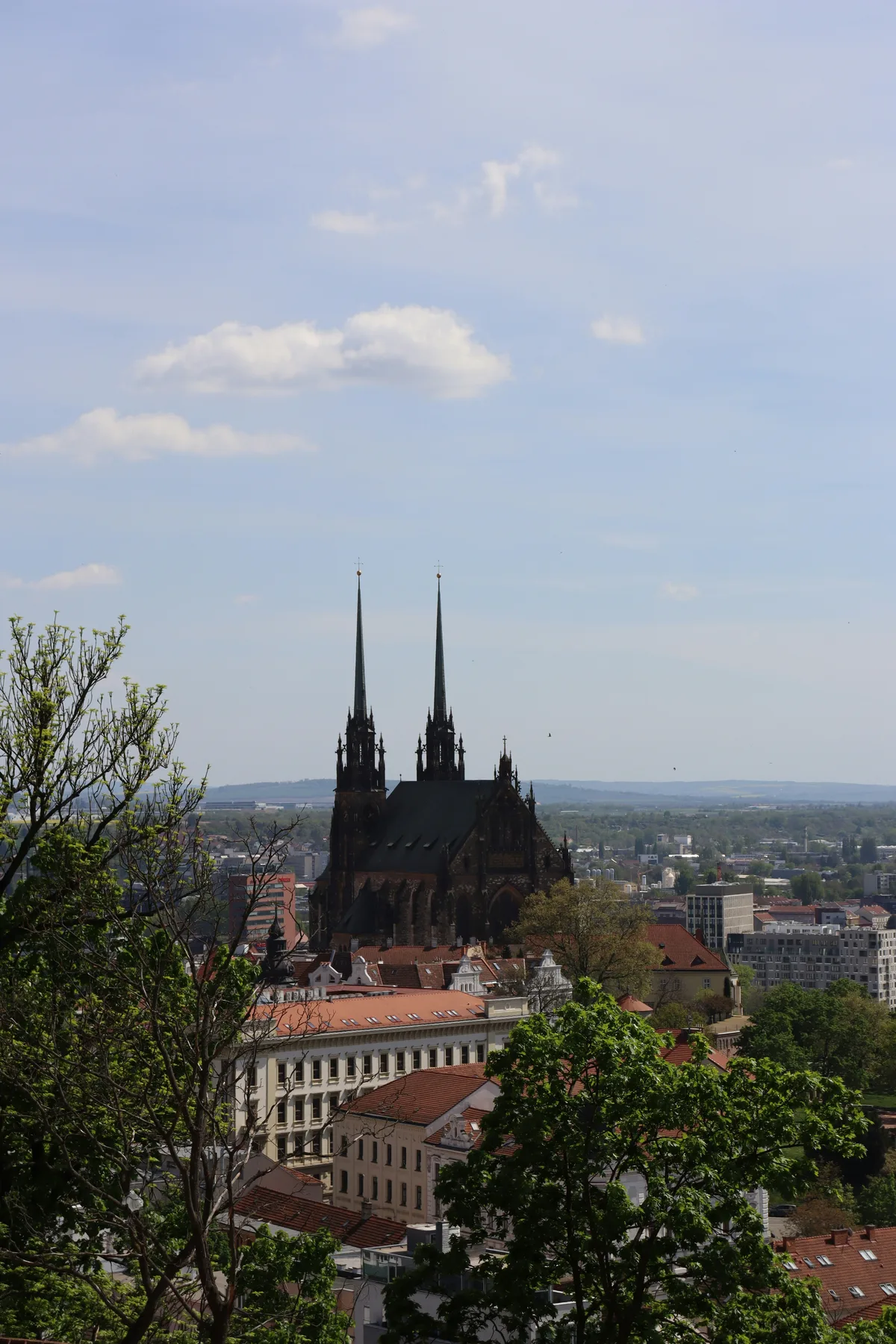
Moravia's capital and Czechia's second city, with Spilberk Castle overlooking the city and the twin Gothic spires of Petrov Cathedral on the skyline, quieter and less touristed than Prague.
Visitor guide
Brno is the second-largest city in the Czech Republic, with about 404,000 inhabitants, set at the confluence of the Svitava and Svratka rivers in the South Moravian Region. Its old town is dominated by two medieval landmarks, Špilberk Castle and the Cathedral of Saints Peter and Paul on Petrov hill, and it served as the capital of Moravia from the Middle Ages until 1948.
Brno is first mentioned in Cosmas' chronicle in 1091. In 1243 the separate settlements were consolidated into a single fortified town and granted a royal charter by King Wenceslaus I. Around the turn of the 13th century, merchants on the main market, today Zelný trh or the Vegetable Market, began building cellars to store food, wine and beer. These vaults expanded over time, especially in the Baroque period, and served as shelters in wartime. They are now known as the Labyrinth under Zelný trh, a tourist attraction whose passages were more fully connected by a reconstruction completed in 2009.
From the mid-14th century to early 15th century Špilberk Castle was the seat of the Moravian margraves. In the 17th century it was rebuilt as a massive Baroque citadel and later served as a prison. During the Thirty Years' War, Brno under Jean-Louis Raduit de Souches resisted the Swedish siege of 1645, the only Moravian city to do so, and it subsequently served as the sole capital of the Margraviate of Moravia after the Diet and Land Court were moved there in 1641. A Prussian siege in 1742 under Frederick the Great was also unsuccessful. The 18th-century textile boom earned the city the nickname Moravian Manchester.
The Cathedral of St. Peter and Paul stands on the site of an 11th-century Romanesque chapel that became a Romanesque basilica in the 13th century and a Gothic basilica in the 14th. Its interior is mostly Baroque from mid-18th-century renovations, and the two Neo-Gothic towers by August Kirstein were added in 1909. Its image appears on the Czech 10-koruna coin.
The Old Town Hall, dating to approximately 1240, is the oldest secular building in Brno. In its passage hang a stuffed crocodile, locally called the Brno dragon, and a cartwheel, both symbols of the city. One legend says a young butcher killed a monster by feeding it a hide filled with quicklime; another says a crocodile gifted to Margrave Matthias died in the streets and was left in the city. Both are folk stories.
The Abbey of Saint Thomas was the site of Gregor Mendel's genetics experiments, and its church holds the graves of John Henry and his son Jobst of Moravia, both margraves. The Brno Ossuary is described by Wikipedia as the second largest in Europe after the Paris catacombs, and the Capuchin Crypt houses mummified monks and notable figures. The Church of Saint James is among the best-preserved Gothic churches in Brno.
The interwar period brought a construction boom of modernist and functionalist buildings. Villa Tugendhat, designed by Ludwig Mies van der Rohe and completed in 1930, was inscribed as a UNESCO World Heritage Site in 2001. Brno's Jewish community, documented since at least the 13th century, left a functionalist synagogue of 1934 to 1936 and the largest Jewish cemetery in Moravia.
Brno is a member of the UNESCO Creative Cities Network and was designated a City of Music in 2017. A private guided visit can combine the old town with Špilberk and the Villa Tugendhat district, depending on the time available.
See every tour and attraction we cover in Czechia.