TorontoOntario · 36 tours
 Niagara FallsOntario · 25 tours
 New York CityNew York · 30 tours
 Las VegasNevada · 8 tours
 San FranciscoCalifornia · 16 tours
 VancouverBritish Columbia · 17 tours
 DubaiUAE · 54 tours
 Abu DhabiUAE · 5 tours
 Buenos AiresArgentina · 23 tours
 AthensGreece · 31 tours
 AucklandNew Zealand · 38 tours
 CancunMexico · 54 tours
No destinations match “”. Try searching all tours instead — that search understands full questions, not just place names.
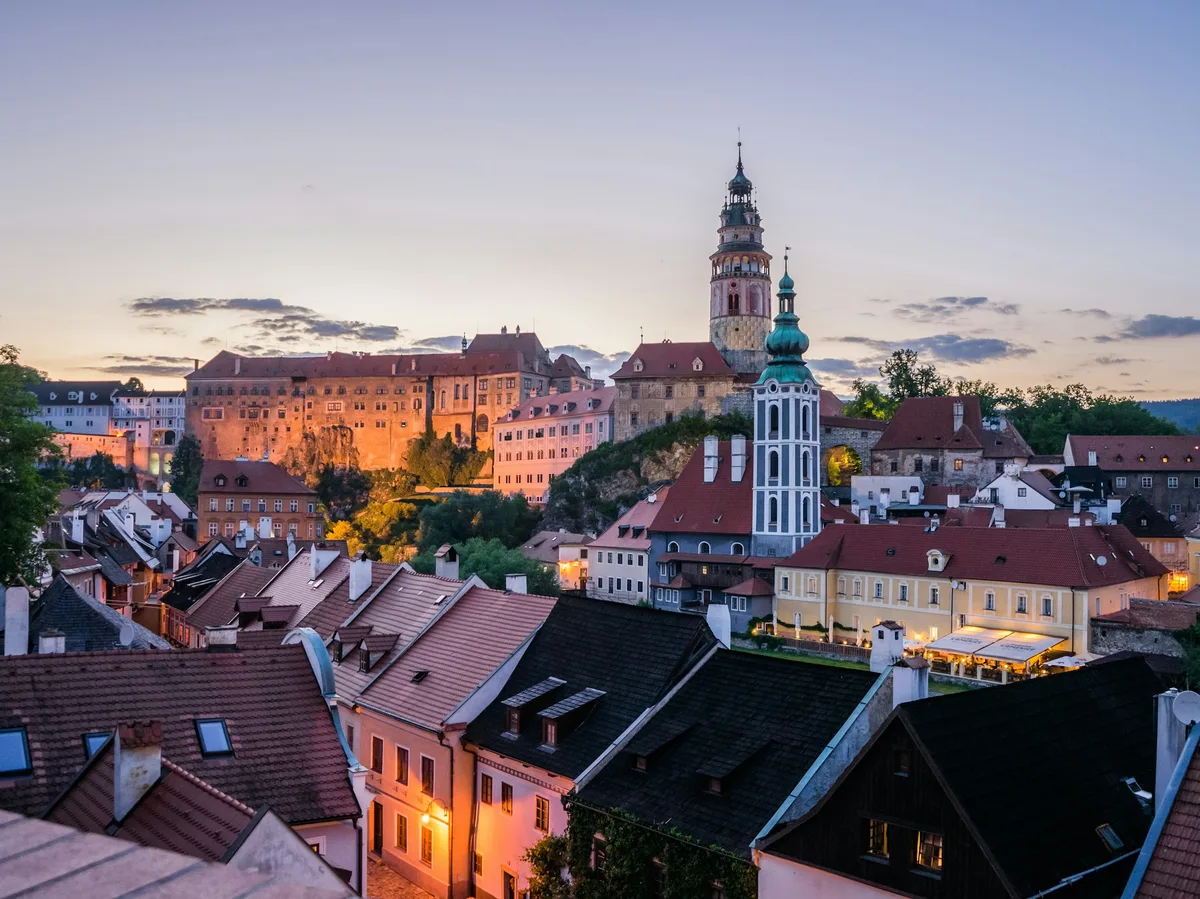
A UNESCO World Heritage town in South Bohemia, Český Krumlov's medieval old town curls around a bend in the Vltava River beneath a spectacular 13th-century castle with Rococo gardens.
 Multi-Day Tours Popular Pick
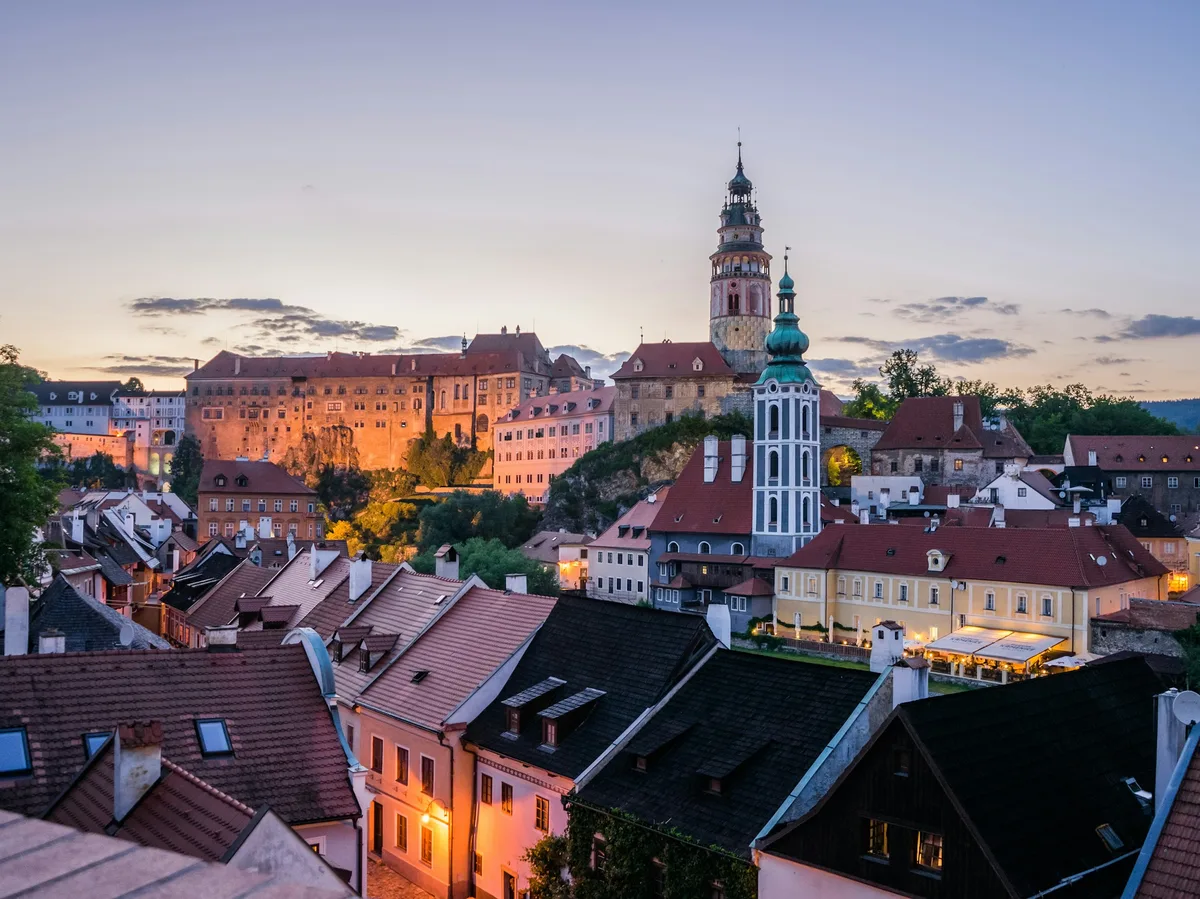
A 10-day loop through Bohemia and Moravia's best-known castles, cathedrals and spa towns, from Prague Castle and the Kutná Hora ossuary to Český Krumlov and the thermal springs of Karlovy Vary.
 Multi-Day Tours
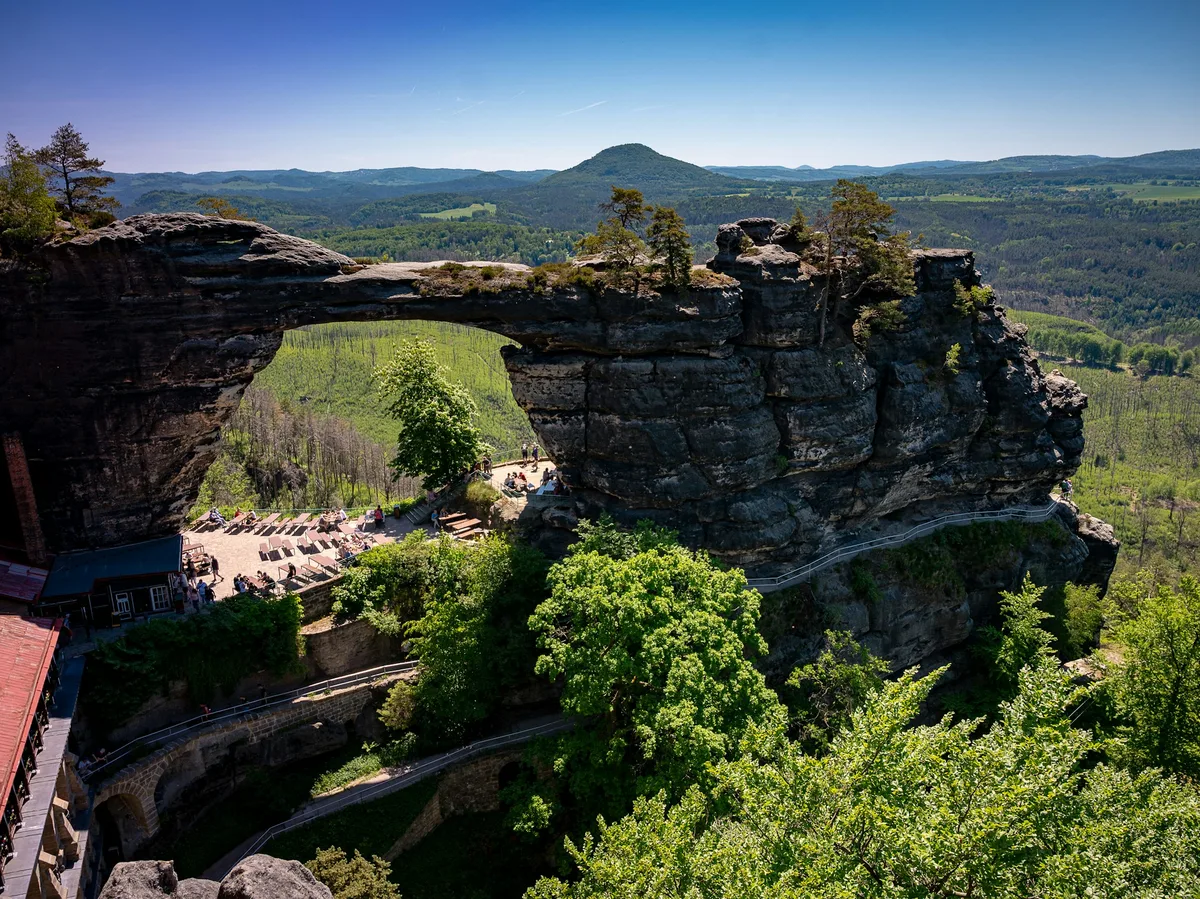
An 8-day, Prague-based hiking adventure through the sandstone canyons and forests of Bohemian Switzerland National Park, with a day trip across the border to Saxon Switzerland and a visit to Český Krumlov.
 Multi-Day Tours
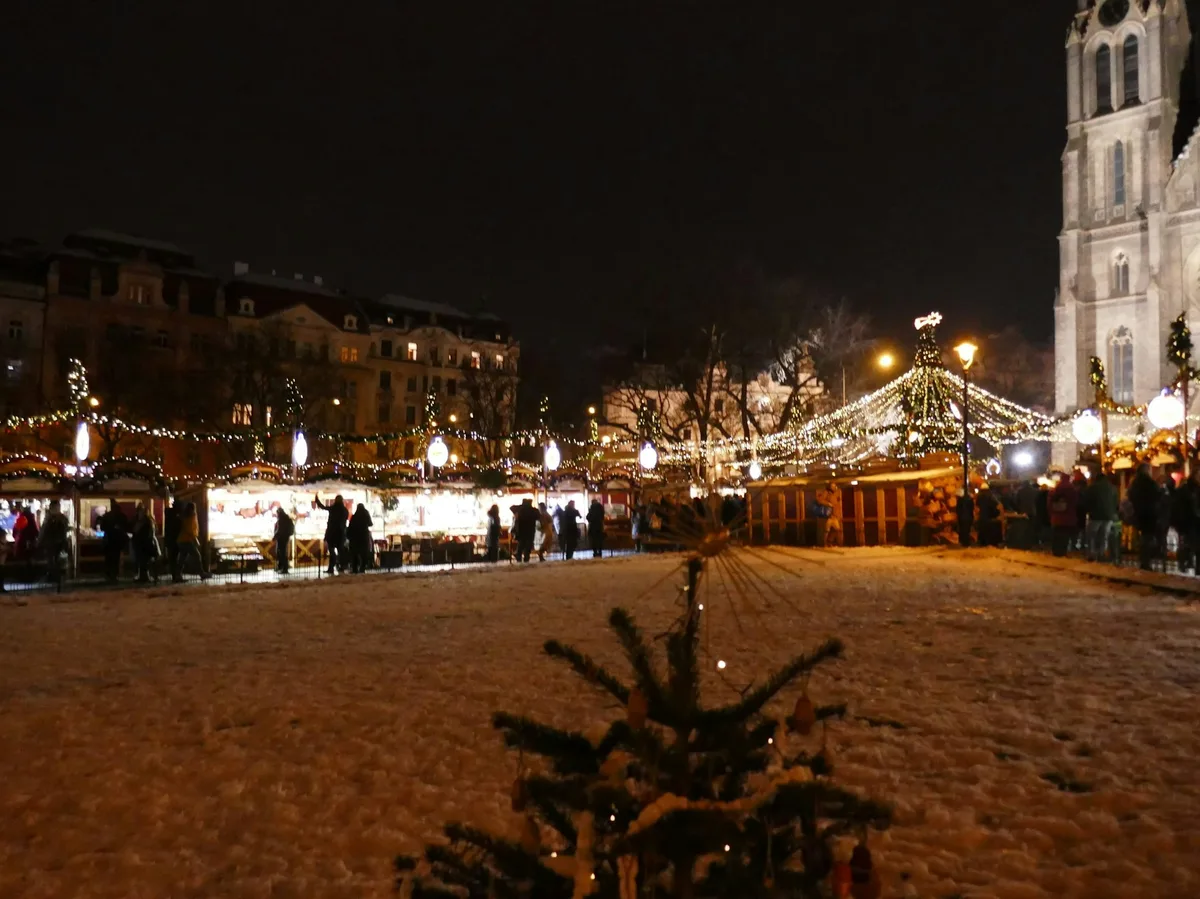
A grand 15-day festive road trip through the Christmas markets of Vienna, Salzburg, Munich, Nuremberg and Dresden, finishing with the market in Prague's Old Town before returning through Český Krumlov to Vienna.
Visitor guide
Český Krumlov is a town of about 13,000 inhabitants in the South Bohemian Region of the Czech Republic, set on a horseshoe bend of the Vltava river in the Bohemian Forest foothills. Its historic centre and the castle complex above it have been a UNESCO World Heritage Site since 1992 because of their well-preserved Gothic, Renaissance and Baroque architecture.
According to Wikipedia, Krumlov derives from the Middle High German Krumme Aue, meaning crooked meadow, after the river bend. The word Český, meaning Bohemian, was added in the 15th century to distinguish it from Moravský Krumlov in Moravia. The area has been inhabited since the Old Stone Age, and the castle was founded shortly before 1250 by a branch of the Vítkovci family. The town is first mentioned in a deed of 1253 and grew in two stages: Latrán, built beneath the castle, and a newly founded Old Town. A Jewish community is documented since 1334.
After the Vítkovci line became extinct in 1302, the estate passed to the Rosenberg family, who made it their main residence. Peter I of Rosenberg had the present upper castle built in the early 14th century, and the town reached its highest prosperity in the 15th century under Oldřich II of Rosenberg. In 1555 William of Rosenberg unified Latrán and the Old Town, and later in that century rebuilt the castle in Renaissance style.
The Rosenberg estate was sold in 1602 to Emperor Rudolf II. After 1620 it was given to the Eggenberg family, and the town became seat of the Duchy of Krumlov. From 1719 to 1947 the castle belonged to the Schwarzenbergs. Most of the town fortifications were demolished in the 19th century, and under communism the historic town fell into disrepair; since the Velvet Revolution of 1989 much of it has been restored.
Wikipedia describes Český Krumlov Castle as one of the largest in central Europe, with an area of 7 hectares, around forty buildings and palaces grouped around five courts and a park. It is notable for a moat that holds bears instead of water, which the rulers kept to associate themselves with the Orsini family, whose name puns on the Italian orso for bear. A five-storey Cloak Bridge from 1764 connects the Upper Castle with the theatre and gardens.
The castle's Baroque theatre, built in 1680 to 1682 and renovated in 1765 to 1766, is among the best-preserved Baroque theatres in the world, keeping its original building, stage machinery and archive; the castle describes only one other royal theatre, Drottningholm in Sweden, as comparable, and it is used only on special occasions. A revolving auditorium has stood in the gardens since 1959.
The old town's centre is the square Náměstí Svornosti, with a town hall from 1597 formed by joining three Gothic houses. The late Gothic Church of Saint Vitus, built between 1407 and 1439, is the town's most valuable church. The Lazebnický most links Latrán with the Old Town, and the Art Nouveau Český Krumlov Synagogue was built in 1908. The Egon Schiele Art Centrum commemorates the painter, who lived in the town.
Each year the Five-Petalled Rose Festival turns the centre into a medieval town on the summer solstice weekend, and the International Music Festival has run each July and August since 1992. A private tour allows time to walk the lanes of the old town and the castle courts at an easy pace.
See every tour and attraction we cover in Czechia.