TorontoOntario · 36 tours
 Niagara FallsOntario · 25 tours
 New York CityNew York · 30 tours
 Las VegasNevada · 8 tours
 San FranciscoCalifornia · 16 tours
 VancouverBritish Columbia · 17 tours
 DubaiUAE · 54 tours
 Abu DhabiUAE · 5 tours
 Buenos AiresArgentina · 23 tours
 AthensGreece · 31 tours
 AucklandNew Zealand · 38 tours
 CancunMexico · 54 tours
No destinations match “”. Try searching all tours instead — that search understands full questions, not just place names.
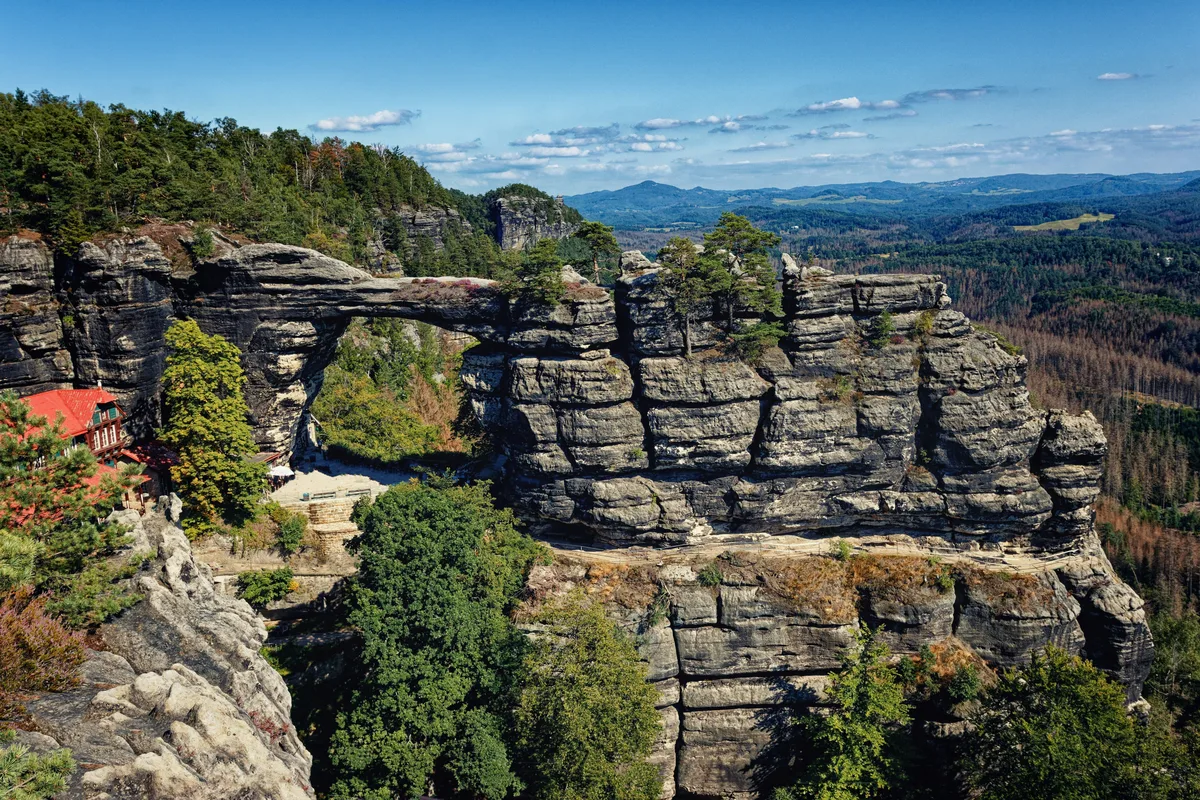
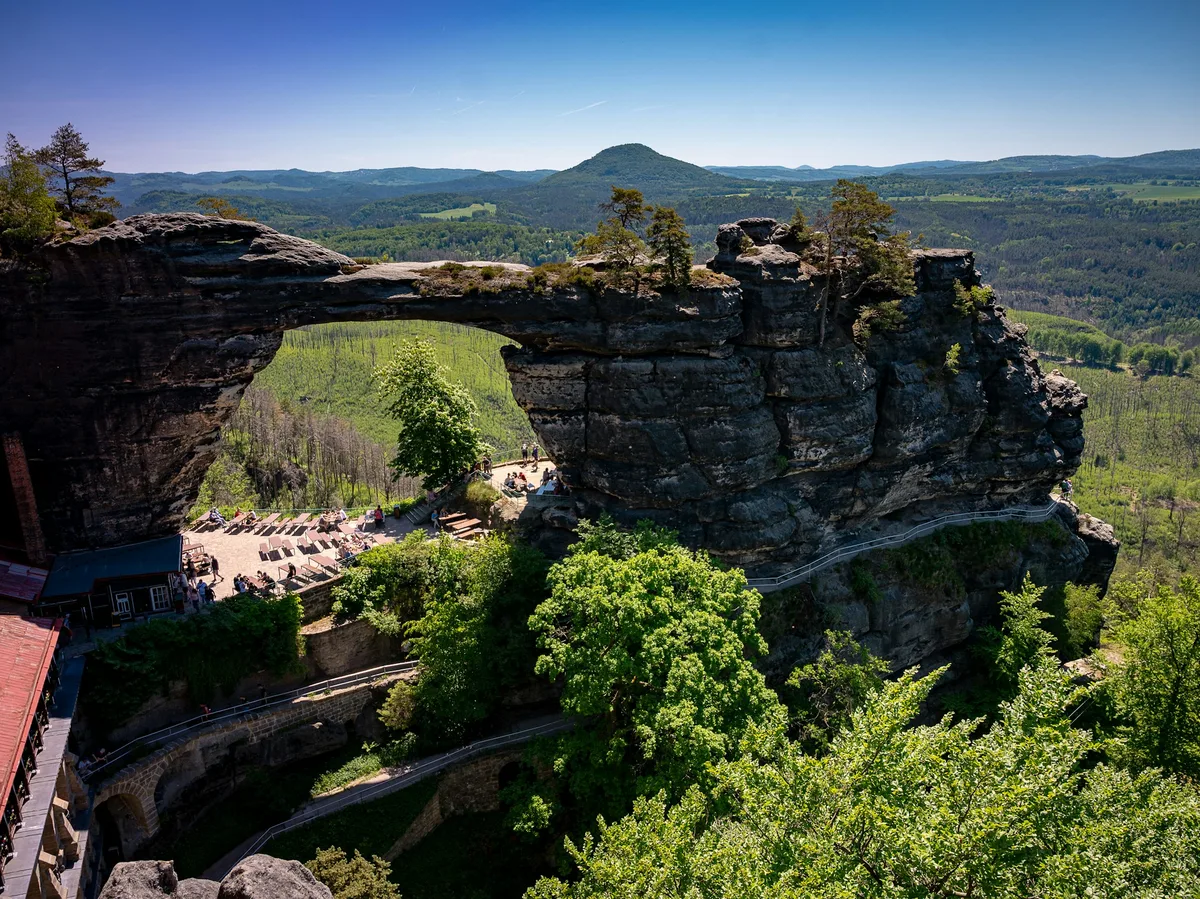
Sandstone cliffs, deep gorges, and the Pravcicka Brana, the largest natural sandstone arch in Europe, along the Czech-German border, explored on hiking trails and river boat trips through the Kamenice Gorge.
Visitor guide
Bohemian Switzerland (České Švýcarsko) is a nature region in the Elbe Sandstone Mountains of the northwestern Czech Republic, protected as a national park. It lies on the right bank of the Elbe northeast of Děčín, borders Saxon Switzerland National Park in Germany, and together the two are known as Saxon-Bohemian Switzerland.
The Elbe Sandstone Mountains straddle the Czech-German border, with about three-quarters of the area on the German side. According to Wikipedia, the sandstone formed from sand deposited on the floor of a Cretaceous sea and later shaped by weathering and water, with the Elbe cutting the deepest incision. The result is a deeply dissected landscape with constant changes between plains, ravines, table mountains and rocky areas of forest, a diversity that supports a rich range of species. On the Bohemian side, volcanic activity of the Tertiary period left conical hills such as Růžovský vrch, which at 619 metres is the park's highest elevation.
The Pravčická brána, or Pravčice Gate, is a sandstone arch about 3 kilometres northeast of Hřensko. With a span of 26.5 metres and an inside height of 16 metres, it is the largest natural sandstone arch in Europe, according to Wikipedia, and is a national nature monument. An inn was built beside it in 1826, and in 1881 Prince Edmund of Clary-Aldringen built the Hotel Sokolí hnízdo (Falcon's Nest). Because of heavy erosion by visitors, the arch itself has been out of bounds since 1982. Scenes of The Chronicles of Narnia: The Lion, the Witch and the Wardrobe were filmed in the landscape here, though the sequence of actors running over the arch was filmed in a studio.
The Kamenice Gorge, a rocky ravine of the Kamenice River near Hřensko, is one of the main tourist destinations of the region. It has three boat sections, the Edmund Gorge (Quiet Gorge), Wild Gorge and Ferdinand Gorge, of which only the first two are open to tourists. Ferrymen steer the boats with a tiller. The Wild Gorge, about 450 metres long, is described as the most valuable and best preserved part of the national park, and the Edmund Gorge is about 900 metres long. The gorge was first travelled in 1877 by five adventurers on a wooden raft, and from the 1880s Prince Edmund Clary-Aldringen paid for access, with Italian experts directing workers who carved pedestrian tunnels.
Other sights include Šaunštejn and Falkenštejn rock castles, viewpoints near Jetřichovice such as Mariina skála, Vilemínina stěna and Rudolfův kámen, the romantic valley of Pavlino údolí, a rock chapel at Všemily and well-kept villages with Upper Lusatian houses. Many castles were built here to guard trade routes, and some served as medieval robber-baron hideouts. German-speaking settlers colonised the area in the 12th century; their descendants were driven out after 1945.
The whole region has been protected since 1972 as the Elbe Sandstone Mountains Protected Landscape Area, and it became a national park on 1 January 2000. The name Bohemian Switzerland arose in the 18th century, inspired by the Swiss artists Adrian Zingg and Anton Graff, who were reminded of their homeland by the scenery. Romantic-era artists, including Ludwig Richter, and the composer Carl Maria von Weber were drawn here. A private guided visit suits the area's mix of viewpoints and gorges, with a local driver handling the routes between them.
See every tour and attraction we cover in Czechia.