TorontoOntario · 36 tours
 Niagara FallsOntario · 25 tours
 New York CityNew York · 30 tours
 Las VegasNevada · 8 tours
 San FranciscoCalifornia · 16 tours
 VancouverBritish Columbia · 17 tours
 DubaiUAE · 54 tours
 Abu DhabiUAE · 5 tours
 Buenos AiresArgentina · 23 tours
 AthensGreece · 31 tours
 AucklandNew Zealand · 38 tours
 CancunMexico · 54 tours
No destinations match “”. Try searching all tours instead — that search understands full questions, not just place names.
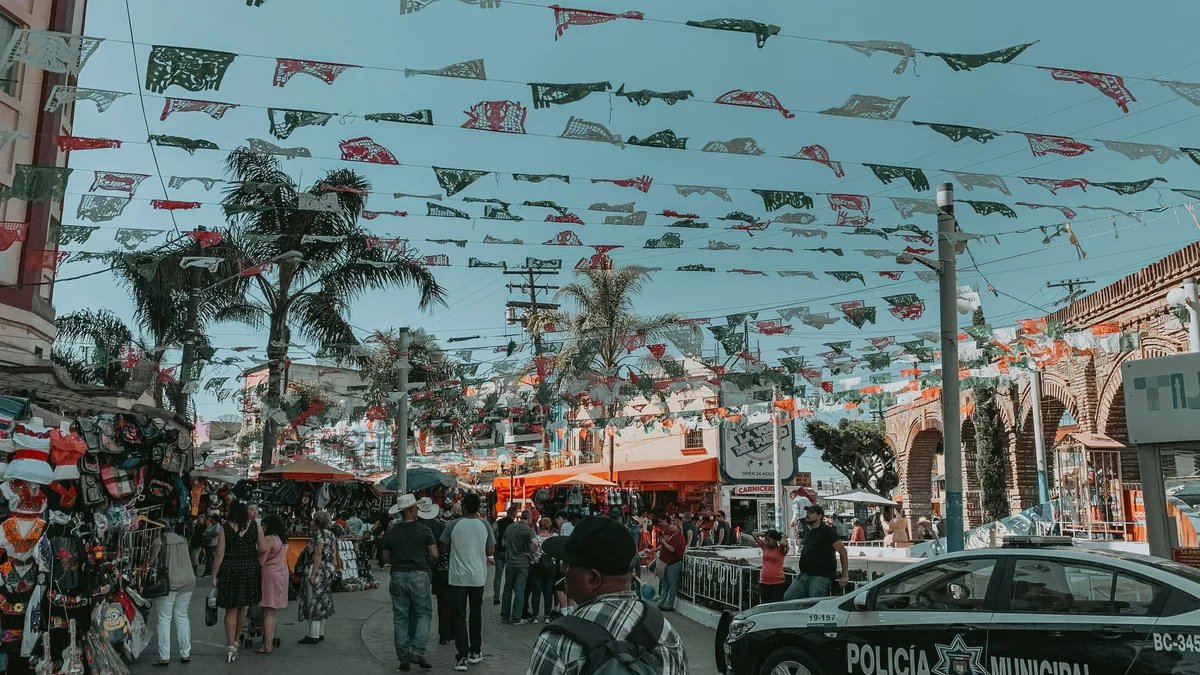
Avenida Revolución is Tijuana's best-known downtown street, lined with shops, restaurants, murals, and historic landmarks, running from the Tijuana Arch through the heart of the city.
 Private Tours Popular Pick
A private full-day tour of Tijuana led by a local guide, covering the border city's history and culture through real landmarks, shops, and a Lucha Libre museum, with a genuine taste of the city's food scene along the way.
 Food & Drink Tours
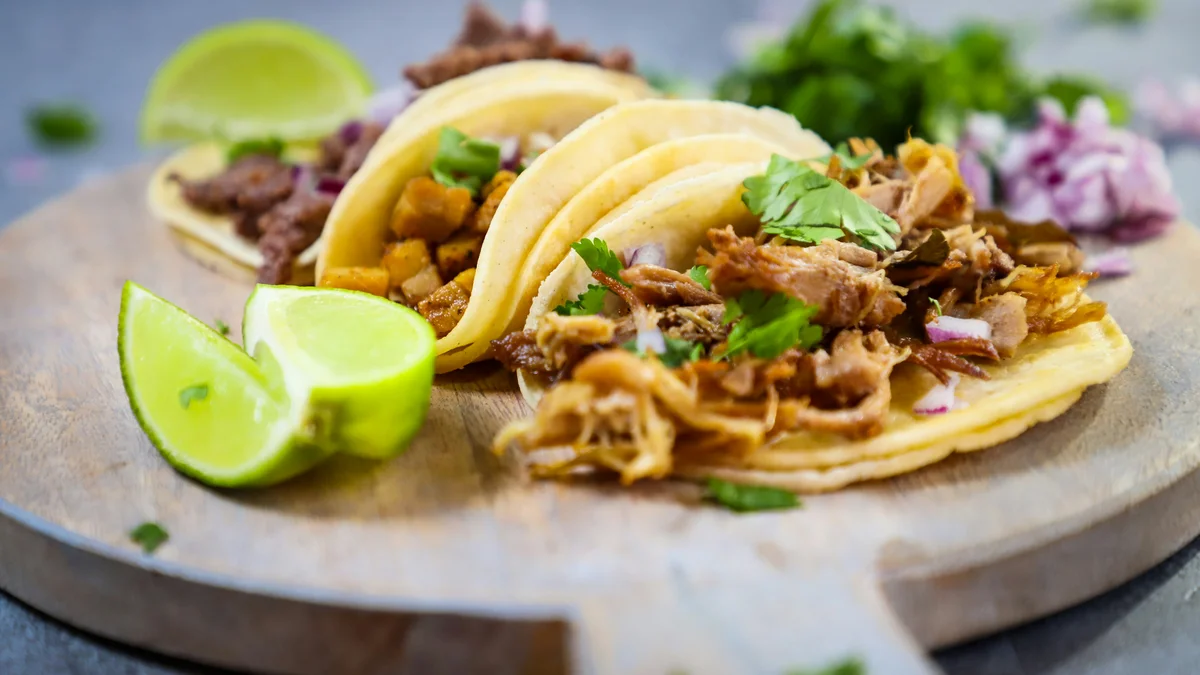
A 100% private food journey hosted by a local collective of Tijuana natives, taking you to real local favorites like Tacos El Franc and Mercado Hidalgo in comfortable, air-conditioned private vehicles — your hosts handle the ordering while you enjoy the food.
Visitor guide
Avenida Revolucion is the main tourist street of Tijuana, Baja California, Mexico, running through the city's historic downtown, known as Zona Centro. It is lined with shops, restaurants, bars and landmarks, and it begins beneath the Tijuana Arch at its northern end.
Wikipedia says urban settlement in Tijuana began in 1889, when descendants of Santiago Arguello and Augustin Olvera agreed to develop the city, and 11 July 1889 is recognised as the founding date. The name comes from Rancho Tia Juana, established by Arguello in 1829, and the most accepted theory among historians is that it derives from a Kumeyaay word meaning roughly by the sea; the popular Aunt Jane inn story has no historical record. Wikipedia adds that Californians came for trade and entertainment from the late 1800s, so tourism has shaped the city from the start.
Wikipedia says Avenida Revolucion was the first road in Tijuana to be paved, near the start of the twentieth century. It was originally called Avenida Olvera and drew American tourists crossing from California. The street changed names several times, including Avenida A in 1920 and later Avenida Alvaro Obregon and Avenida Libertad in the late 1920s, before receiving its current name in 1932.
The avenue's most notable period of growth came during Prohibition in the United States, between 1920 and 1933, when Americans crossed the border for legal alcohol. Wikipedia notes that Caesar Cardini, an Italian-American restaurateur, is credited with inventing the Caesar salad at the Hotel Caesar on the avenue, though origin stories for the salad are often disputed. Accounts of the restaurant's history differ: one says Caesar's opened in an alley in 1923, moved to 2nd Street in 1926 and then to its location on Avenida Revolucion, while San Diego Magazine and local historians repeat 4 July 1924 as the date of the salad's creation. United States Navy sailors were also a major part of the visitors until the Navy banned them from visiting Tijuana.
The Agua Caliente complex, with a hotel, spa, racetrack and casino, opened in 1928 elsewhere in the city, and Wikipedia says gambling was banned in 1935. The jai alai arena on the avenue, built in 1947, drew spectators from both sides of the border; the former Jai Alai Palace is now a concert venue known as El Foro.
The avenue begins at the Tijuana Arch and Plaza Santa Cecilia, a pedestrian area decorated with papel picado. A travel guide describes the arch, also called the Monumental Arch or Millennium Arch, as a steel and copper structure rising about fourteen storeys, built to revitalise the area and welcome travellers. Other landmarks listed on Wikipedia include Pasaje Rodriguez, a former bazaar repurposed as a design and cultural space, the Hotel Nelson, Sanborn's, a historic HSBC building and Cine Tonala. The Torre de Agua Caliente monument stands near the eastern end.
Shopping arcades lost customers and tenants after 2001 as tourism declined. The avenue was remodelled in the mid-2010s, with wider sidewalks, bus rapid transit lanes and fewer car lanes, to make it more pedestrian friendly. Photographs with a zonkey, a donkey painted to look like a zebra, are a long-running street tradition.
The street is best explored on foot, and it is lively with cantinas, clubs, art galleries and souvenir shops. A private guided visit can point out the historic buildings and suggest where to eat, with a driver handling pick-up and drop-off in the downtown traffic.
See every tour and attraction we cover in Tijuana.