TorontoOntario · 36 tours
 Niagara FallsOntario · 25 tours
 New York CityNew York · 30 tours
 Las VegasNevada · 8 tours
 San FranciscoCalifornia · 16 tours
 VancouverBritish Columbia · 17 tours
 DubaiUAE · 54 tours
 Abu DhabiUAE · 5 tours
 Buenos AiresArgentina · 23 tours
 AthensGreece · 31 tours
 AucklandNew Zealand · 38 tours
 CancunMexico · 54 tours
No destinations match “”. Try searching all tours instead — that search understands full questions, not just place names.
Often billed as North America's oldest commercial street, lined with historic buildings, shops, and restaurants.
Visitor guide
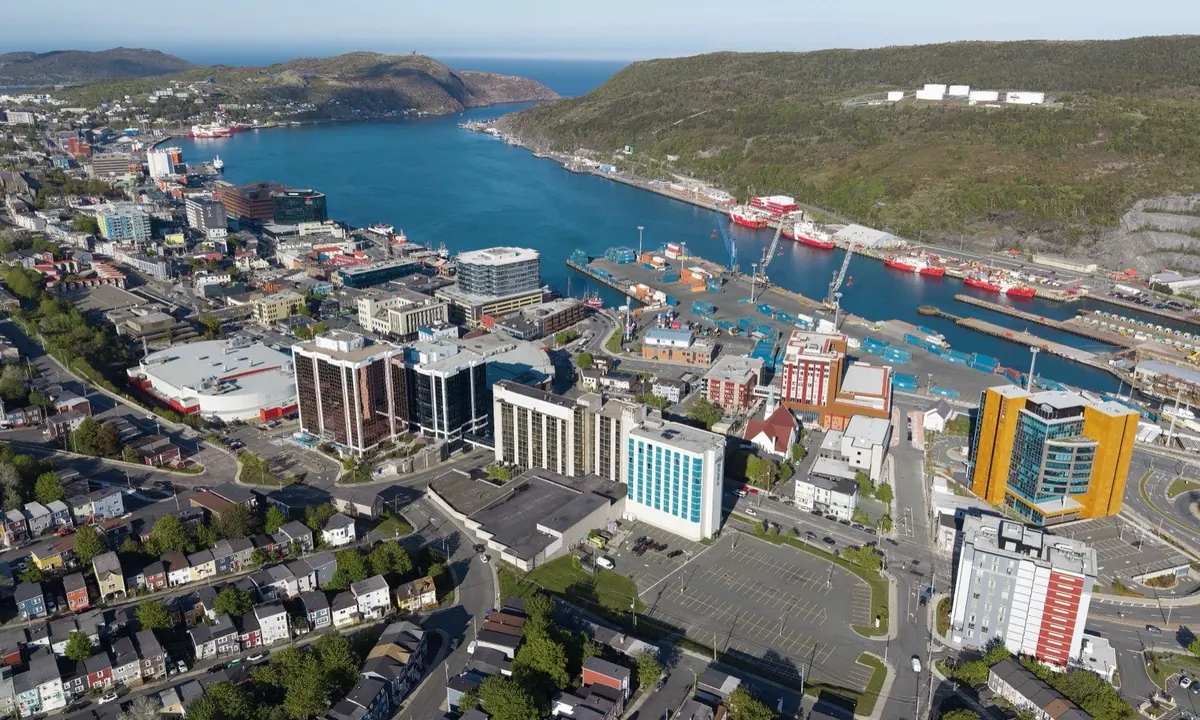
Water Street is the long harbourside thoroughfare of downtown St. John's, Newfoundland, and for centuries the commercial spine of a port built on the cod fishery. Its eastern end sits near Temperance Street and its western end meets Waterford Bridge Road, and a group of its surviving merchant buildings has been a National Historic Site of Canada since 1987.
The street grew up as the working edge of one of the New World's great fishing harbours. Wikipedia describes it as a trading outpost for Basque, French, Spanish, Portuguese and English fishermen, and local tradition and many guides call it the oldest commercial street in North America. That ranking is a popular claim rather than something the official heritage record states, and some operators hedge it with "possibly", so it is best treated as local pride rather than settled fact. What the records do support is a long, continuous role as the place where fish merchants, chandlers and traders did business beside the wharves.
Much of what stands today dates from a rebuilding. The Canadian Register of Historic Places notes that, with two exceptions, the heritage district's buildings went up soon after the Great Fire of 1846, and their construction dates run from 1847 to 1916. They housed the merchant premises that handled salt fish, supplies and credit for the outports, and their rear access to the harbour reflects how goods once moved between ship, warehouse and shop.
The Water Street Historic District National Historic Site of Canada was designated in 1987. According to the register, it comprises about twenty neighbouring former mid-19th-century mercantile buildings on both sides of the street between Beck's Cove and Mahon's Lane. Its significance lies in being a cohesive group of commercial structures, representative of the mercantile establishments tied to the Newfoundland fisheries and Atlantic trade, and in the setting that preserves the buildings' historic connection to the harbour. The designation covers that stretch of buildings rather than the whole length of the street.
Today the street is the main hub of downtown commerce, with souvenir shops, restaurants, pubs and boutiques occupying the old merchant premises. In 2020 the city introduced a seasonal pedestrian-only section of the road, so the character of the central stretch changes with the season; check the City of St. John's for current arrangements. Look up as well as along the street: the brick and stone commercial facades, loading doors and narrow lanes running down to the water are the clearest clues to its mercantile past.
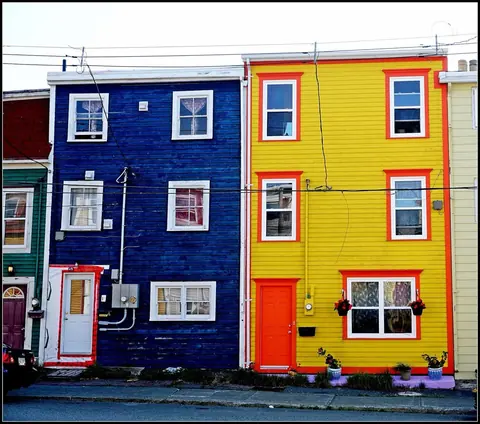
Water Street is also the easiest way to stitch together the rest of the historic core. Parallel and uphill lie Duckworth Street and the steep, brightly painted rows of the downtown neighbourhoods, and the harbour, the Narrows and Signal Hill frame the view at the east end.
Opening hours of individual shops and restaurants vary by season, so confirm locally. The street is flat along most of its length but crosses side lanes and steep cross-streets, and weather off the Atlantic can turn quickly, so wind- and rain-proof layers are sensible even in summer. Mornings are quietest if you want to look at the architecture rather than the crowds.
On a Voyzo private tour, the street works well as an unhurried stop: your private driver can drop you at one end and collect you at the other, which saves doubling back on foot, and the same vehicle can continue to nearby harbour and coastal viewpoints.
See every tour and attraction we cover in St. John's.