TorontoOntario · 36 tours
 Niagara FallsOntario · 25 tours
 New York CityNew York · 30 tours
 Las VegasNevada · 8 tours
 San FranciscoCalifornia · 16 tours
 VancouverBritish Columbia · 17 tours
 DubaiUAE · 54 tours
 Abu DhabiUAE · 5 tours
 Buenos AiresArgentina · 23 tours
 AthensGreece · 31 tours
 AucklandNew Zealand · 38 tours
 CancunMexico · 54 tours
No destinations match “”. Try searching all tours instead — that search understands full questions, not just place names.
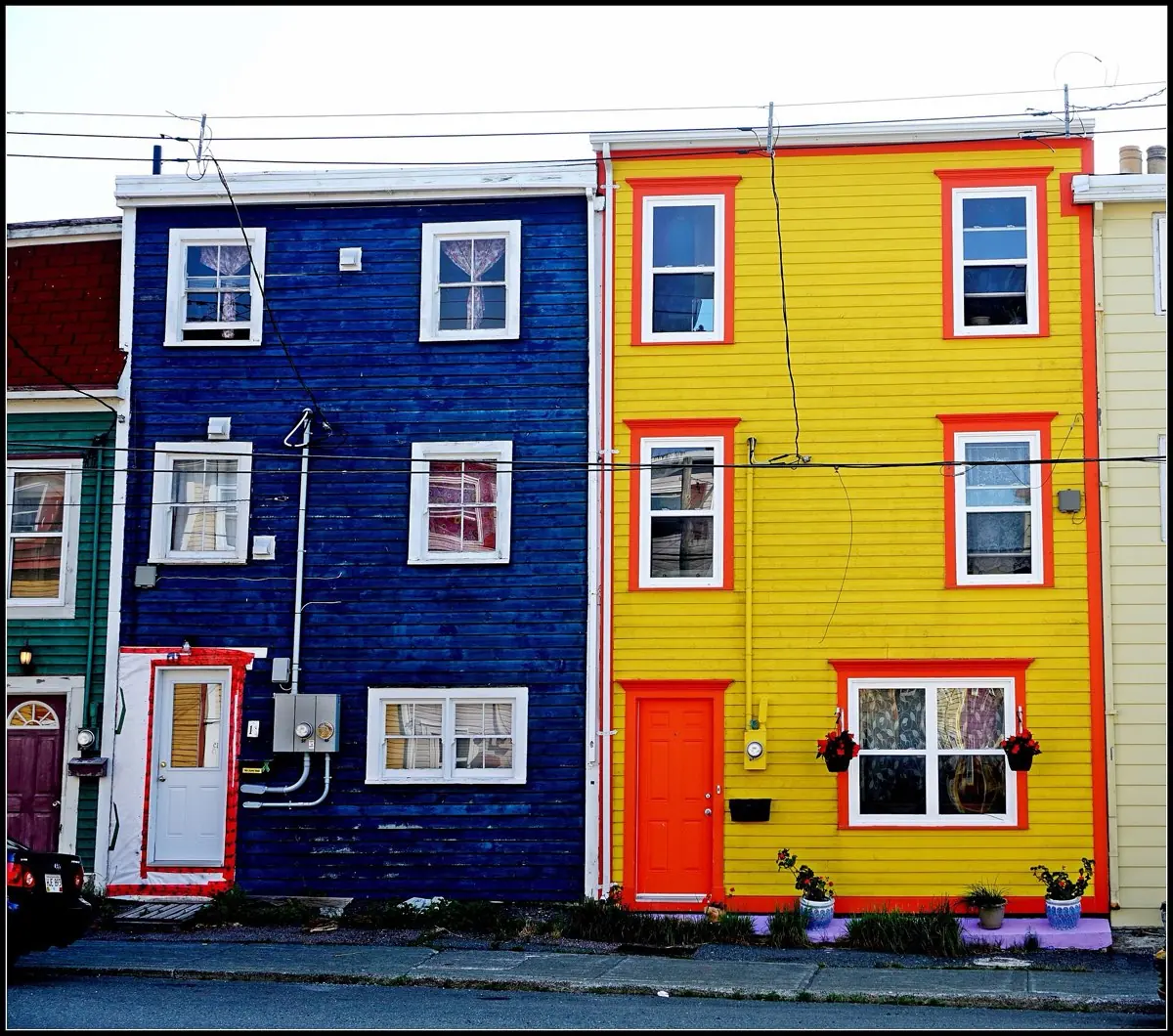
Blocks of brightly painted row houses, one of the most photographed streetscapes in Canada.
Visitor guide
Jellybean Row is the popular name for the brightly painted rows of narrow houses on the sloping streets of downtown St. John's. It is a nickname rather than an official street, and the exact streets it covers are loosely defined. The colour scheme is among the most photographed scenes in Newfoundland and Labrador.
Much of the older housing downtown dates from the rebuilding after the Great Fire of 8 July 1892, which Wikipedia says destroyed nearly the whole east end of St. John's, including much of its commercial core, and left at least 12,000 people homeless. The fire reportedly began when a dropped pipe ignited a stable on Carter's Hill, and dry shingled roofs and a strong wind carried it. Aid arrived from Britain, Canada and the United States, and Wikipedia credits architect John Thomas Southcott's Second Empire designs with shaping many heritage buildings from that period.
A student field-school write-up on the Georgestown neighbourhood, based on interviews with an urban-history professor, says that after 1892 the city was rebuilt using only about four or five plain colours, with no contrasting trim on windows or doors.
Before the 1960s, much of downtown St. John's was, in the words of one heritage scholar quoted by provincial tourism writers, 'kind of deadly dull'. Urban revitalisation began in that decade, and the Heritage Foundation of Newfoundland and Labrador later encouraged bold, contrasting paint on restored buildings. Sources date this differently: one account points to the 1960s and a Heritage Foundation staff member, David Webber, painting restored buildings in contrasting colours, while Lonely Planet cites a downtown revitalisation programme begun by the foundation in 1977. Both agree on the foundation's central role, so avoid a single firm start year. The Georgestown write-up quotes Professor Shane O'Dea saying the effect of the new colours was 'electric', and that the look later became central to the city's tourism image.
A well-told provincial story credits a downtown hardware store. Templeton's, established in 1863, turned up old paint chips in its basement, and the owners, brothers John and David Templeton, brought them to the Heritage Foundation. That led to the Heritage Colours of Newfoundland and Labrador. Lara Maynard, a municipal outreach officer with the foundation, gave the shades names rooted in local places and speech, such as Little Heart's Ease, Charmer, Ferryland Downs, Bristol's Hope and Mussels in the Corner. The provincial tourism site notes that Jellybean Row is itself a colour name in the palette, and that there are two palettes: a traditional one of muted browns, reds and greens, and a brighter Jelly Bean one with yellows, blues and greens.
The popular belief that fishermen painted their homes bright colours so they could find them in fog is legend. Provincial tourism writers present it as the romantic version and say the real reason is unclear. Similarly, the origin of the 'jellybean' nickname is disputed: the Georgestown write-up says some residents believe the Georgestown rows inspired the name while others say it refers to houses near Quidi Vidi Lake, and some sources use it more widely for downtown. Treat any single claim, including about which house or street started the trend, with caution.
The Georgestown write-up describes the neighbourhood as bordered by Military Road, Monkstown Road, Empire Avenue and Bonaventure Avenue, and as one of the few St. John's neighbourhoods with its own association. Its colourful landmarks include a corner bakery repainted in a bold purple-pink by its owner, who said he wanted to take a risk with colour. The nearby Basilica of St. John the Baptist was built between 1839 and 1855; the same source says it is built of grey limestone with white granite, that about 6,000 people helped drag stones across the frozen harbour in the winter of 1839, and that 10,000 people donated when money ran short in 1841.
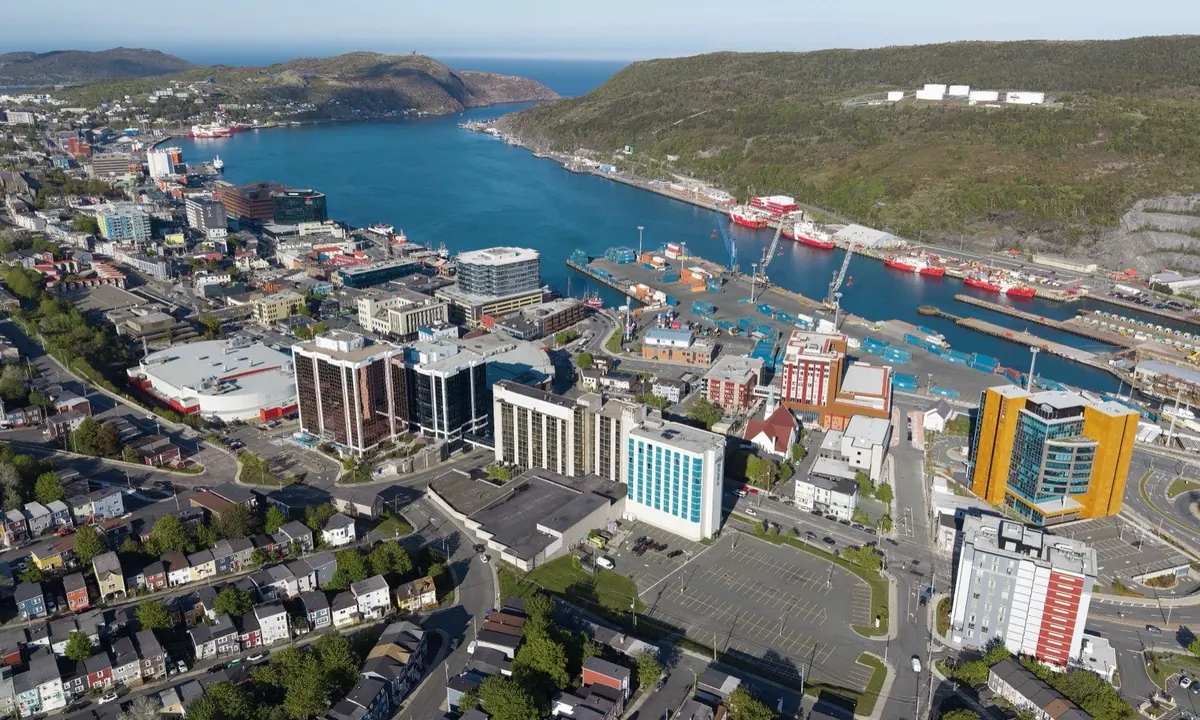
The streets are lined with narrow townhouses, many with flower boxes and white-framed windows, set along steep streets that run down toward the harbour. Many are private homes today, so walk as you would in any residential neighbourhood.
See every tour and attraction we cover in St. John's.