TorontoOntario · 36 tours
 Niagara FallsOntario · 25 tours
 New York CityNew York · 30 tours
 Las VegasNevada · 8 tours
 San FranciscoCalifornia · 16 tours
 VancouverBritish Columbia · 17 tours
 DubaiUAE · 54 tours
 Abu DhabiUAE · 5 tours
 Buenos AiresArgentina · 23 tours
 AthensGreece · 31 tours
 AucklandNew Zealand · 38 tours
 CancunMexico · 54 tours
No destinations match “”. Try searching all tours instead — that search understands full questions, not just place names.
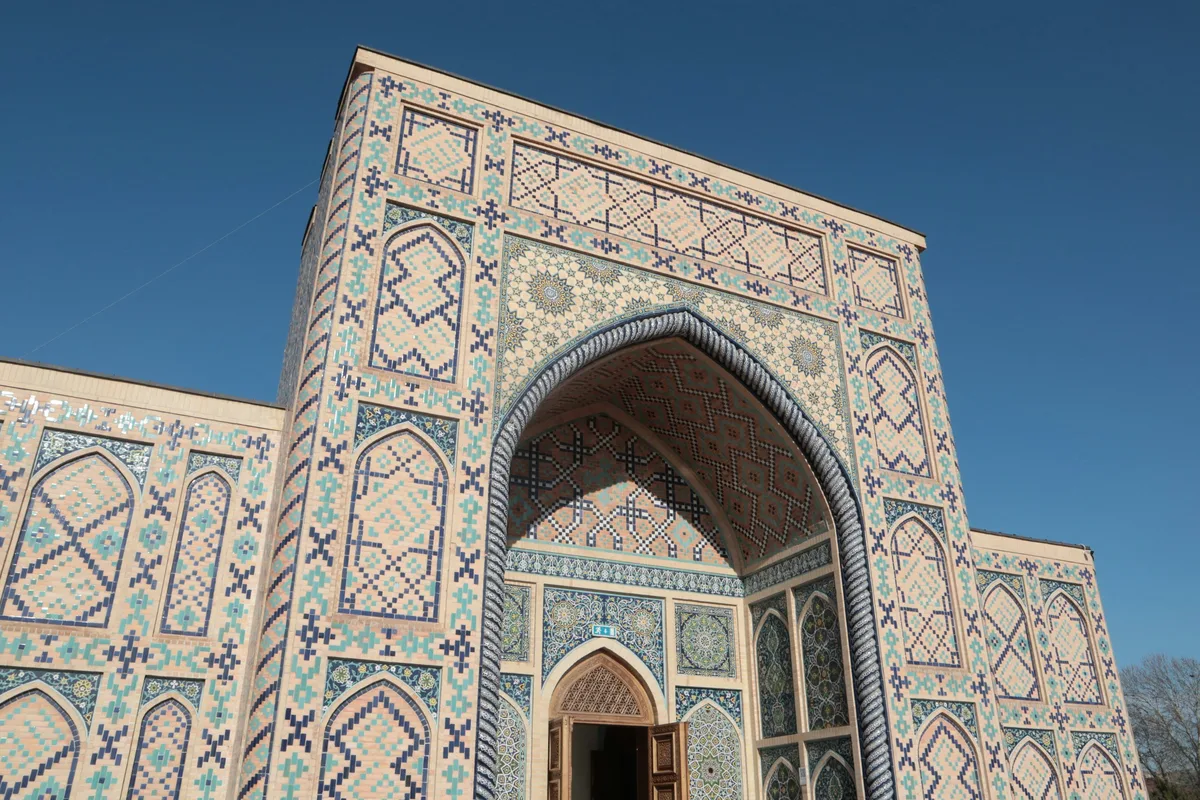
The remains of a 15th-century astronomical observatory built by the scholar-prince Ulugbek, whose sextant trench and star catalogue were among the most accurate produced anywhere before the invention of the telescope.
 Multi-Day Tours
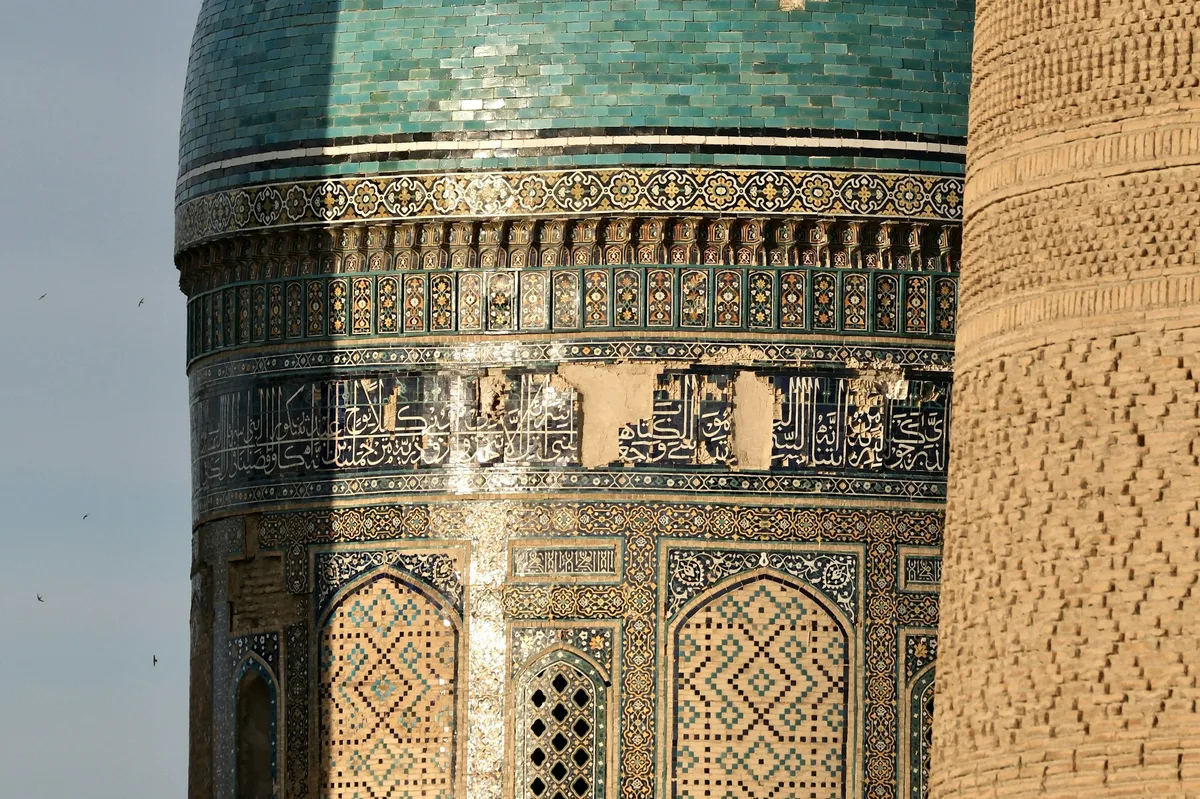
A 7-day private trip through Tashkent, Bukhara, and Samarkand by private car and train — the Hazrati Imom Complex, the Ark Fortress, the Registan, and the 15th-century Ulugbek Observatory.
 Multi-Day Tours
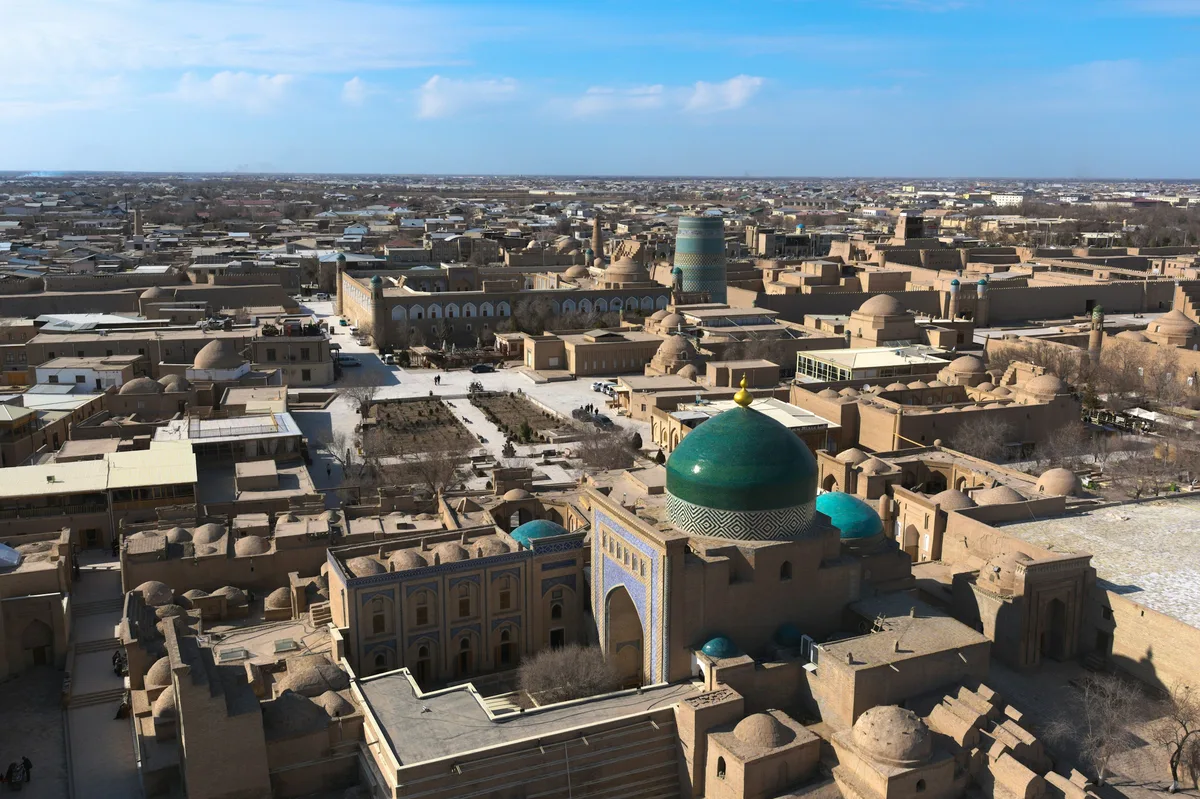
A 12-day private circuit from Tashkent through Khiva, Bukhara, a night in a desert yurt camp, Samarkand, and Shakhrisabz — the Registan, Khiva's walled old town, and Timur's birthplace.
Visitor guide
The Ulugh Beg Observatory is the remains of a 15th-century astronomical observatory in Samarkand, Uzbekistan, founded by the Timurid ruler and scholar Ulugh Beg. Today the foundations and the buried lower part of its great marble sextant are what survive, alongside a small museum.
Ulugh Beg, a grandson of Timur, founded the observatory in the 1420s. Wikipedia says its foundations were laid in the early 1420s and that historians still debate its completion date, usually given as about 1428. He invited skilled mathematicians and astronomers, with the figure of more than 60 mentioned. Jamshid al-Kashi was the first director, followed by Qadi Zada and then Ali Qushji.
The design followed the earlier Maragheh observatory. The building was a brick cylinder roughly 46 metres across and 30 to 33 metres tall, standing on a hill about 21 metres above the ground, with three stories. The lower floor housed staff and observations were made from the upper two, which had many arched openings.
The main instrument was a huge mural sextant, called the Fakhri sextant, with a radius of about 40 metres. Wikipedia describes it as the largest astronomical instrument in the world at that time. To keep the building from becoming dangerously tall, part of the instrument was set underground in a trench about two metres wide. Its marble-lined arc was marked at about 70 centimetres per degree, with finer divisions down to about five seconds of arc.
Ulugh Beg's best-known scholarly work is the Zij-i Sultani, a star catalogue and astronomical table written in Persian and completed in 1437. It lists around 1,000 stars and follows the Ptolemaic planetary model. Wikipedia describes it as the first star catalogue produced since Ptolemy's Almagest to offer more accurate figures for many stars. It also includes sine tables of high precision. The work remained in use until the 19th century, hundreds of manuscript copies survive, and it was translated into several languages.
His measurements included a tropical year of 365 days, 5 hours, 49 minutes and 15 seconds, with an error of about 25 seconds, and an axial tilt of about 23.5 degrees.
Letters written by Jamshid al-Kashi are an important source for daily life at the observatory. Wikipedia notes that one of them describes teaching that relied heavily on memory and suggests that the institution was more insular, and more connected to astrology, than earlier accounts implied. The building's entrance has also been altered several times, mainly for aesthetic reasons.
Ulugh Beg was assassinated around 1449 by his son, Abd al-Latif, and Wikipedia attributes the observatory's decline to the chaos that followed. The building was destroyed and many scholars left. The site was largely forgotten until 1908, when the Russian archaeologist Vassily Vyatkin uncovered its remains.
The Ulugh Beg Observatory Museum opened in 1970. It holds reproductions of star charts, the Zij-i Sultani, European printed editions of Ulugh Beg's work, astrolabes and other instruments, and a miniature model of the observatory. A private guided visit helps visitors picture the vanished building from what remains.
See every tour and attraction we cover in Uzbekistan.