TorontoOntario · 36 tours
 Niagara FallsOntario · 25 tours
 New York CityNew York · 30 tours
 Las VegasNevada · 8 tours
 San FranciscoCalifornia · 16 tours
 VancouverBritish Columbia · 17 tours
 DubaiUAE · 54 tours
 Abu DhabiUAE · 5 tours
 Buenos AiresArgentina · 23 tours
 AthensGreece · 31 tours
 AucklandNew Zealand · 38 tours
 CancunMexico · 54 tours
No destinations match “”. Try searching all tours instead — that search understands full questions, not just place names.
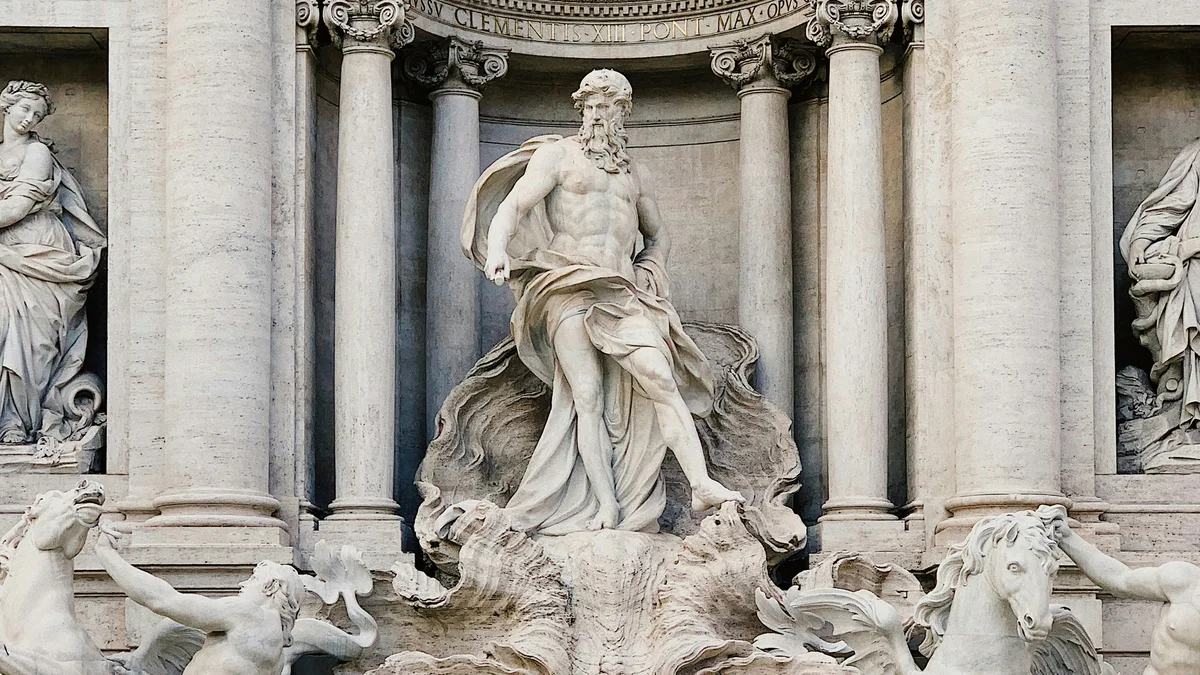
Completed in 1762 to a design by architect Nicola Salvi, this is Rome's largest and most theatrical Baroque fountain, fed by an aqueduct originally built in 19 BC. Its centerpiece is a dramatic sculpture of Oceanus riding a shell-shaped chariot through crashing marble waves. Tradition holds that tossing a coin over your shoulder into the water guarantees a return trip to Rome, and the coins collected are donated to charity.
Visitor guide
The Trevi Fountain, or Fontana di Trevi, is an 18th-century fountain in the Trevi district of Rome, Italy. It was designed by the architect Nicola Salvi and completed by Giuseppe Pannini in 1762. Standing 26.3 metres high and 49.15 metres wide, it is described by Wikipedia as the largest Baroque fountain in the world and one of the most famous.
The fountain stands at the junction of three roads, tre vie, and marks the end of the Acqua Vergine, the revived Aqua Virgo, one of the aqueducts that supplied ancient Rome. According to the story shown on the fountain's facade, Roman technicians located a source of pure water in 19 BC with the help of a young woman, a virgin, about 13 kilometres from the city. The aqueduct fed the Baths of Agrippa, served Rome for more than 400 years and remained in use, with repairs, through the Middle Ages. The Acqua Vergine still supplies the fountain.
In 1629 Pope Urban VIII asked Gian Lorenzo Bernini to sketch possible renovations of the earlier fountain, but the project was abandoned when the Pope died. Wikipedia notes that, although never built, Bernini's ideas left touches in the fountain as it exists today. In 1730 Pope Clement XII held a competition in which Nicola Salvi initially lost to Alessandro Galilei, but after an outcry that a Florentine had won, Salvi was given the commission. Work began in 1732.
Salvi died in 1751 with the work half finished. Four sculptors completed the decoration, including Pietro Bracci, whose statue of Oceanus stands in the central niche, and Giuseppe Pannini finished the fountain, which Pope Clement XIII inaugurated on 22 May 1762. The fountain is made mostly of travertine quarried near Tivoli. Salvi is also said to have hidden a barber's unsightly sign behind a sculpted vase, which Romans call the asso di coppe, the Ace of Cups.
Salvi built the fountain into the rear of a palace, now the Palazzo Poli, giving it a new facade with Corinthian pilasters. A triumphal arch is superimposed on the facade, framing Oceanus, who rides a shell chariot guided by tritons and drawn by two sea horses, one calm and one restless. Flanking figures represent Abundance and Salubrity, and bas-reliefs above illustrate the Roman origin of the aqueducts. The theme, Wikipedia says, is the taming of the waters.
The best known tradition is throwing a coin into the fountain before leaving Rome, said to ensure a return to the city. Coins are meant to be thrown with the right hand over the left shoulder, with one's back to the fountain. The tradition was the theme of the 1954 film Three Coins in the Fountain. Wikipedia reports that the money thrown in is donated to the charity Caritas. The fountain also appears in Roman Holiday (1953) and in Ottorino Respighi's Fountains of Rome.
The fountain stands in a small square and draws large crowds, so many visitors find it more enjoyable outside the busiest hours. A private guided visit with a driver can fit it into a route through the historic centre.
See every tour and attraction we cover in Rome.