TorontoOntario · 36 tours
 Niagara FallsOntario · 25 tours
 New York CityNew York · 30 tours
 Las VegasNevada · 8 tours
 San FranciscoCalifornia · 16 tours
 VancouverBritish Columbia · 17 tours
 DubaiUAE · 54 tours
 Abu DhabiUAE · 5 tours
 Buenos AiresArgentina · 23 tours
 AthensGreece · 31 tours
 AucklandNew Zealand · 38 tours
 CancunMexico · 54 tours
No destinations match “”. Try searching all tours instead — that search understands full questions, not just place names.
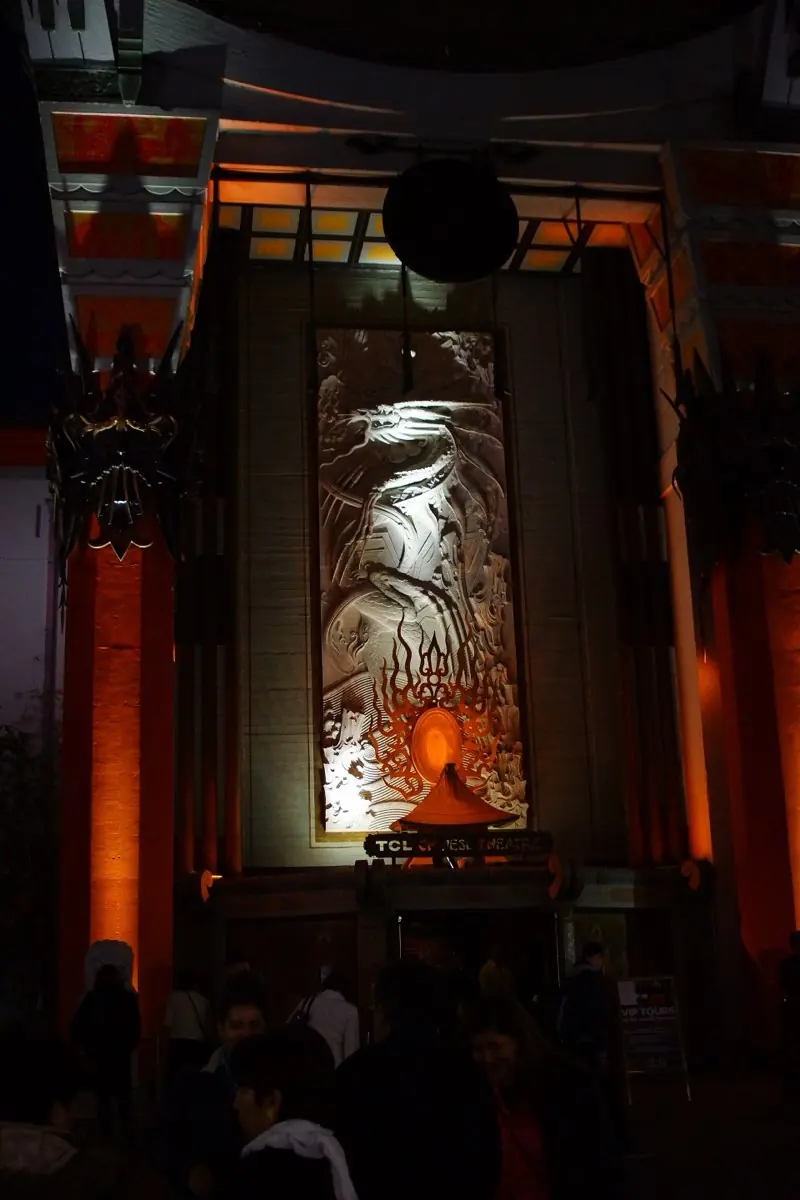
The forecourt of celebrity hand and footprints, on Hollywood Boulevard's star-studded sidewalk.
 Private Tours Popular Pick
A private, fully customizable tour of Los Angeles — Hollywood, Beverly Hills, Santa Monica, and the neighborhoods in between — in your own vehicle with a dedicated local guide.
 Private Tours
A private tour hitting Los Angeles' must-see stops — Hollywood, Beverly Hills, and a beach finish — built for visitors short on time.
Visitor guide
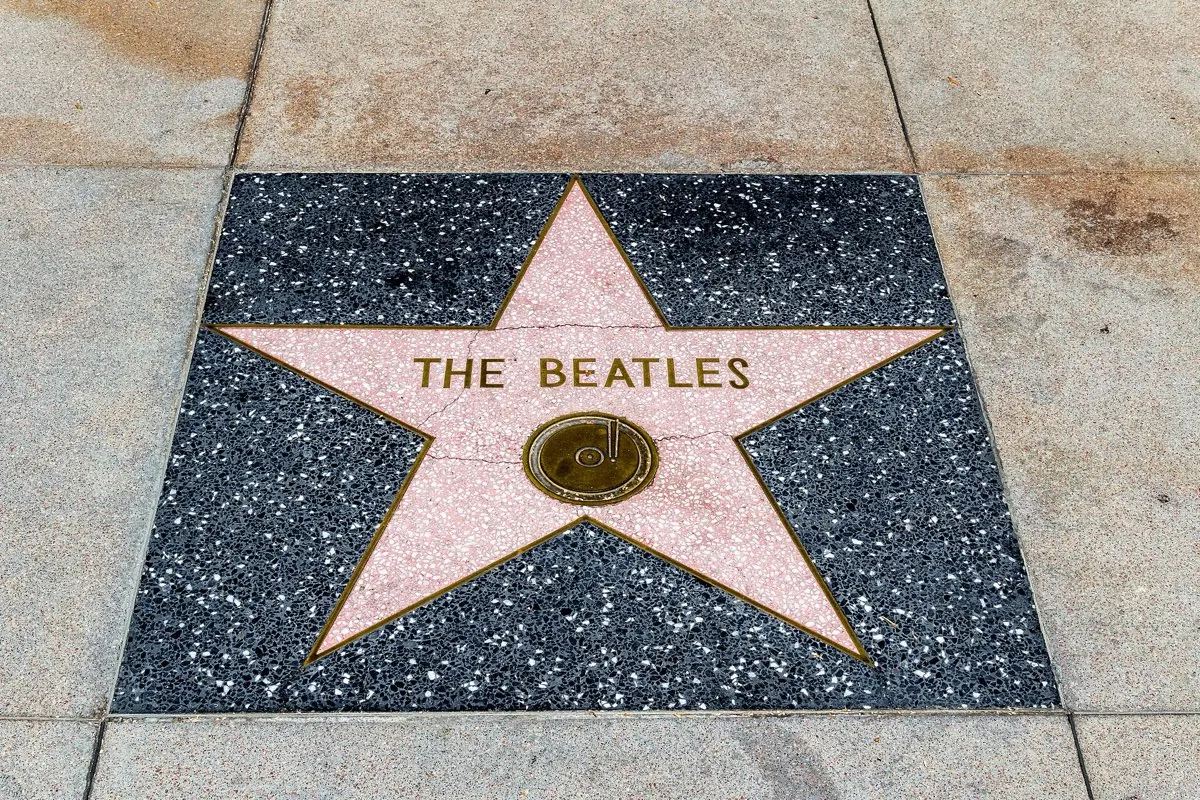
The TCL Chinese Theatre, opened in 1927 as Grauman's Chinese Theatre, is the best-known movie palace on Hollywood Boulevard, with a 90-foot pagoda facade and a forecourt of celebrity hand and footprints. Around it, the Hollywood Walk of Fame lays thousands of brass-rimmed terrazzo stars along the sidewalks of Hollywood Boulevard and Vine Street.
Showman Sid Grauman, who also founded the Million Dollar and Egyptian theatres, led the partnership that built the Chinese Theatre. Groundbreaking took place on January 5, 1926, and it opened on May 18, 1927, with the premiere of Cecil B. DeMille's The King of Kings. Raymond M. Kennedy of the firm Meyer & Holler designed it in an Exotic Revival style. Early reports promised a $5 million project, but Wikipedia puts the actual cost at about $2.1 million.
The facade includes a 90-foot pagoda with a bronze roof, a large dragon mural, and two Ming-era guardian lions at the entrance. Grauman sold his share to Fox Theatres in 1929 and managed the theatre until his death in 1950. The theatre later became Mann's Chinese Theatre in 1973, reverted to Grauman's name in 2001, and took the TCL name after TCL Corporation bought naming rights in January 2013. An IMAX conversion reopened it on September 20, 2013, with a curved screen of about 94 by 46 feet. The 1977 premiere of Star Wars was held here, and the theatre hosted the Academy Awards ceremonies of 1944, 1945 and 1946.
The theatre is a Los Angeles Historic-Cultural Monument, designated June 5, 1968, and sits within the Hollywood Boulevard Commercial and Entertainment District, listed on the National Register of Historic Places on April 4, 1985.
The first imprints were made by Douglas Fairbanks and Mary Pickford on April 30, 1927. Nearly 200 celebrity prints are now in the forecourt. How the tradition began is genuinely disputed. The theatre's own account credits actress Norma Talmadge accidentally stepping into wet cement, while Grauman himself said in a 1937 radio interview that he stepped in it and Mary Pickford followed. Treat the story as legend, not settled fact.
The Walk of Fame is administered by the Hollywood Chamber of Commerce. Eight prototype stars were installed in 1958; the first permanent star, Stanley Kramer's, was set near Hollywood and Gower on March 28, 1960, and the Walk was dedicated on November 23, 1960. It now runs about 1.3 miles along Hollywood Boulevard between Gower Street and La Brea Avenue and about 0.4 miles on Vine Street between Yucca Street and Sunset Boulevard. Wikipedia counted 2,857 stars as of September 2026.
Each star is a coral-pink terrazzo five-pointed shape rimmed in brass, set in a charcoal terrazzo square, with a category emblem below the name: a film camera for motion pictures, a television set, a phonograph record for recording, a microphone for radio, comedy and tragedy masks for live performance, and, since 2023, a trophy for sports entertainment. The Walk is Los Angeles Historic-Cultural Monument No. 194, designated July 5, 1978. New stars are approved through a nomination process that ends with approval by the Los Angeles City Council.
Hollywood and Highland, the Dolby Theatre next door, and the Egyptian Theatre are all within walking distance, making the block a natural first stop before heading up to Griffith Observatory.
See every tour and attraction we cover in Los Angeles.